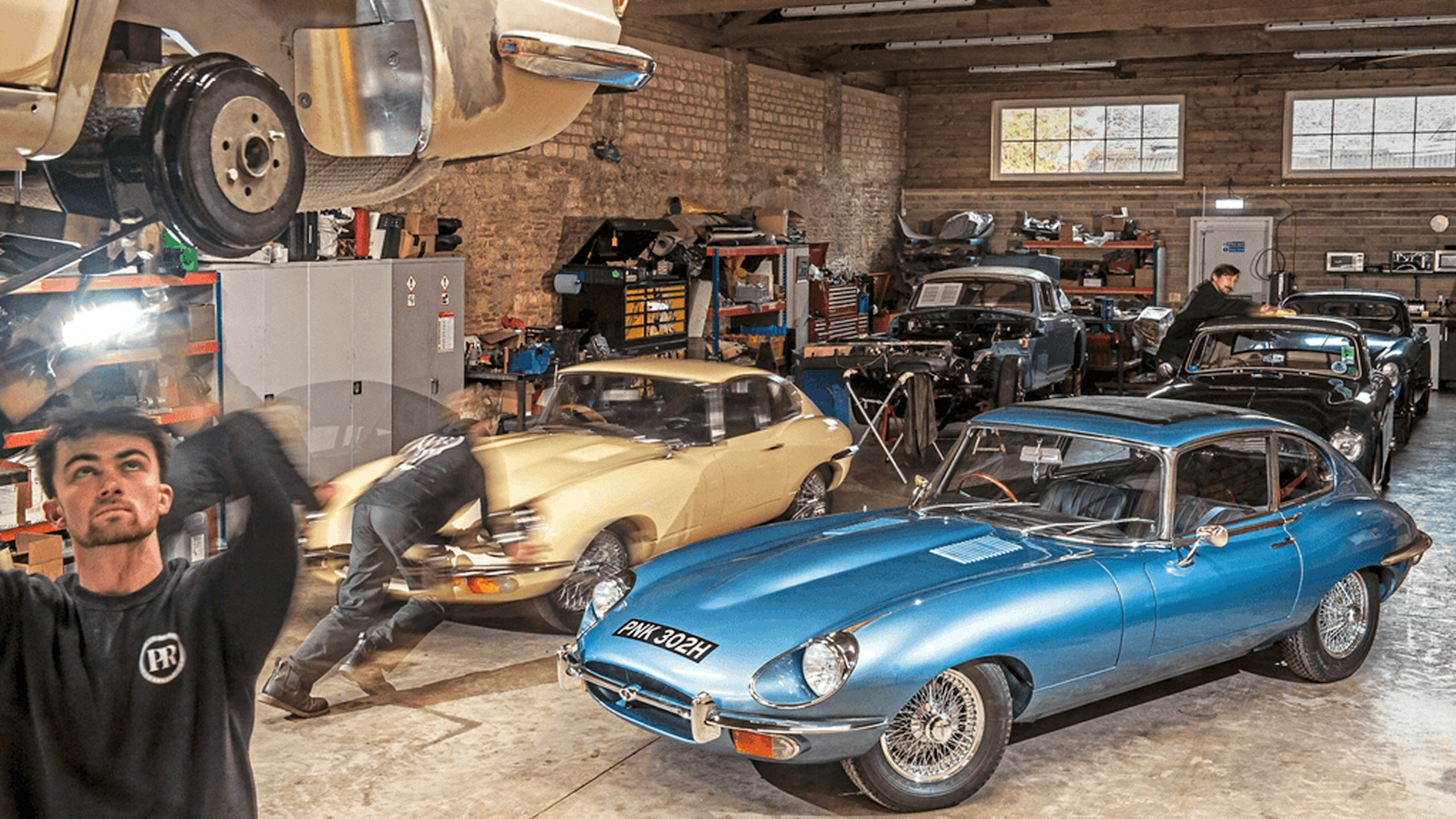
[ Epic Restoration ]
A thorough 100-point restoration on a valuable flat-floor Jaguar E-type is commonplace, but on a rusty 1969 2+2 automatic? That takes serious dedication
Words NIGEL BOOTHMAN Photography LAURENS PARSONS
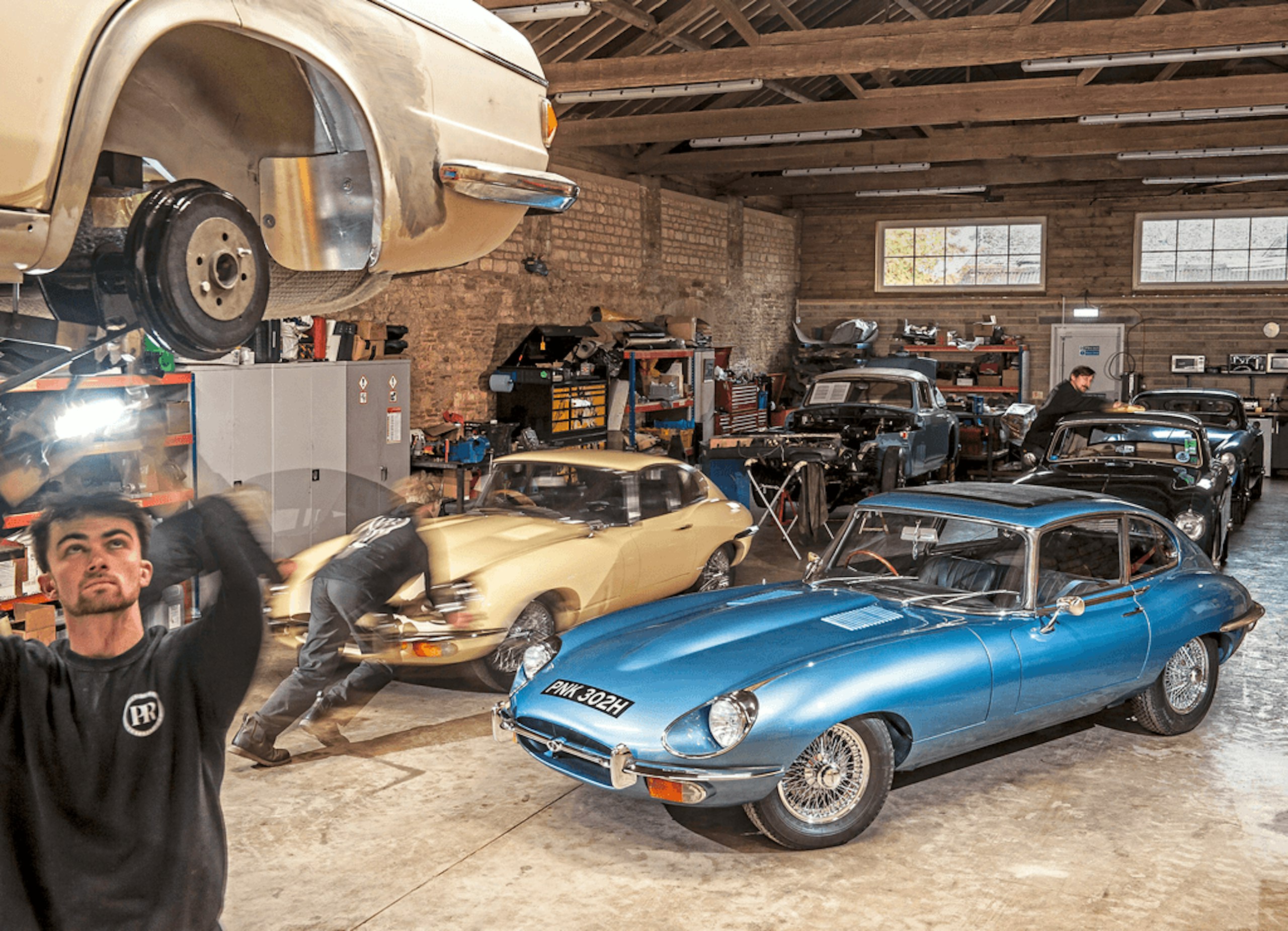
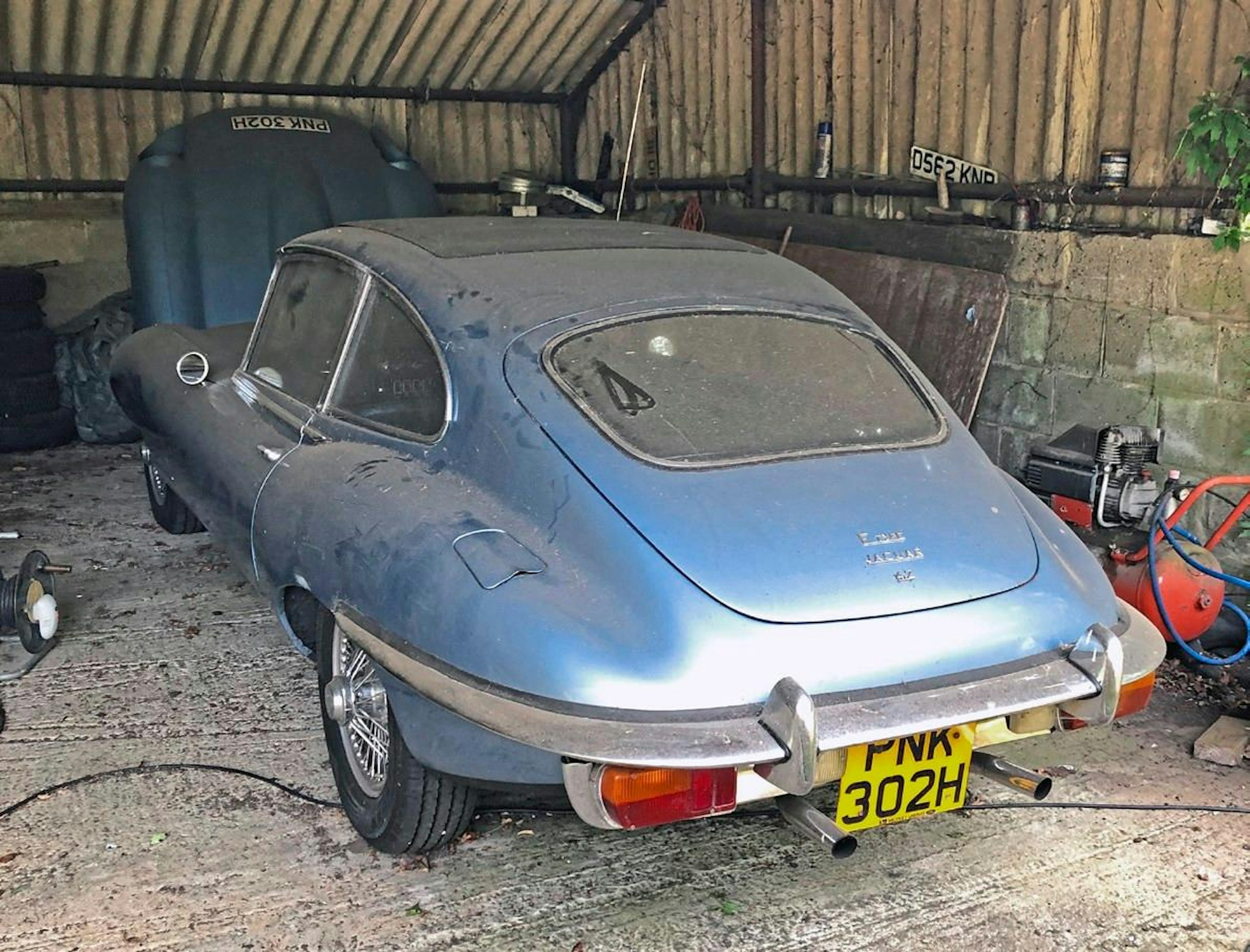
I remember the Jaguar from as far back as 1984,’ says Angie Owen of her dad Melvyn’s 1969 Jaguar E-type 2+2. ‘Dad would never let me drive it, but about 20 years ago it went away to be stored in a farmer’s barn, and my partner Steve Evans started joking with Dad that because he wasn’t using it, he might as well let us have it. In 2019, he agreed!’
In 2021 a tired-looking E-type went to a restoration company for a paint repair to one sill. Surface blisters were knocked off, a bit of probing and scraping revealed more rot, and the decision was taken to remove the paint and give it a proper respray. Which uncovered so many problems Steve and Angie soon found themselves taking on a full restoration.
Before all this had kicked off, the couple had taken the car to a garage for mechanical work that would make it roadworthy. That done, Steve and Angie were able to enjoy a few car meets and dog-walking trips and fell in love with the Jaguar. This meant they wanted to bring it back to a more presentable state, hence the paintwork with Hightone in Oxfordshire, now reborn as Petroyle Restorations in its location next to Chalgrove Airfield.
When Steve and Angie heard the news about the state of the bodyshell, they had to decide what to do next. Steve sums it up. ‘We thought we’d have it acid dipped, and see what came back.’
The point of no return
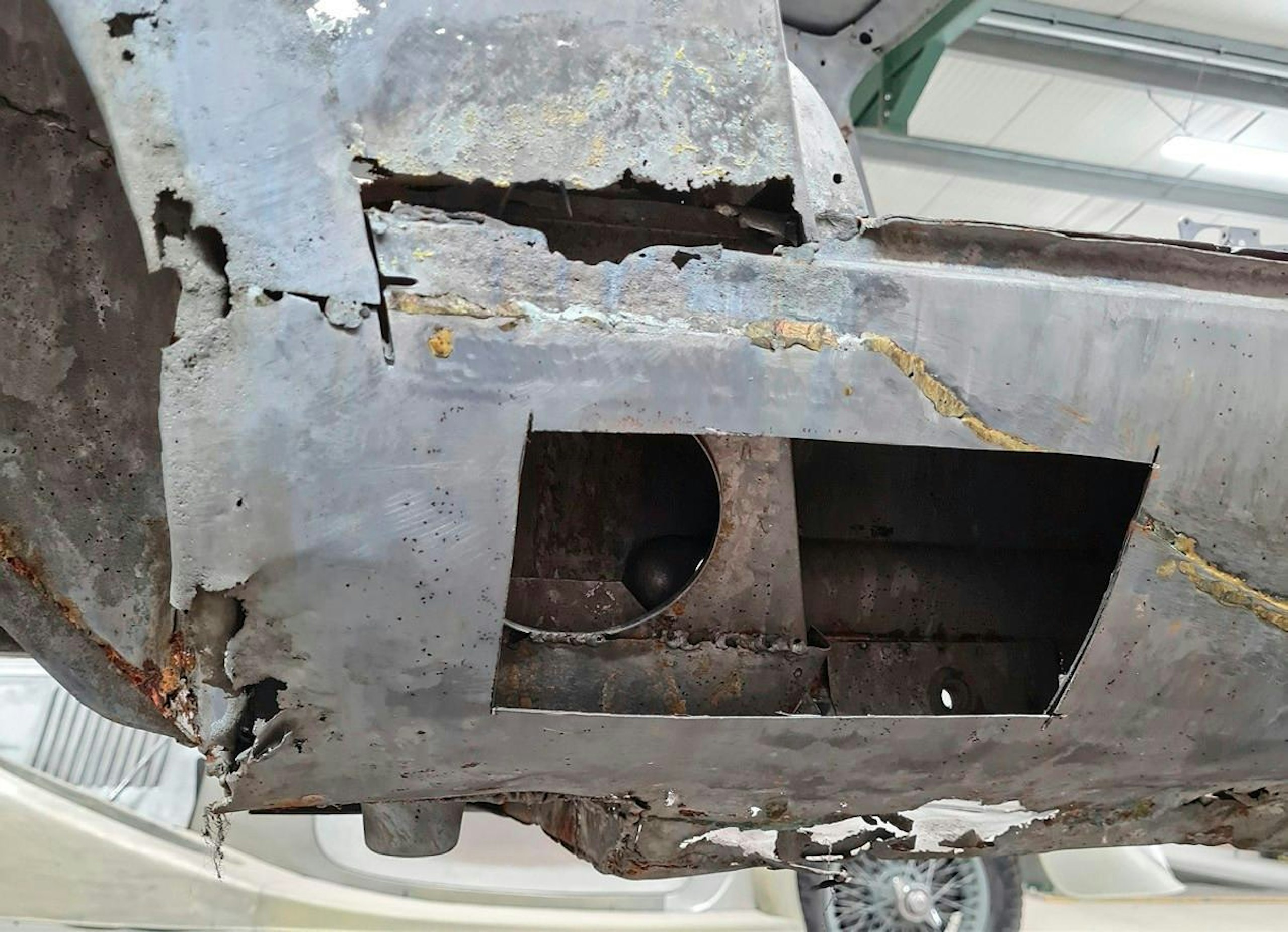
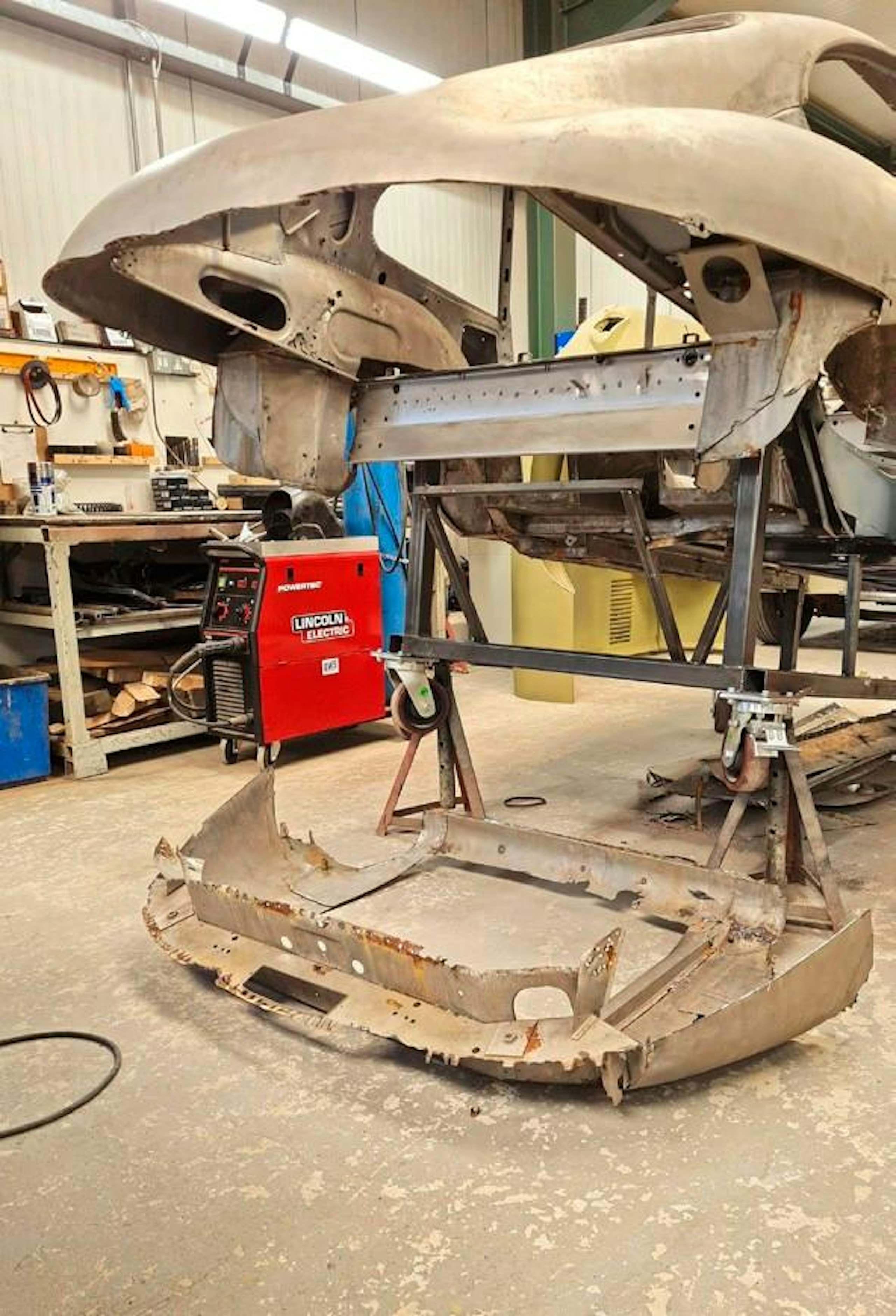
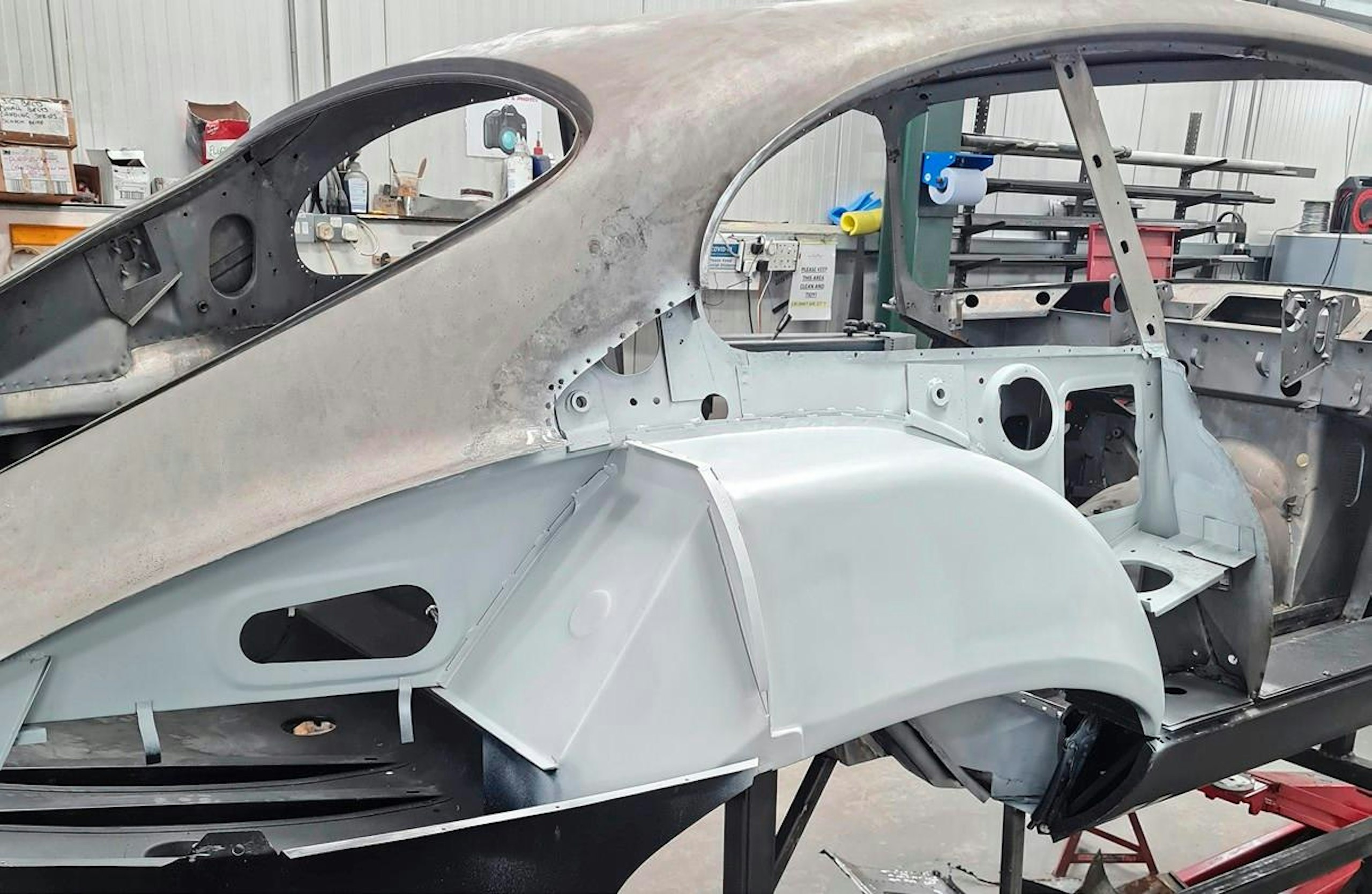
The team at Hightone stripped the car so the bodyshell could be dipped. What came back looked more like a colander than a car. Suddenly, Steve and Angie were at the point where the cheapest way forward was to scrap the ’shell and sell the leftovers. For them, though, this was never an option. ‘The car has a lot of sentimental value,’ says Angie. ‘We just had to get on with it.’ Fabricator Steve Fuller had the job of turning the colander back into an E-type ’shell.
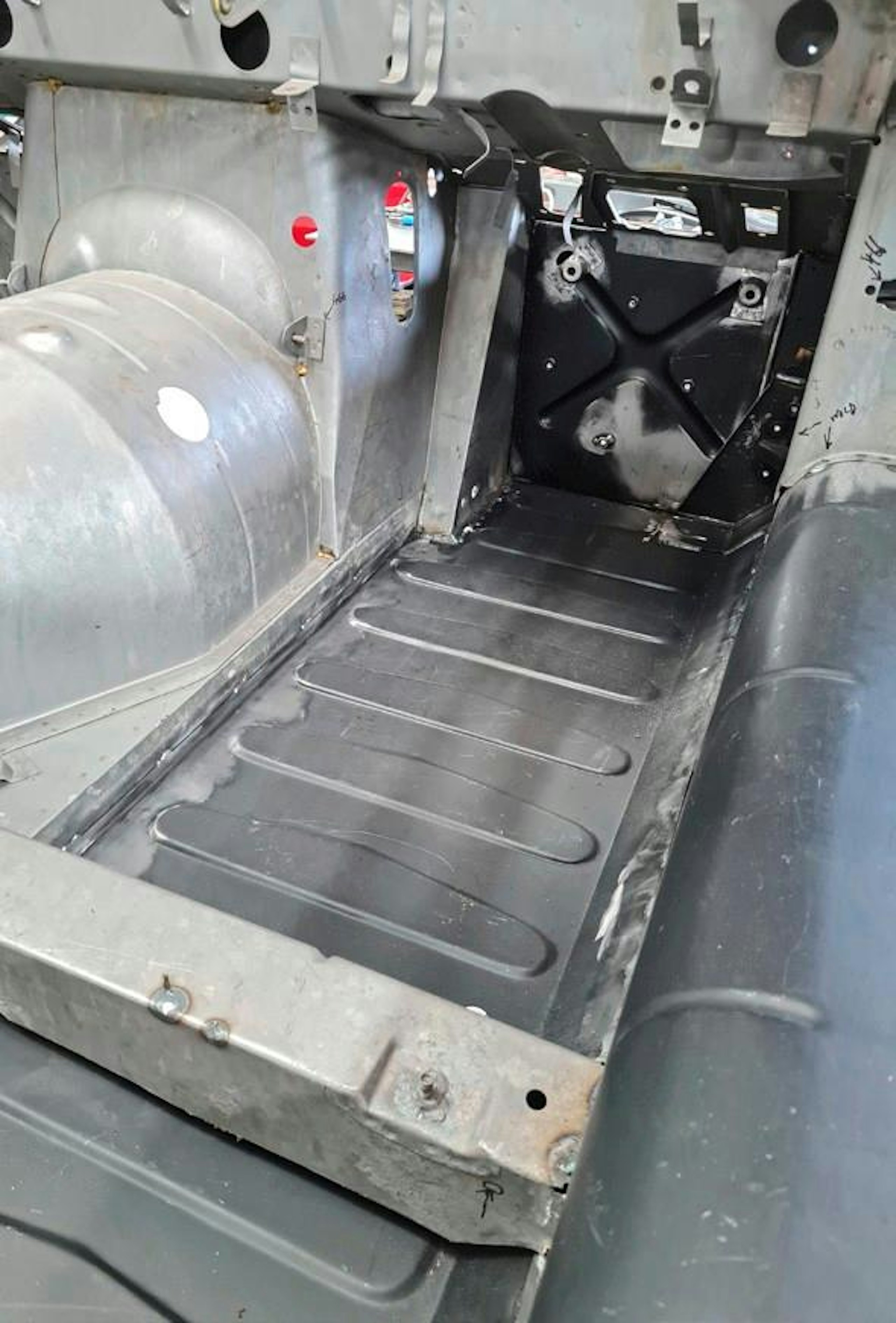
‘I just did one piece at a time,’ he says. ‘Unless the car is a total wreck, you can take a sill out and put another one in, and it’s not going to distort. I preferred this to cutting it almost in half to replace the floors, sills and bits of bulkhead it needed, relying on braces or a jig. It takes longer, but it’s worthwhile to keep the dimensions original.’ How much had to be renewed? ‘Quite a bit. I also had to fit new quarter panels, new doors and a third of the bonnet. The rear quarter panels took so much fitting – they were short at the front, where each one meets the back of the door aperture. I had to extend each panel by slicing the end off and inserting a strip of steel, which I managed by TIG-welding it to leave a smaller, more workable weld. Then I could get a dolly behind it and tap it to shape.’
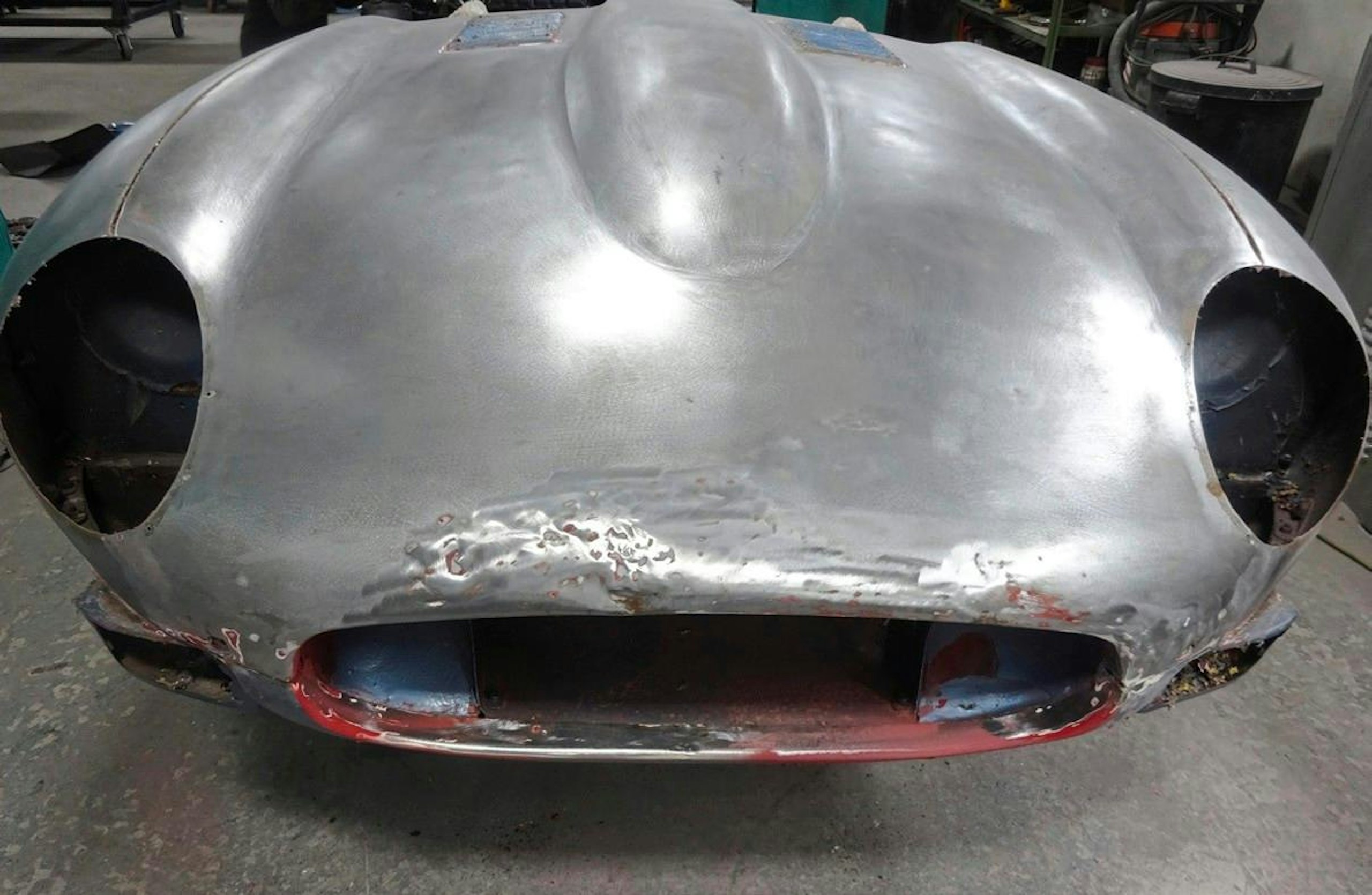
Steve also fitted a new panel that forms the underside of the E-type’s tapering tail, plus several little flitch panels and fill-in sections inside the front and rear corners of the cabin. The top of one windscreen pillar was only attached to the roof by a lacy strand of rotted-out steel and had to be re-made. ‘Someone had hacked holes in the cabin floor to get at the inboard rear brakes,’ says Steve, ‘I put that right. Getting the bonnet to fit took a lot of patience, but in the end I could lead-load all the body joints and hand it over for paint. I was on it for about a year.’
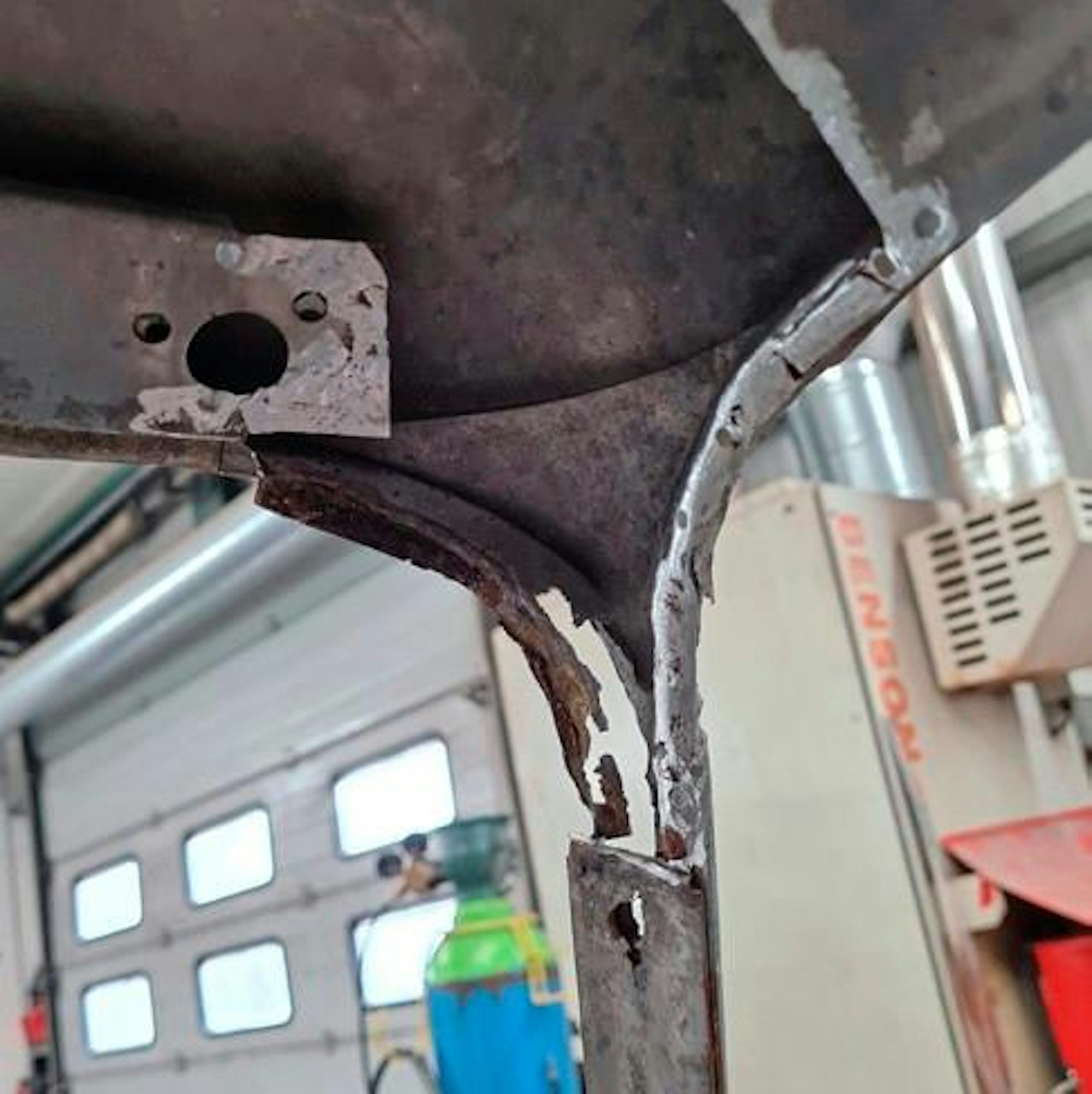
‘When it came back from the acid dip looking like a sieve. There was hardly a panel that didn’t need repairing or even replacing altogether’
Steve Evans
Drop coats and dry sanding
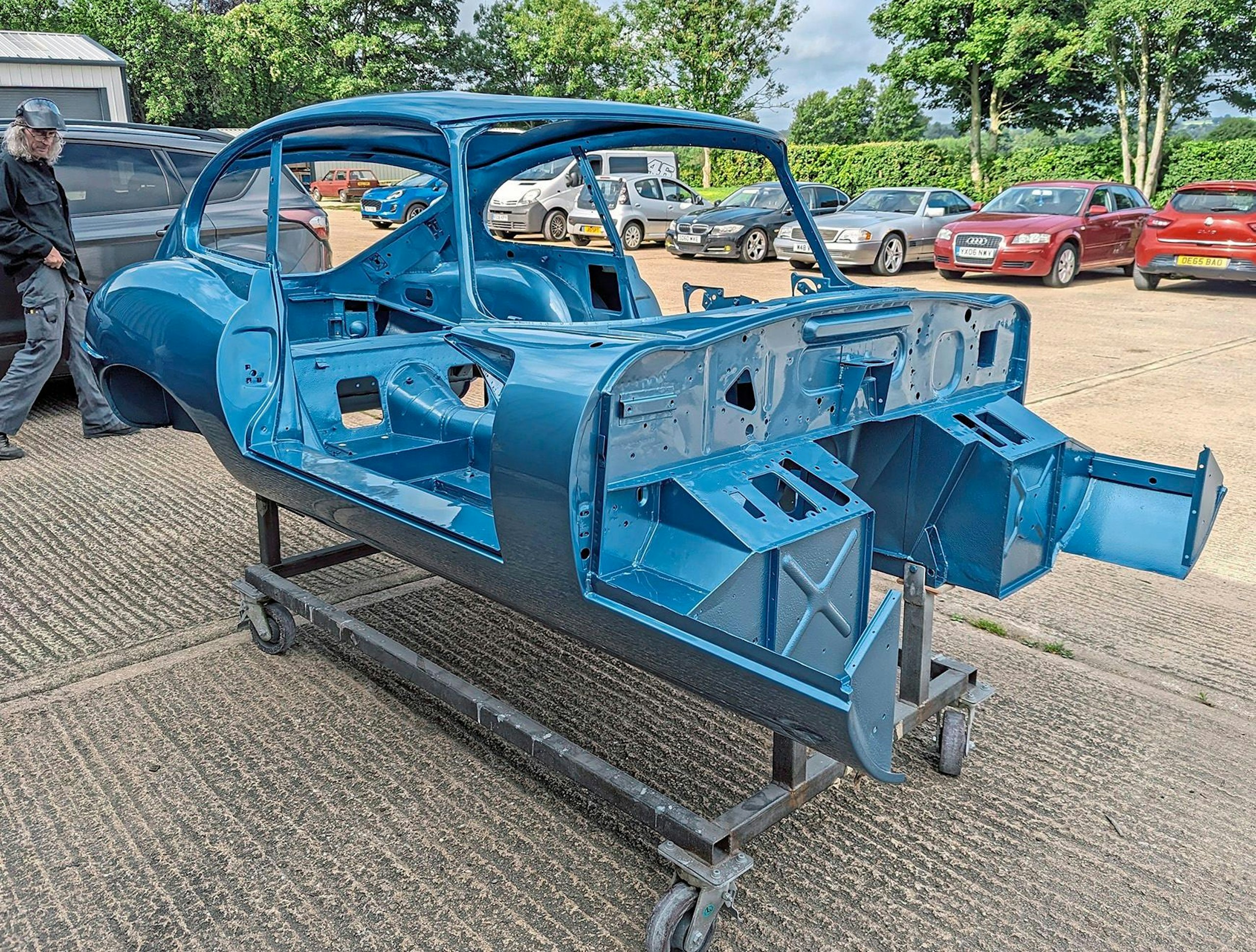
Paint technician Dickie Aust started his work on the Jaguar with an all-over sanding, to key the surface while checking for any defects that would need correcting before paint. ‘I used epoxy primer inside and outside,’ he says, ‘then a tiny bit of work with fine filler to perfect it. Next, I re-primed everything, then seam-sealed it before using a spray-on two-pack stone-chip coating on the floor and the boot, and underneath.’
Next, for the parts of the body that would be on show, Dickie used a different primer that carries more paint solids and can be wet-flatted with 800grit paper to give the best possible surface for the colour coat. Dickie has two useful tactics when painting metallics on older cars, as he explains. ‘I use a medium solids or MS paint, because using a high solids metallic, even if it’s mixed to a period colour, can look too bright and flashy – too modern. Then, when applying it, I end with a “drop coat” – you turn the air pressure down a bit and widen the fan on the gun, then apply it both side to side and up and down. You barely put any more paint on, but it makes the metallic content lie down.’
This solvent-based colour coat needs no flatting, so once dry, Dickie could apply three coats of clear lacquer. Here again he has a clever approach. ‘When the clear coats were cured, I dry-sanded them using special discs that need a specific sanding machine. I never would have touched this process before I tried it, but now I’m a convert.’ See the ‘My Favourite Tool’ panel (p73) for an explanation of this new tech.
Trim trouble and tedious delay
As so often happens, beautiful new paint made the owners reluctant to reinstall tatty old interior trim. So, the car went off as a rolling ’shell to a trim specialist whose photos of attractive work seemed promising. After a long six months, it came back and workshop manager Todd Tuffney was not impressed with the results.
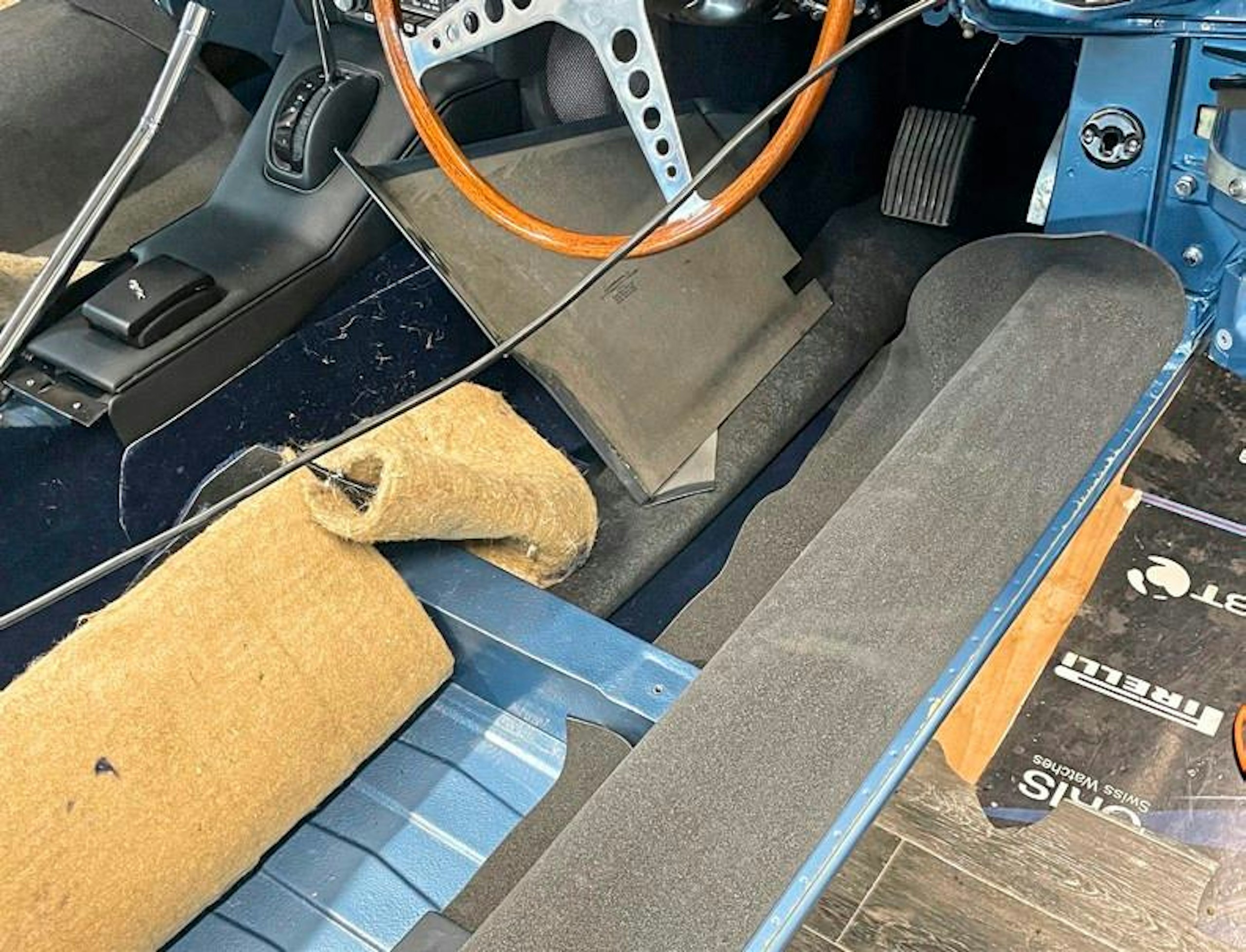
‘I created a snagging list, and it was two sides of A4,’ he says. ‘For example, the Webasto roof was folding the wrong way – effectively back to front – and there was spray glue everywhere, even on the spare wheel. So, they took it back again.’ Another six months later, and there was still a lot wrong with it. ‘Steve and Angie decided to cut their losses,’ says Gregg Alvarez, Petroyle’s managing director, ‘We had to find someone to sort it. Luckily, we knew Gez Nahoulakian.’
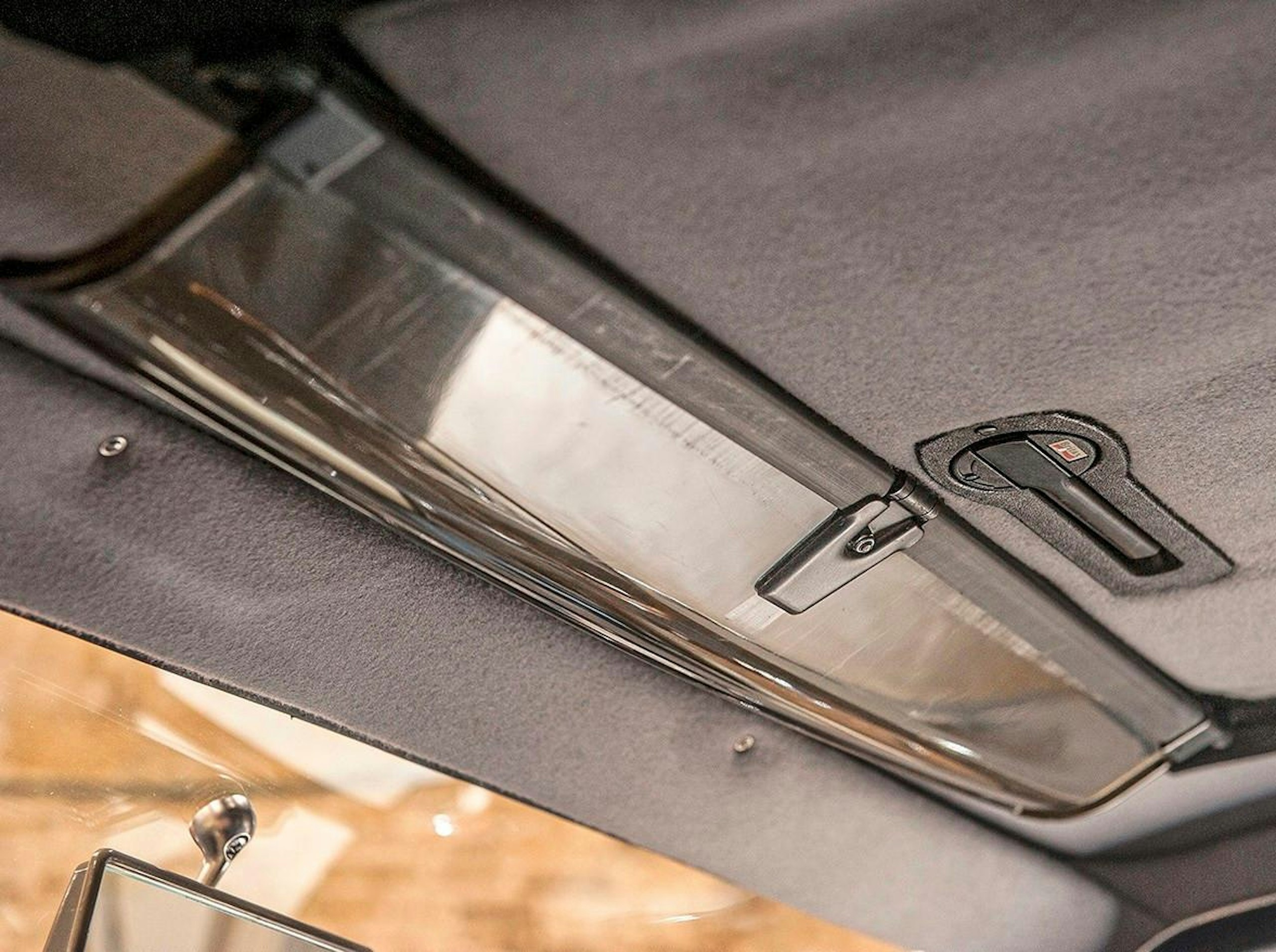
Todd began by sending pieces to Gez and his father Paul that could be done off the car, such as dash and centre console, then in January 2025 the Jaguar went to Nahoulakian Trimmers near Abingdon. Gez describes what he had to do. ‘I ended up working on almost every aspect of the interior. Parts like the seats and the dash had been covered using re-trim kits, which are made to one pattern and might not fit every car perfectly – so it takes some skill to get them right. You have to ensure the flutes in the seat covers line up and that it’s all free of wrinkles, so it’s a lot of pulling, stretching, checking and even heat-treatment to achieve that.’
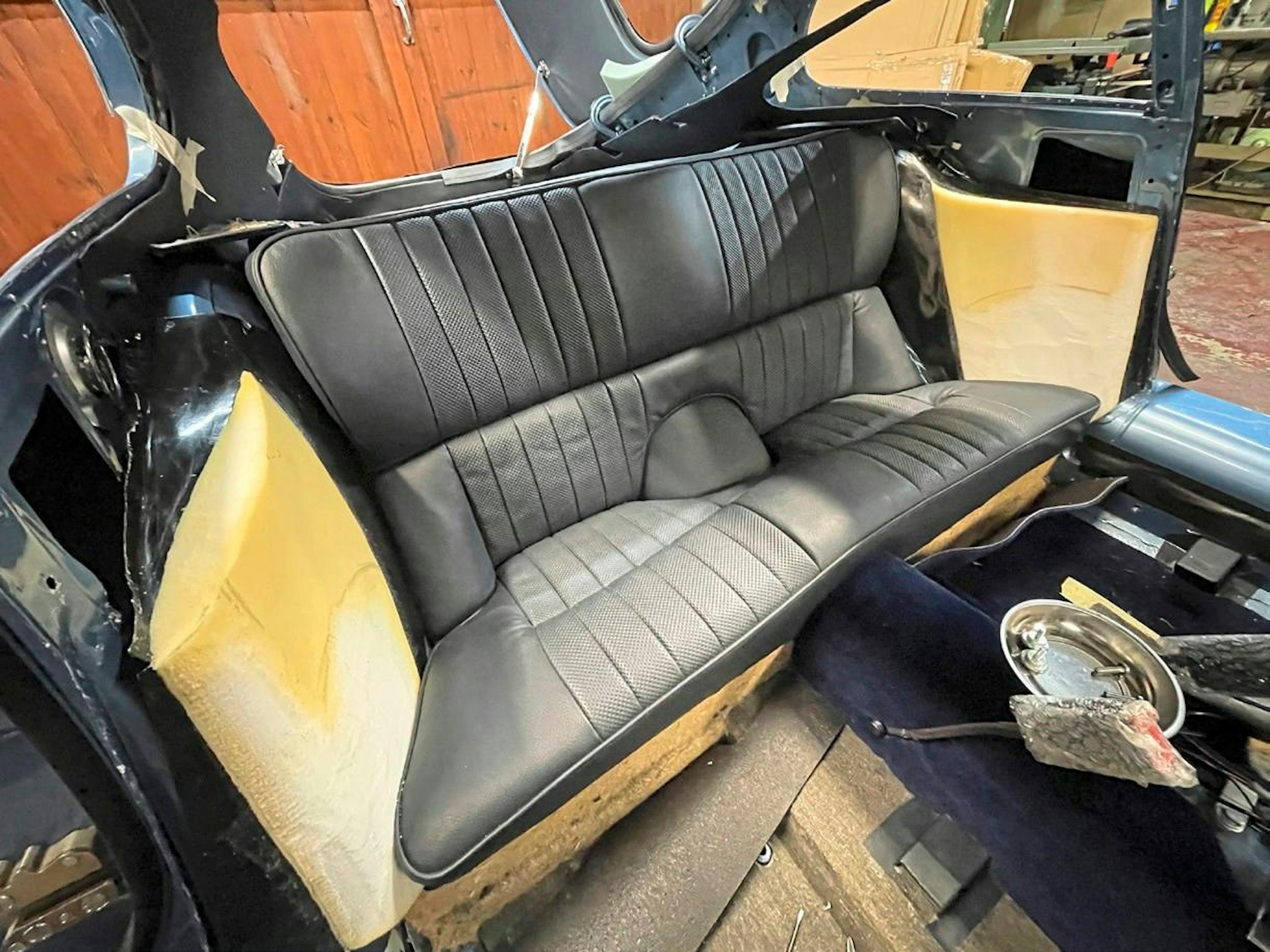
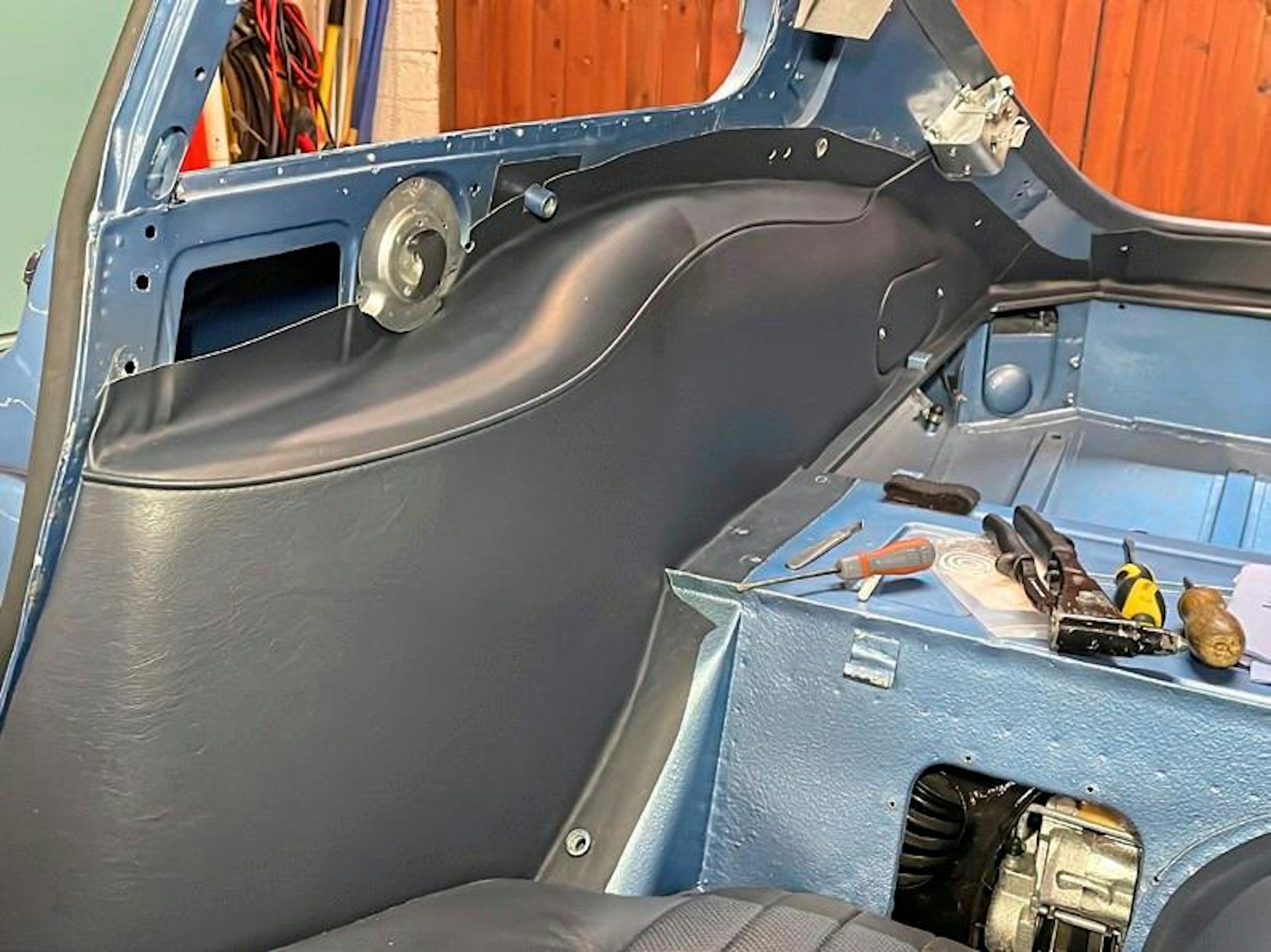
Gez re-trimmed the headlining, which had been installed with a visible gap between the fabric and the horseshoe-shaped finishing trim that runs round the back of the roof, and had to re-do the sill trim and door cards for similar reasons, where incorrect foam thickness or lack of care had led to eye-catching flaws. By far the biggest challenge was the inside rear quarters.
‘You need to figure out the right foam profile, then foam and trim the front edge, clip it in place and pull back into the boot to keep it consistent. It’s trimmed directly onto the car, and there are access panels into the rear wheel arches to get at bits of the loom – which the previous trimmers had covered over!’ Another three months of effort, much of it involving Gez working while lying in the car at uncomfortable angles, saw the job completed. ‘My Wiggly Yoga classes came into their own!’
Concours mission creep
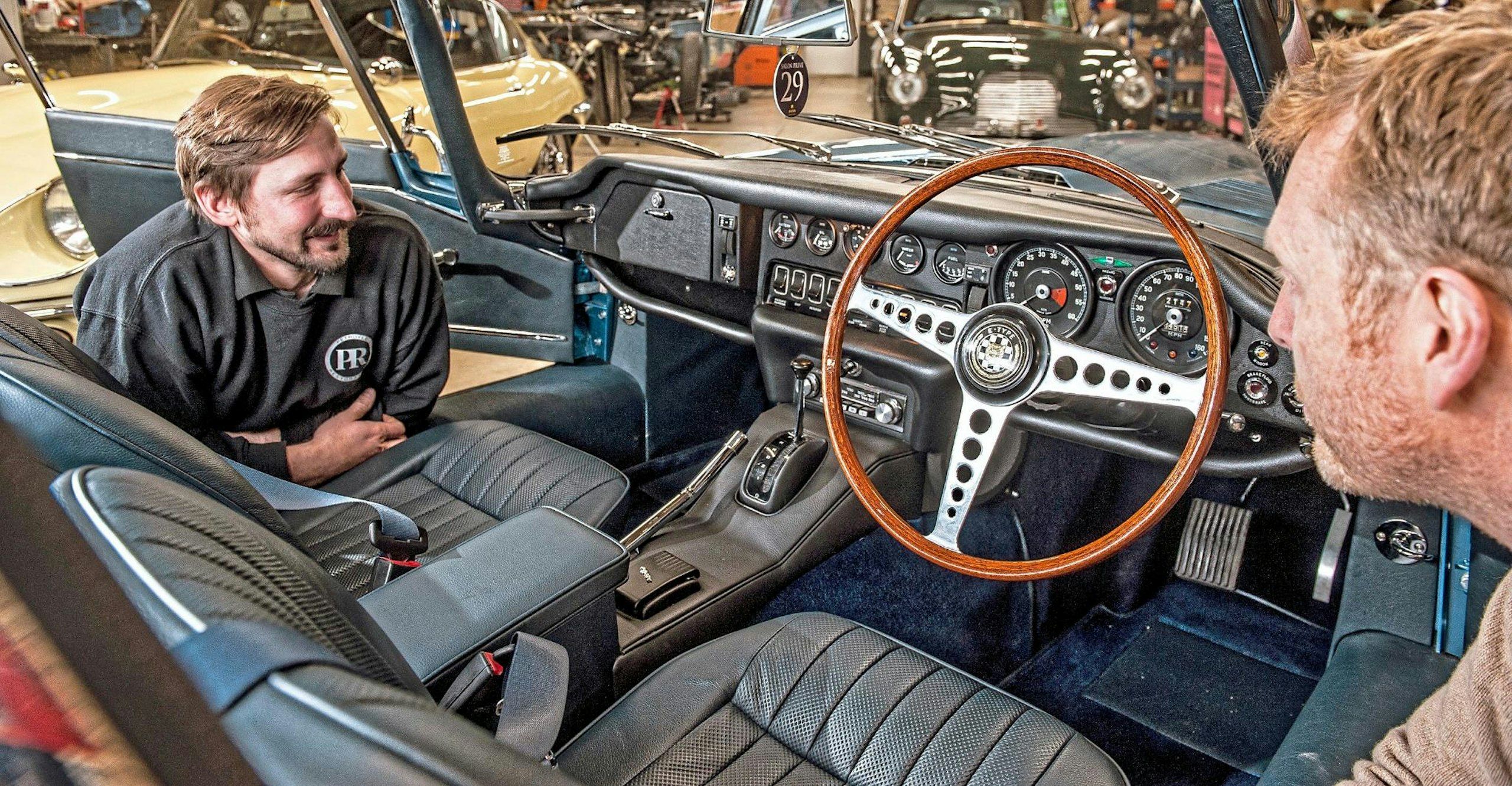
Not long after the car came back from its first unsatisfactory trimming, Petroyle had invested in some profile-raising publicity by exhibiting at Salon Privé in 2024. The team brought the E-type along as a painted ’shell, to show what they could do. This turned out to be a fateful day, as Steve and Angie left Salon Privé with a new idea.
‘The car was displayed on axle stands,’ says Steve. ‘But it got loads of attention. That day, as we left, I said “I’d like to get our car entered here.” From then on, we had to go to the next level.’ This had a direct bearing on the engine rebuild. When the restoration process started, the E-type was a runner, says Todd.
‘We checked compressions, cylinder leak-down, oil pressure and so on, and it was in good shape. But with everything else that was going on, Steve decided he also wanted to upgrade the engine cosmetically. So, we stripped it to a short block, and then when we measured the cylinder head, we found the face was actually warped, because the whole head had twisted. It had probably overheated – the waterways were full of sludge.’
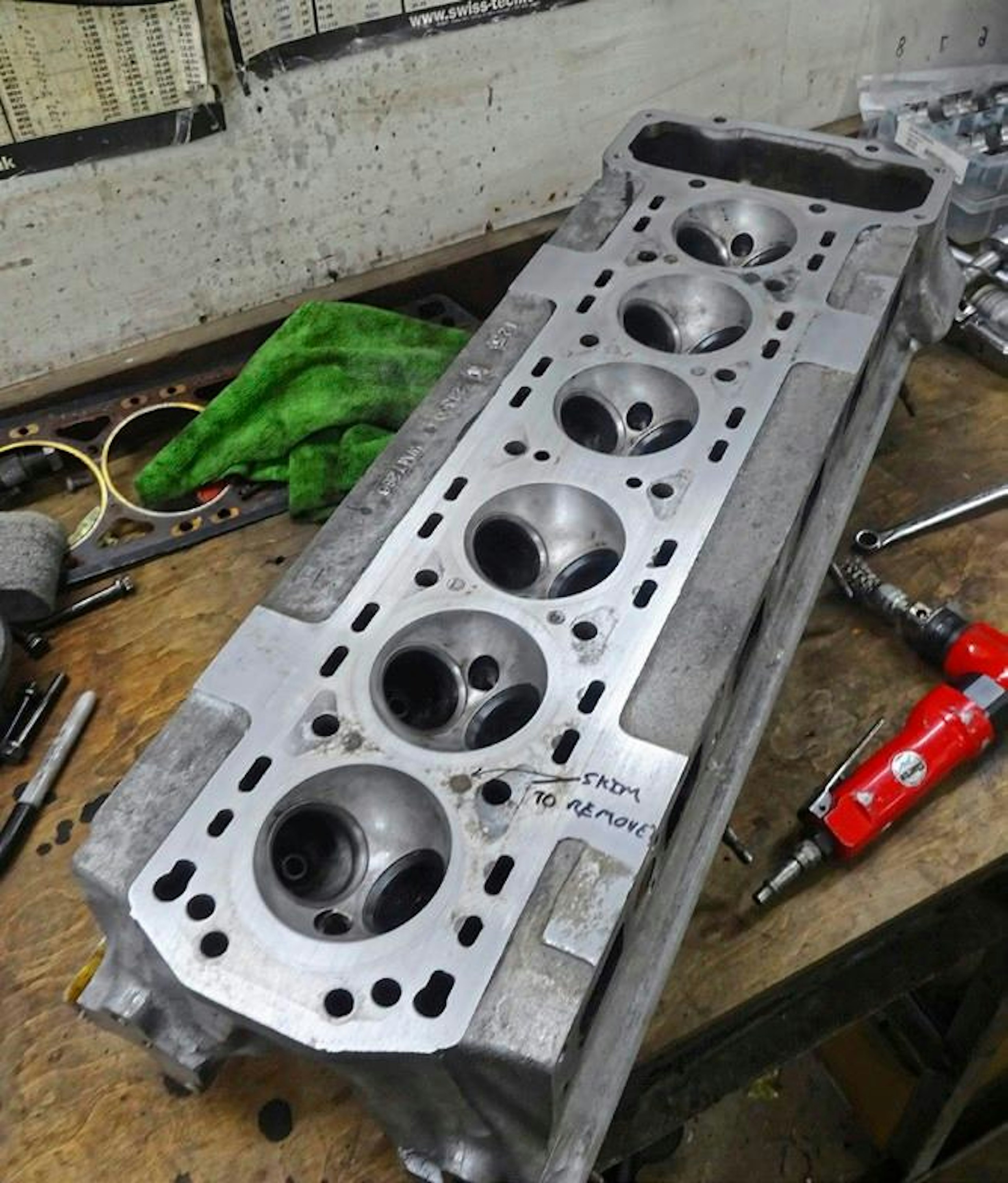
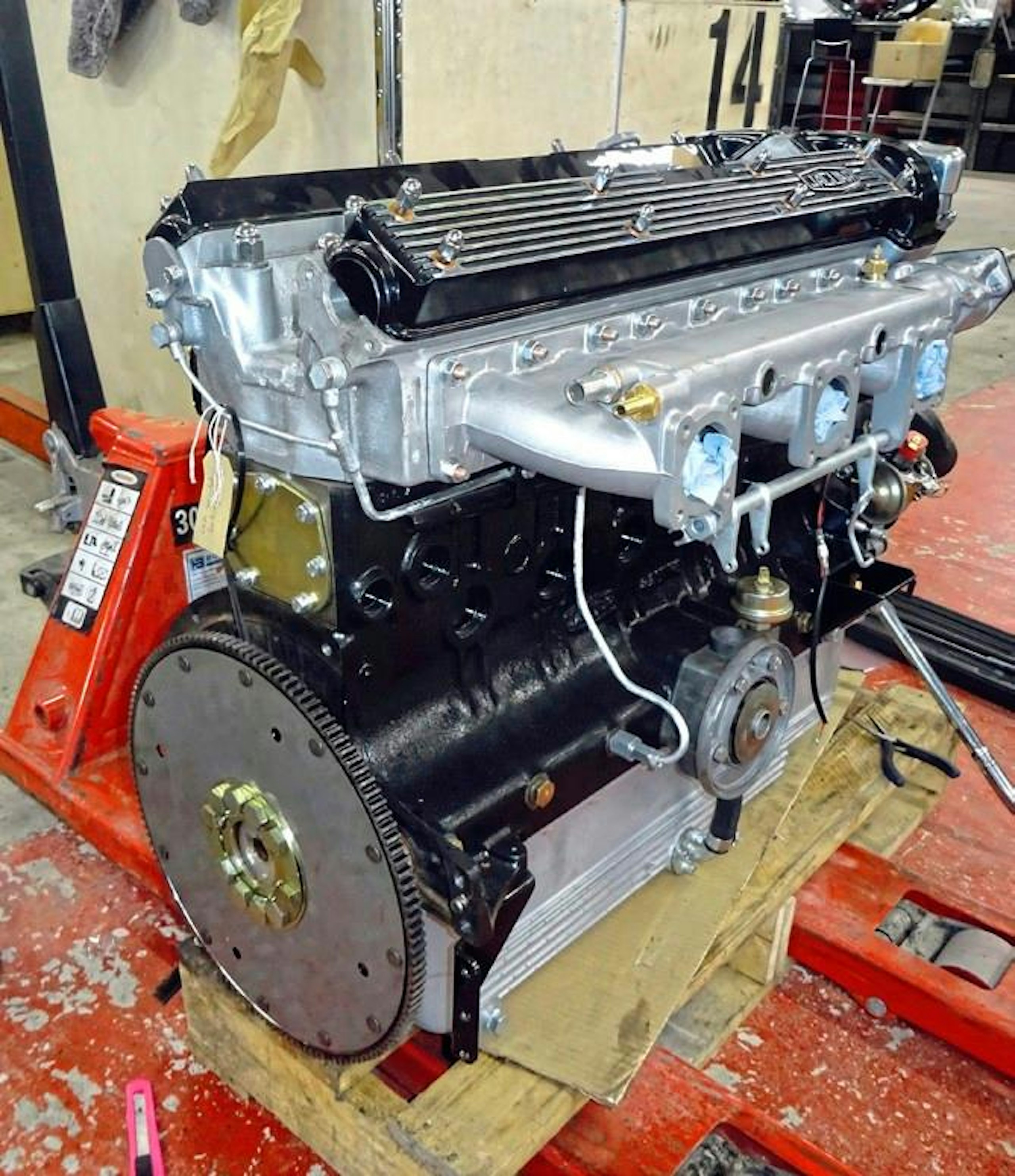
Though the cylinder head gasket had so far taken up this twist without blowing, the warping had also affected camshaft journal alignment. One journal had ‘picked up’ – a mark showed excess heat and wear. Todd and his team investigated line boring it but instead found a good used ’head to rebuild.
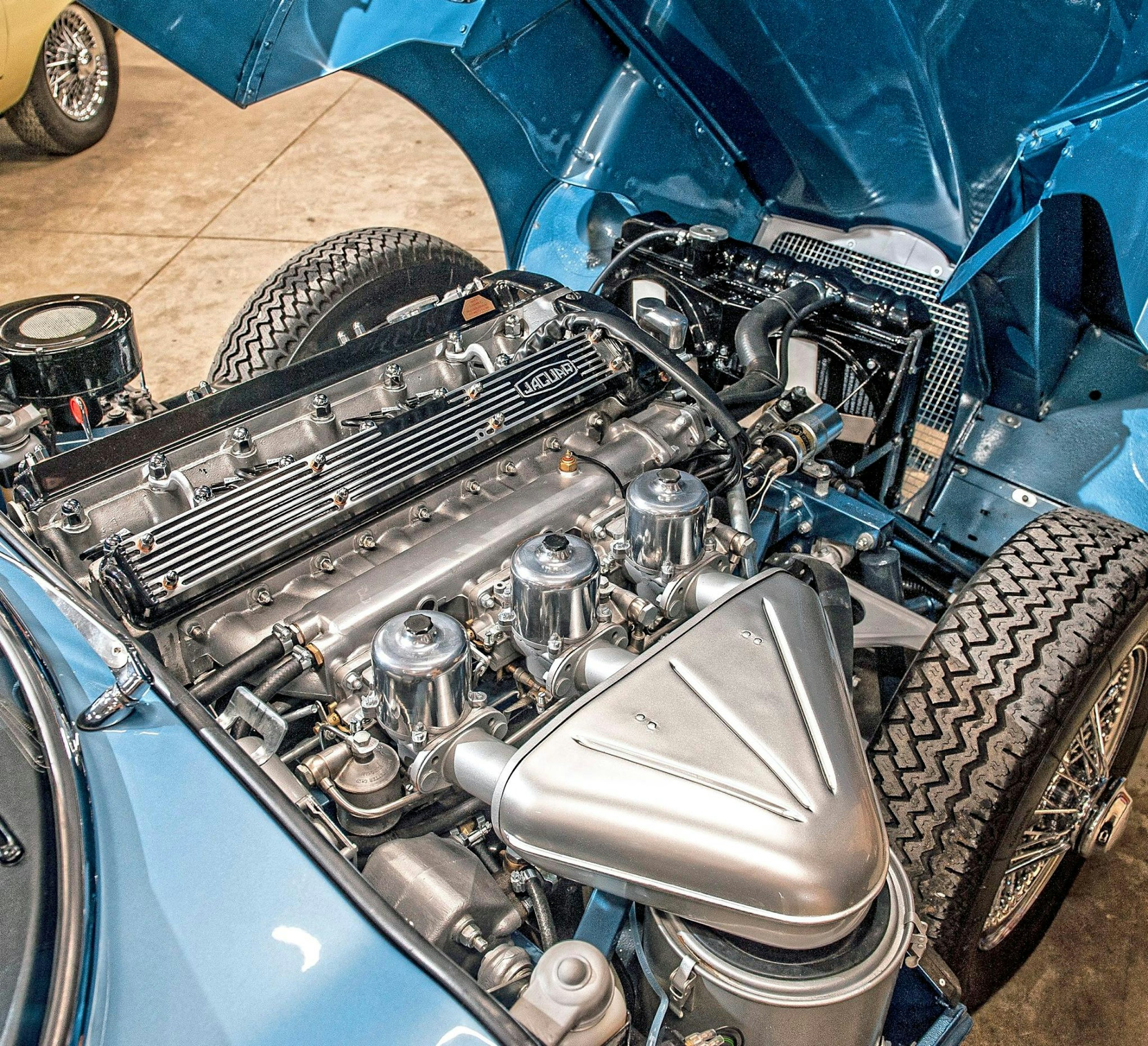
‘We replaced the valve guides and lapped in the valves,’ says Todd. ‘We built the engine up with a new timing chain and seals throughout. We rebuilt the SU carburettors in-house, vapour-blasting and polishing the dash pots and rebushing the spindles.’ When the engine was back in the car once more, Todd took the Jaguar to Stanton Motorsport in neighbouring Wiltshire, where Steve Stanton performed some impressive feats to get it running perfectly, as Todd explains.
‘New SU needles aren’t always correct to the engine they’re intended for. These needles have stages, which vary minutely in diameter to alter fuel supply through the rev range. Steve operates the rolling road, adds a lambda sensor, checks where in the range it’s running lean, takes a minute amount off the needles by touching them with emery paper as they’re spun in a lathe, then re-checks and repeats the process until it’s perfect.’
Taking that drive to the rear axle was the car’s original Borg-Warner Model 8 automatic gearbox, reconditioned by a company called Borg-Warner Specialist with branches in Hertfordshire and Leeds that focuses exclusively on BorgWarner transmissions.
High point
‘The class win at Salon Privé. We were so happy, not just for ourselves but for the whole team to get some recognition’
Angie Owen
Obsessive, moi?
Matty Heron, Petroyle’s mechanical restoration technician, will always have an attachment to this E-type. ‘It was the first classic car I ever touched,’ he says. ‘I was on my trial day at Hightone when Todd told me to run a tap through every thread on the Jaguar’s bulkhead. A year later, when it was repaired and painted, I was then building it all up.’
And in doing so, Matty had his first experience of building a car to concours standard. Was it fun? ‘It can be a nightmare… you end up overthinking details, like how much thread should be sticking out of a fixing, so you find a slightly shorter bolt. Soon I was lining up slotted screw heads, but Todd doesn’t like this, because it can mean things are not equally tight. But I was polishing stuff no-one would ever see. For example, the brake pipes look pristine. From the factory they were steel, but we wanted to use kunifer, a copper-nickel alloy, for a longer life, so we actually got the orange kunifer plated to look like steel.’
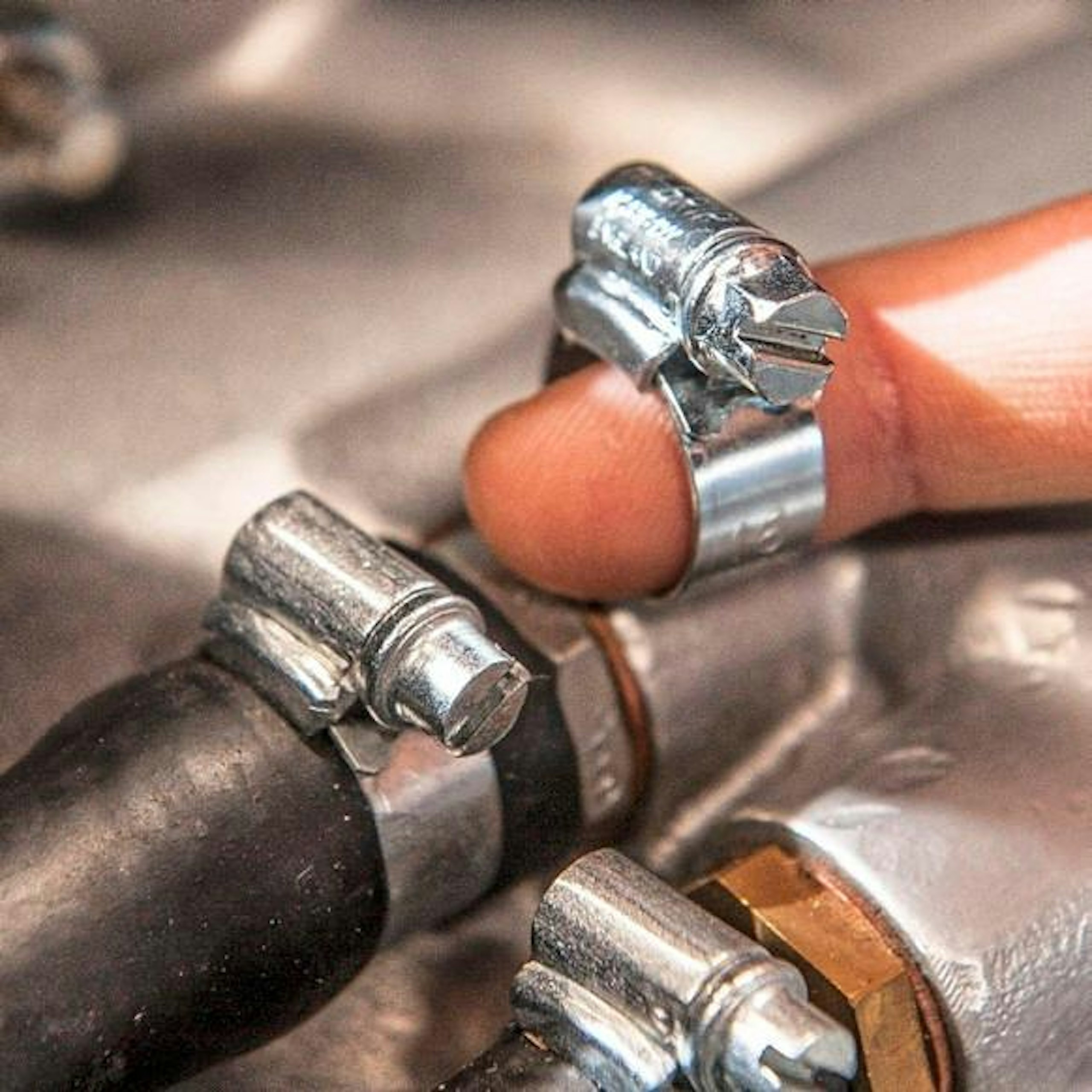
Todd chimes in, telling Matty not to give away secrets like this, but Todd’s own levels of nerdy obsession make Matty’s efforts look sensible. For instance, Jaguar originally fitted Cheney hose clips, but they are no longer available, so Petroyle usually uses Jubilee Hi-Grip clips.
‘But that seemed a shame,’ says Todd. ‘I realised you could take the Jubilee clips to bits, turn the heads down to remove the hex, then sand and polish the numbers off – and send them for re-plating. I told Steve about this, warning him that it would cost a good many hours, and he said, “Well if it’s correct, we’ve got to go for it.” So, all the clamps are now like that. He’s an amazing customer, such a nice guy and so committed to seeing it through.’
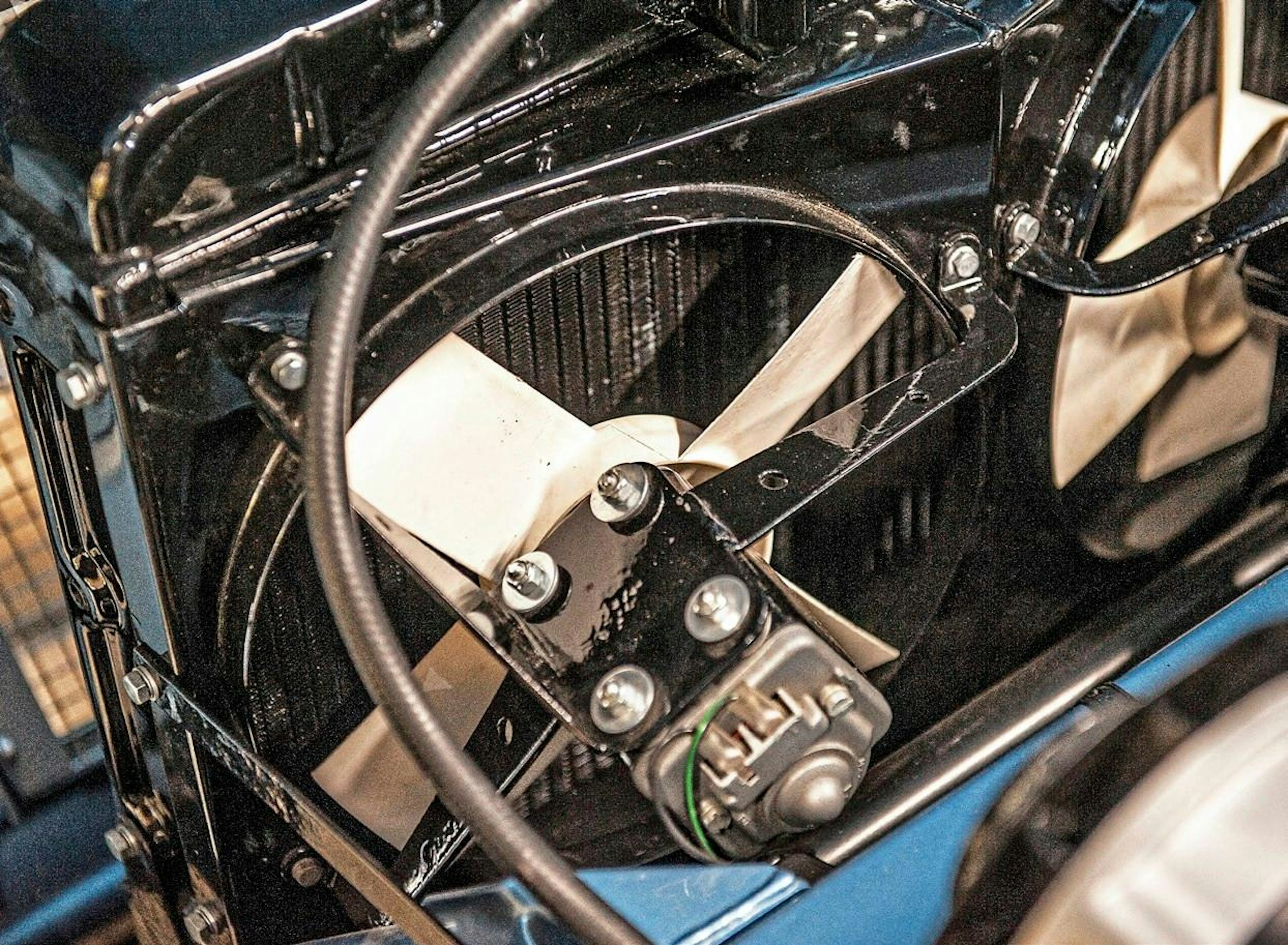
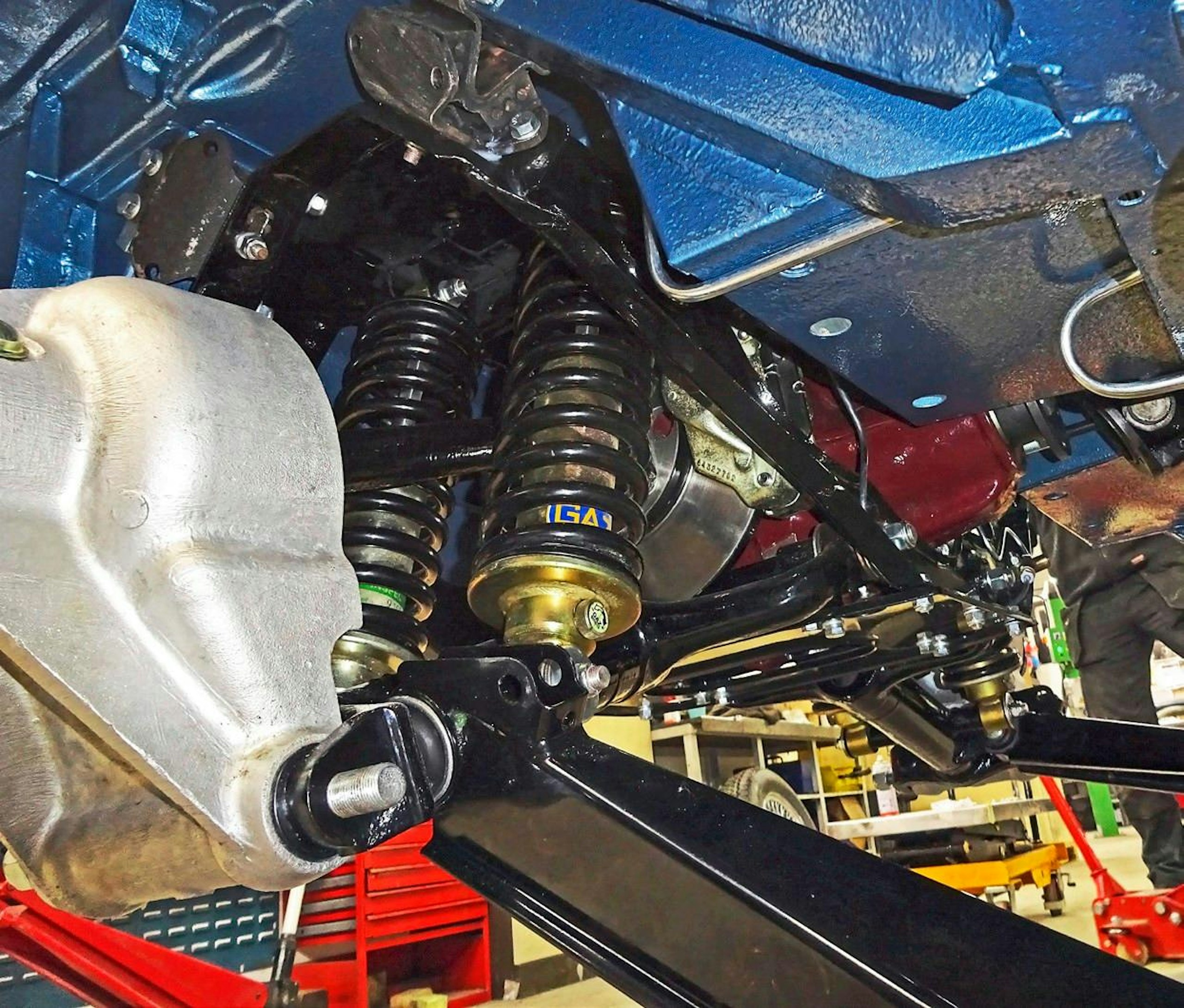
The front suspension components for the E-type were originally cadmium-plated, but that’s largely been outlawed, so Petroyle found a paint that was virtually identical in appearance. A remarkable number of the under-bonnet components are the originals, revitalised using modern methods, such as vapour-blasting the plastic fan blades. So where do you stop?
‘The aim is not to make something look better than new,’ says Todd, ‘but to make it look correct while being an improvement on the way the factory did it. For example, the subframe construction at the front of the car was originally painted after assembly, so no paint got onto the faces where the pieces joined together, so they rusted. We painted it in bits, then assembled it.’
The cake needs icing
As the E-type neared completion, there were only a few more decisions to make and hurdles to clear. Steve, Angie and the team at Petroyle elected to fit brand new wheels rather than attempt to restore and re-plate the old ones – a wise move from a safety point of view, as well as a better aesthetic result – and while the brake servo was successfully reconditioned, the quality of the rebuild kit for the brake master cylinder left something to be desired. Which revealed itself at a crucial moment.
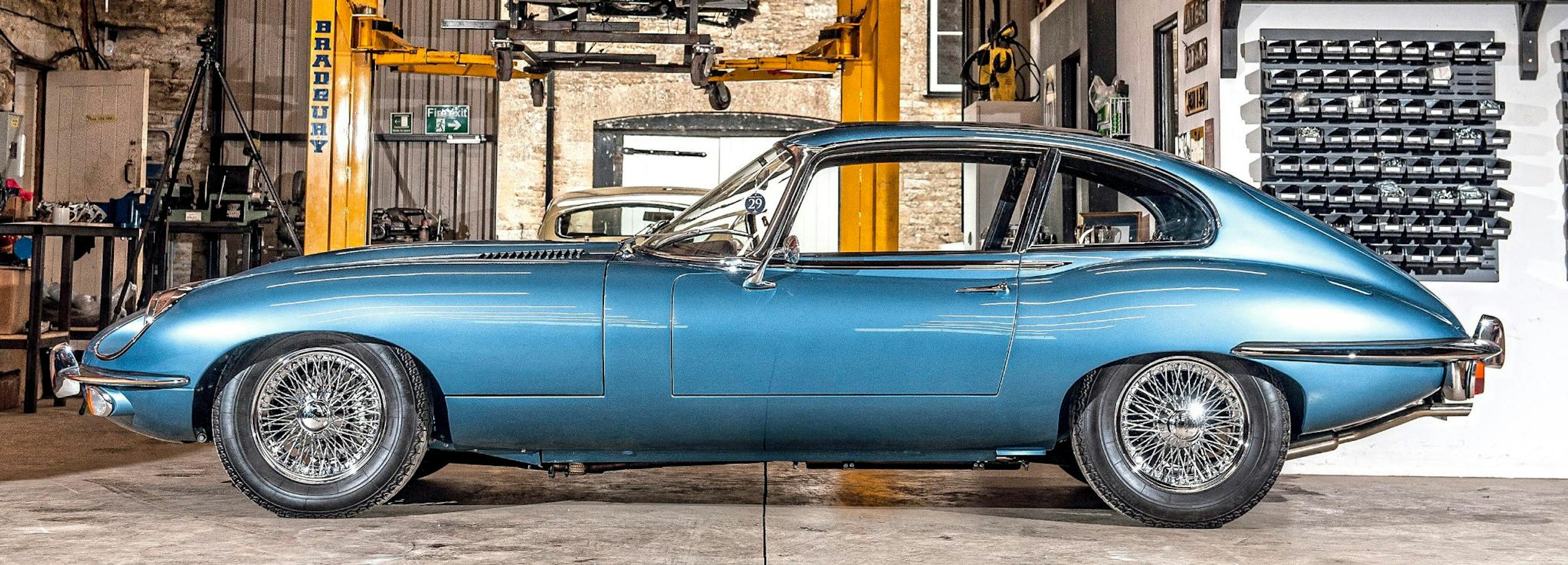
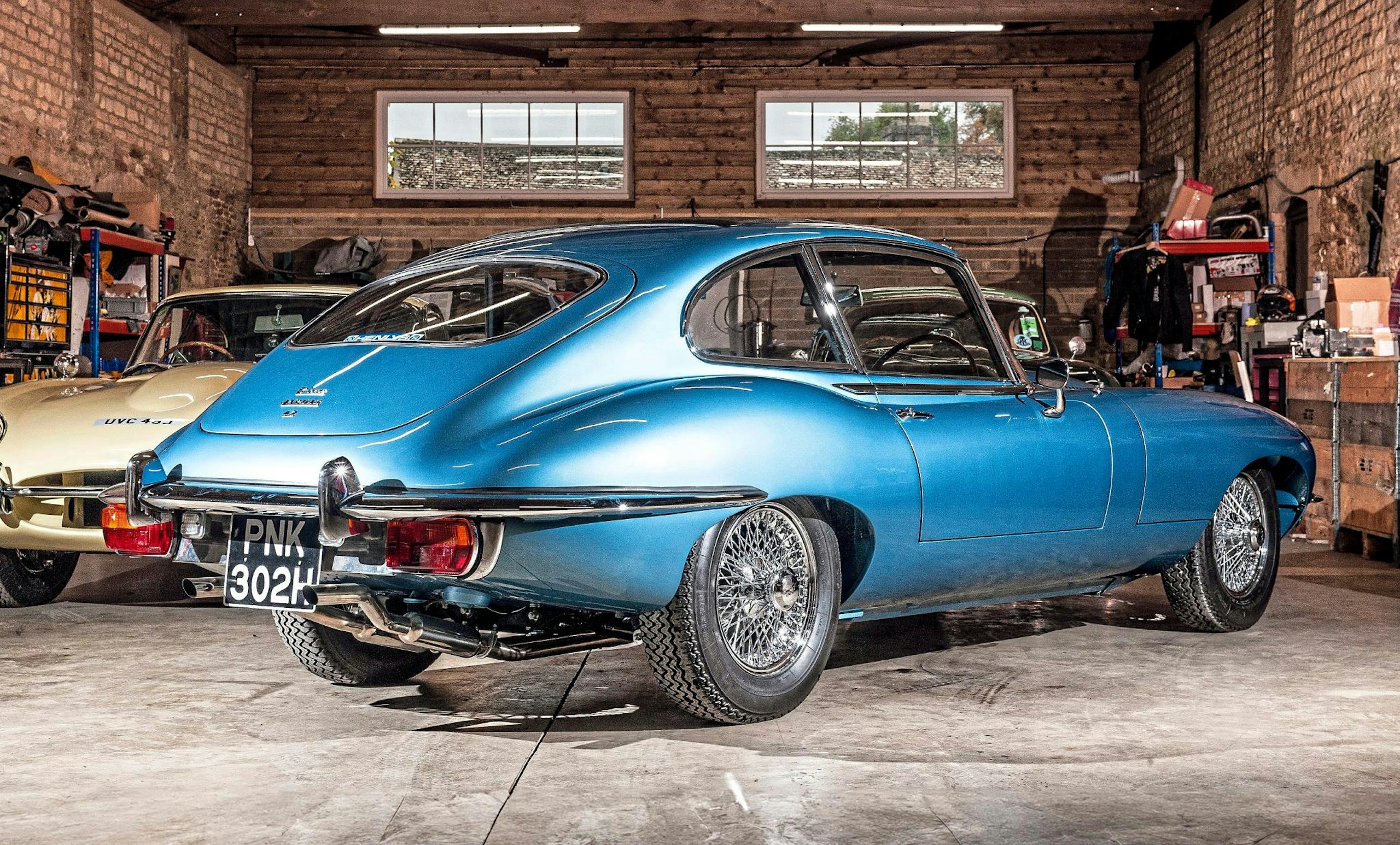
The first shock was the invitation to Salon Privé in September 2025. They had agreed to grant an entry to a car some might have thought wasn’t rare or special enough. Yet the E-type only just made it, as the brakes seized a couple of days before the event thanks to the dodgy rebuild kit, and Todd stayed all weekend to fix it. The second shock was when the car won its class. ‘We were stunned,’ says Angie. ‘That moment, driving up on the platform to accept the prize, was so euphoric. But at the same time, when they were passing this big trophy and a magnum of champagne through the window, I was thinking, “mind the paintwork!”’
This raises the question of what happens to the car now. It is intimidatingly perfect, which has scotched Angie’s original plan. ‘I wanted to drive it down into the village for a pint of milk, with the dogs in the back! But I’m not allowed to yet.’
Steve has been a part of the restoration process, with weekly phone calls with the team at Petroyle, discussing and researching details and guiding the route the restoration took – and also writing the cheques. So perhaps he has more reason than anyone to try and keep the car wrapped in cotton wool. But that’s not what he’s planning. ‘We can make some seat covers and take the dogs out. We’ll let it have its moment in the sun, then enjoy it.’ But that moment in the sun may not be quite over yet; an application to the 2026 Villa d’Este Concours is being made. Quite a journey, then, and a huge achievement all round.
MY FAVOURITE TOOL
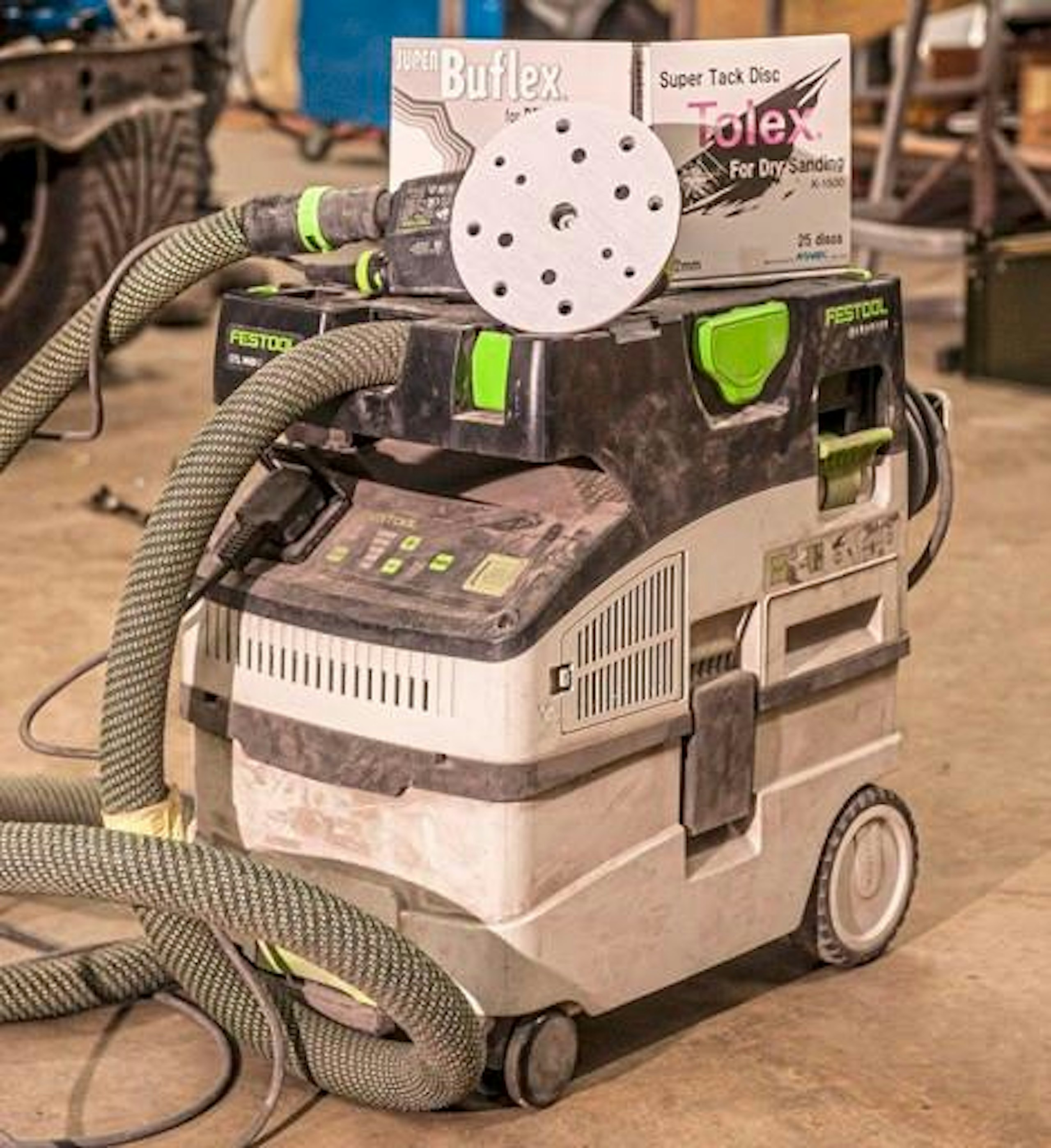
Dry-sanding system
‘Old wet-and-dry discs on a dual action sander left pigtails, spiral patterns where they’d picked up a tiny granule of paint dust and scratched the surface,’ says Dickie Aust. ‘This system avoids that, because it’s got vacuum extraction – the dust stays dry and can be sucked away as it’s created. When starting on a fresh clear coat, you’d put a 1500grit disc on, do a patch, wipe everything with a microfibre towel, then go again. Extraction and wiping keeps it clean. You’d then move up to 3000-grit, and it polishes up amazingly easily. I’ll never go back to the old way!’
Epic Restoration of the Year
This Jaguar E-type 2+2 is one of 12 Epic Restorations you’ll be able to vote for in 2026, with the chance to win fabulous prizes of premium workshop gear from Machine Mart, including this *Clarke JSM1200A Micro Jump Start power bank complete with lithium polymer battery. classiccarsmagazine.co.uk/EpicRestoOfTheYear. T&Cs apply.

*Prizes subject to change. They will be confirmed by the May 2026 issue.
Subscribe to Classic Cars today. Choose a Print+ Subscription and you'll get instant digital access and so much more. PLUS FREE UK delivery.