[ MONTH IN CARS ] Events
Cars with big-name histories emerge onto the classic stage at Members’ Meeting
Cars originally raced by the likes of Maurice Trintignant, Sir Henry Segrave and even Hollywood actors made their historic-motorsport debuts at this year’s Goodwood Members’ Meeting. Perhaps noting the success of MSV’s Super Touring Power events, special races, demonstrations and displays highlighted the British Touring Car Championship’s Nineties pinnacle, with period drivers reunited with their brightly liveried cars more than 30 years later.
Ferrari 250 Monza
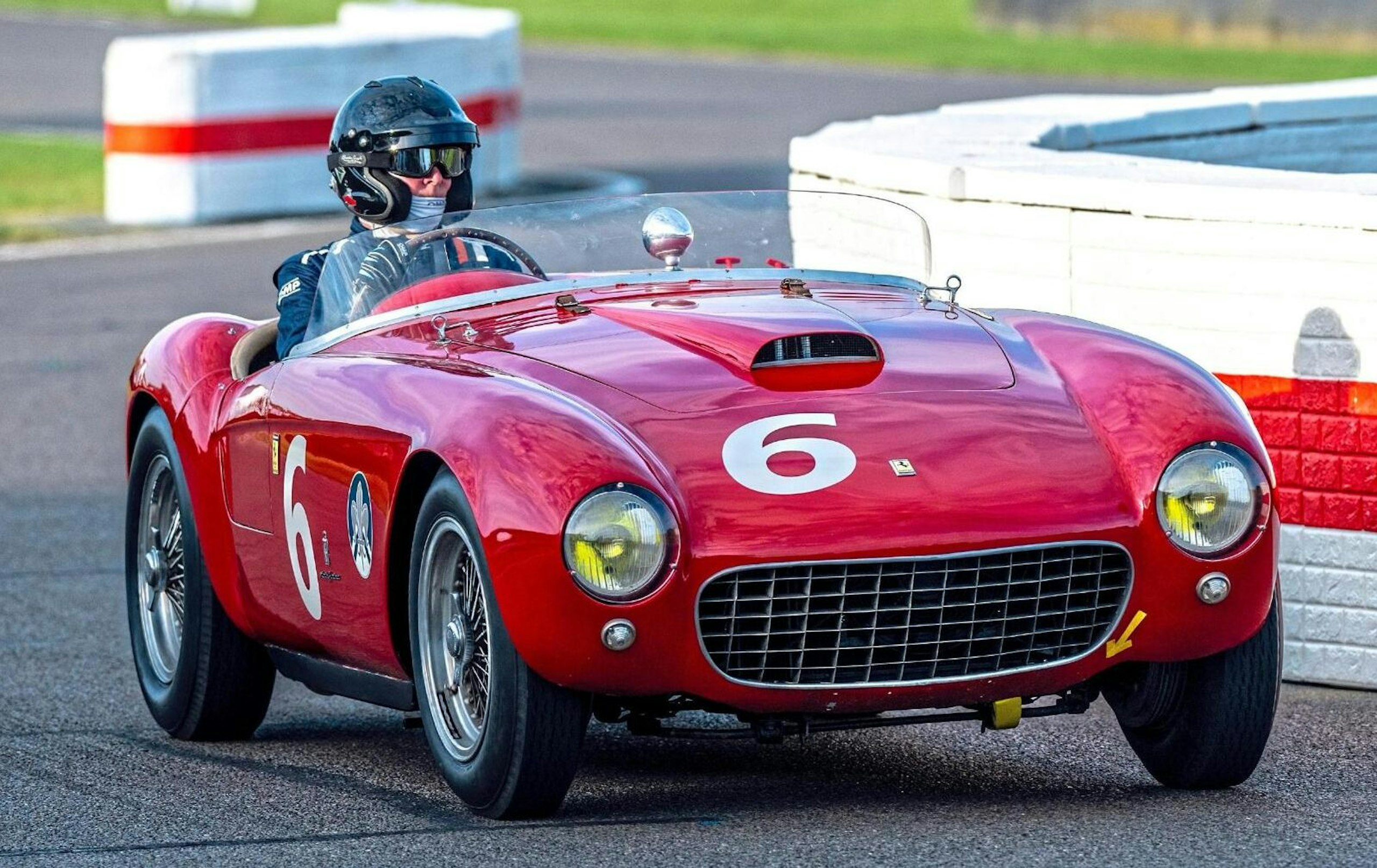
Ex-Trintignant 250 Monza wore incredible patina
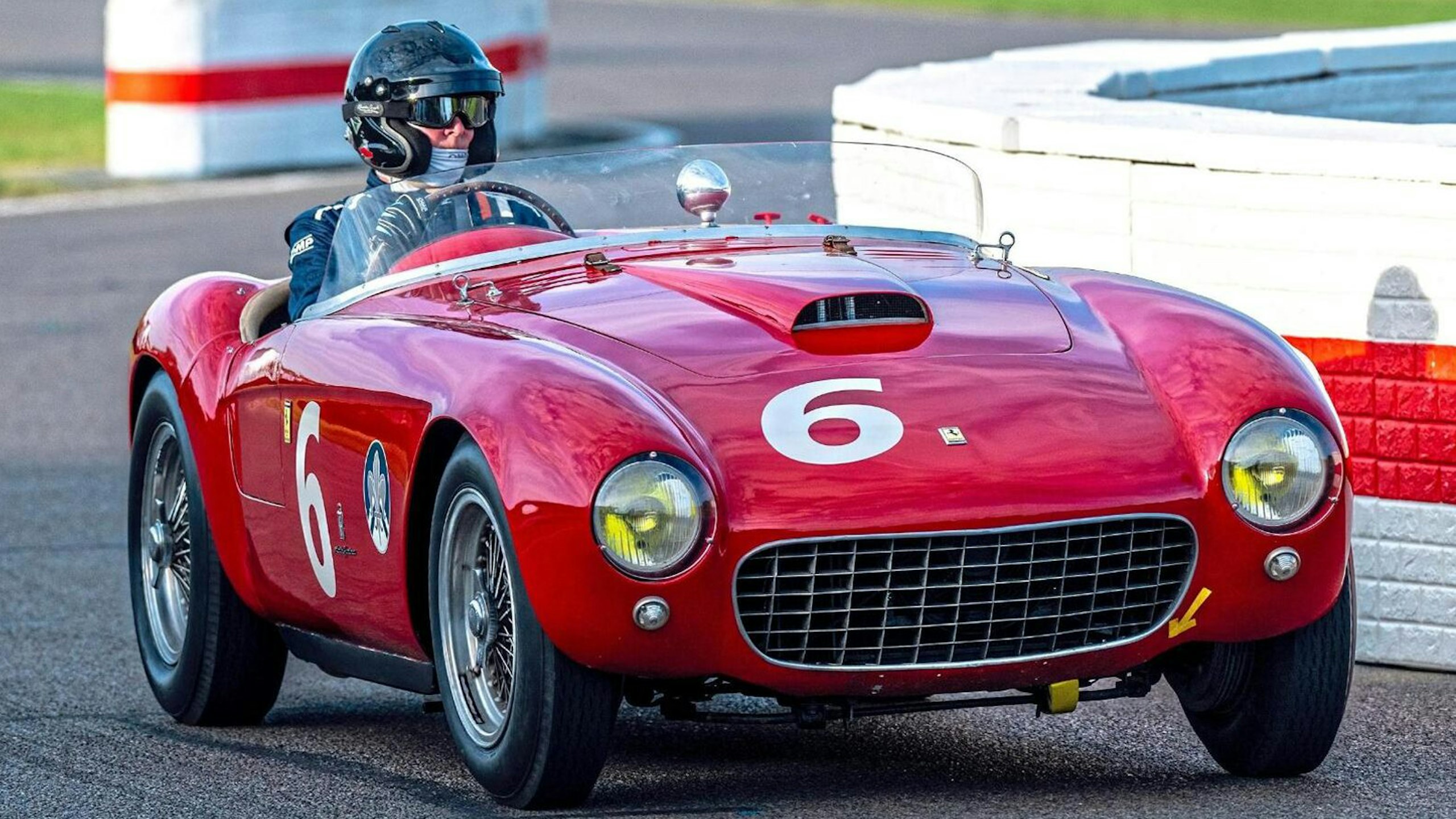
This ex-works Ferrari, winner of the 1954 Hyères 12 Hours, was making its British racing debut, despite being in remarkably unrestored condition. ‘It’s been in my family since the late Seventies, when my father, who’d also raced it when it was new, bought it from a collector,’ said Alexander van der Lof of his father Dries, who was also the Netherlands’ first-ever Formula One driver, with HWM in 1952.
‘It was a Ferrari factory team car in 1954, and its main driver was Maurice Trintignant,’ said Alexander. Partnered with Luigi Piotti, Trintignant took the new 250 Monza to victory at the Circuit du Var, ahead of Francois Picard and Charles Pozzi in another Ferrari, a 500 Mondial. The Hyères 12 Hours proved deeply attritional, with just half the entered cars finishing. It was the only race Trintignant completed in the 250 Monza, but it was a successful year for him. Trintignant won the RAC TT and the Le Mans 24 Hours in 1954, as well as finishing fourth in the F1 World Championship with podium finishes at Spa-Francorchamps and the Nürburgring.
‘After Hyères it was sold to Dutch racer and team owner Hans Tak,’ Alexander explained. ‘My father drove it for him in at Zandvoort in 1955, but by the Seventies it was in a private Ferrari collection, where my father tracked it down again. When he bought it in 1978, he rebuilt the engine because it hadn’t moved for some time. It’s never actually been restored – it’s effectively completely original. This is my first time driving it, and it will receive a full mechanical rebuild ahead of the Revival.’
Sunbeam GP
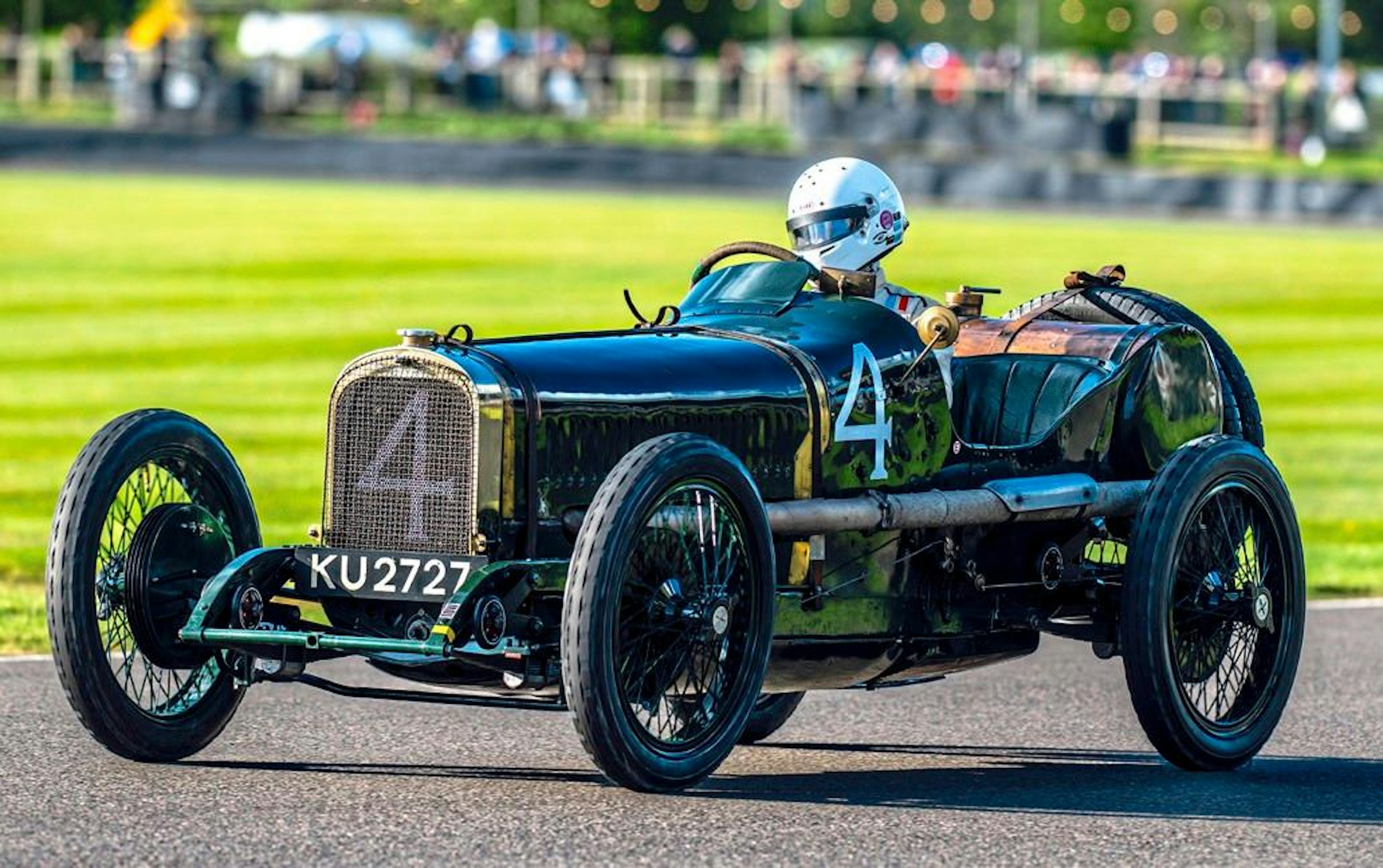
Sunbeam was Segrave’s Brooklands winner
‘This car has been lying low in a private collection for a long time, until the “two Geoffs” – Geoff Scott-Coomber and Geoff Squirrell – got to work on it,’ said Eddie Williams of the 1921 Sunbeam GP originally driven by Sir Henry Segrave. ‘They’ve only just made it roadworthy again.’
The Sunbeam failed to finish its first event, the 1921 French Grand Prix; but American Ora Haibe took it to a fifth-place finish at that year’s Indianapolis 500, setting an average speed of 83.86mph. It was the only non-US car to finish.
Segrave took its reins for the Brooklands 250 and gave the car its first victory, winning with an average speed of 94.64mph. The following year, Segrave also set the fastest lap on the Isle of Man TT – a separate time-trial was held for cars as well as motorcycles on the course back then – although he failed to finish the race.
At the time, Sunbeam was the only British car manufacturer to commit to international racing, amalgamated with Talbot and Darracq. This GP was one of five built in Sunbeam’s Wolverhampton experimental department, using a lightweight aluminium body with a pointed tail for high-speed stability at Indianapolis. Of the five built, this is one of just two left unmodified since 1922. Of the others, one was dismantled, another reworked for Indianapolis where it still resides, and a further example was reworked by Malcolm Campbell to become the first ‘Blue Bird.’
AMC AMX
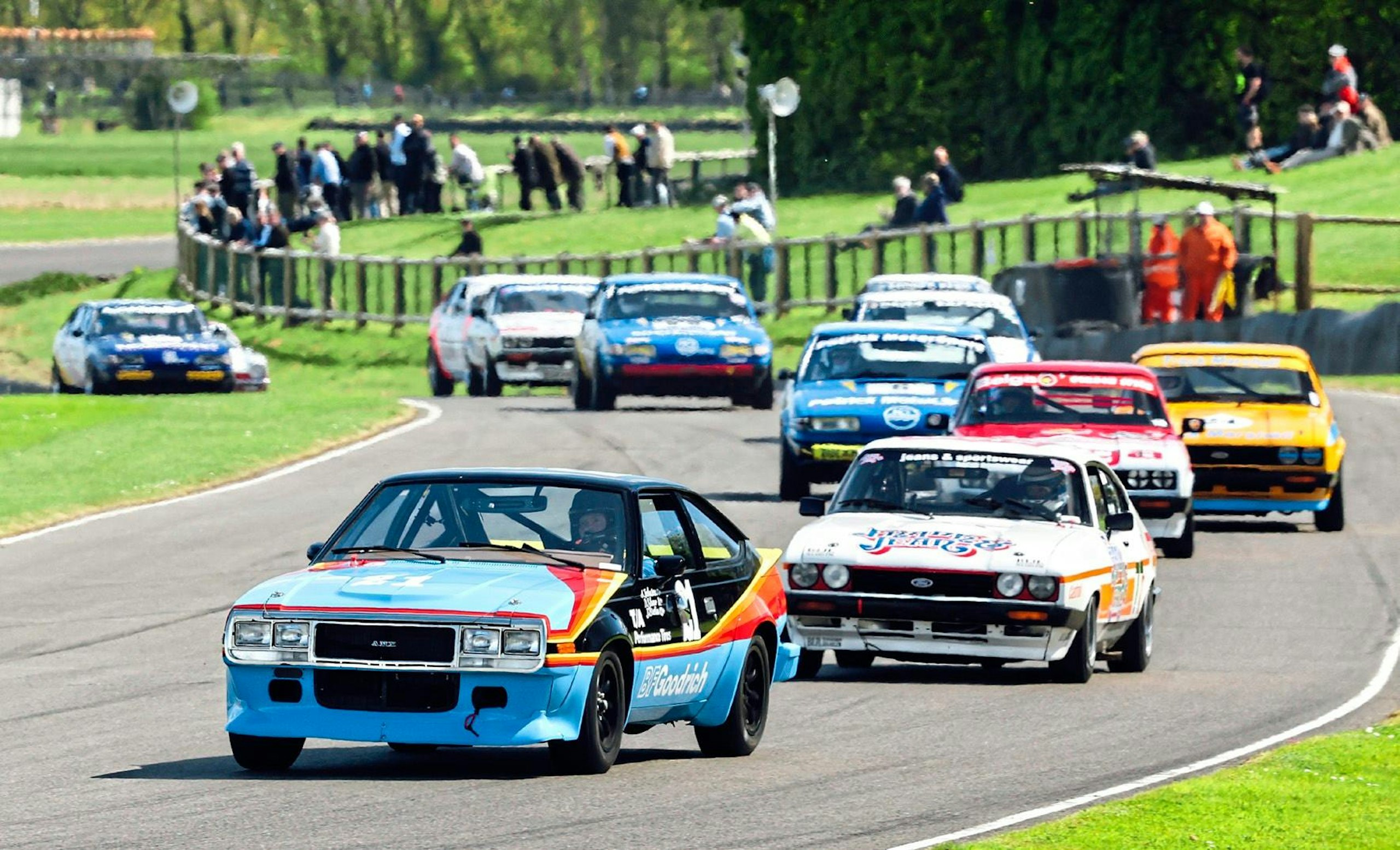
Movie-star AMC raced first time since 1979
‘The last time this car was seen in public was when it finished second in its class at the 1979 Nürburgring 24 Hours with Amos Johnson, Dennis Shaw, and James Brolin – the actor, who made a documentary film about it at the time,’ said MDV Specialist Engineer’s Jake Newman of the AMC AMX he’s just restored.
Part of a two-car team funded by BF Goodrich – which drew attention to the fact that these Group 1 cars were running on its road tyres – the cars managed respectable mid-grid finishes, holding off works-backed Mazda RX-7s, although it remained a long way off the pace of the more developed works Fords. But Brolin’s presence and the publicity he brought gave the team somewhat of a ‘plucky underdog’ status that got the crowd on-side.
‘It only did that one race,’ said Newman. ‘Afterwards, the class-winning car – driven by Gary Witzenburg, Lyn St James and Jim Downing – went back to America. BF Goodrich only had the budget to keep running one of the two cars, so this one was just left in a garage in Germany and sadly never raced again.
‘It’s been restored, back to a bare ’shell, but because there was only 24 hours’ worth of wear on the components, were were able to reuse most of its original parts. Things like the engine, gearbox and suspension only needed a straightforward stripdown and rebuild.’
Volvo 850
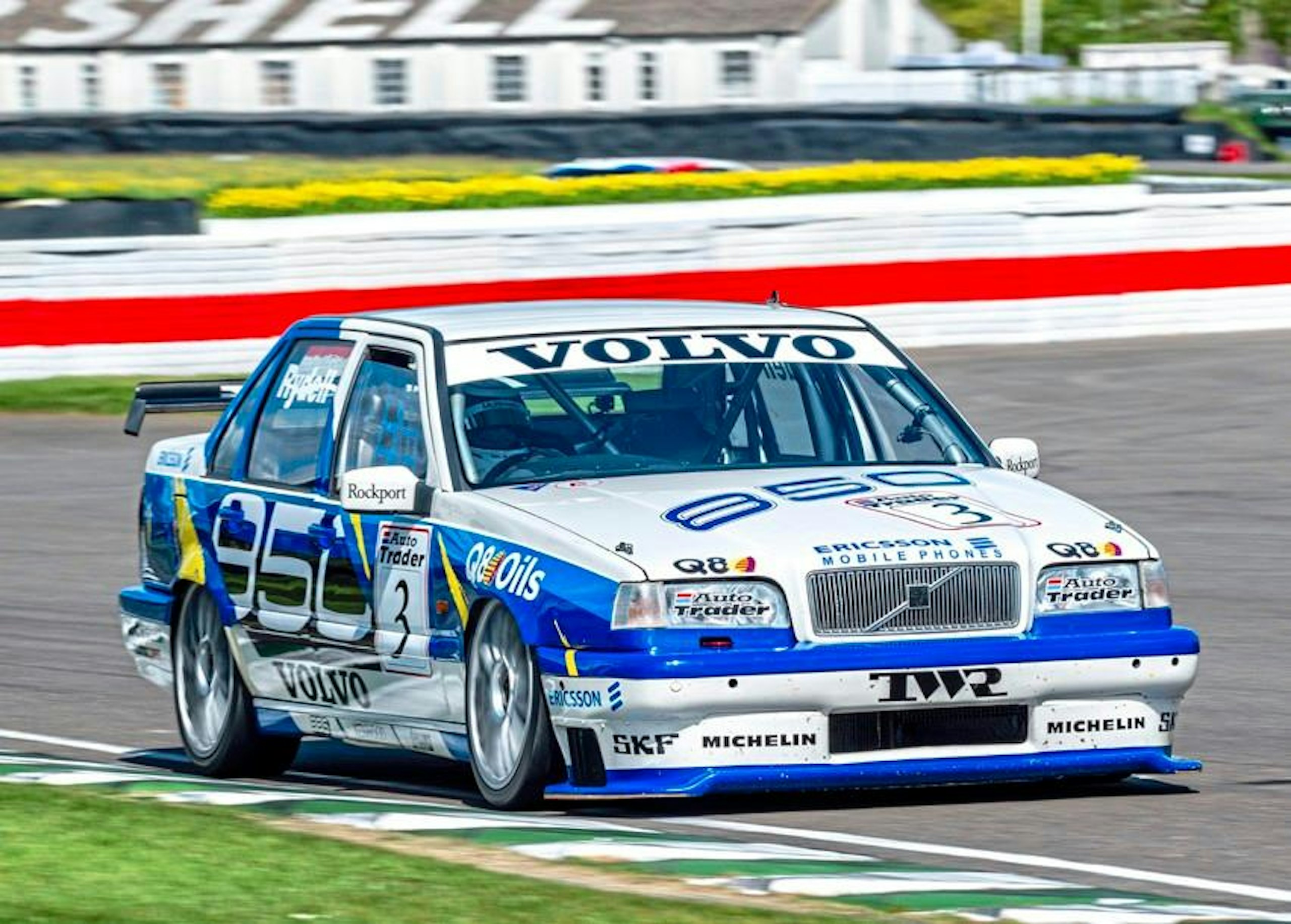
Rydell Volvo was only ’96-built BTCC 850
‘This car was last touched about 20 years ago,’ said ROFGO’s Johnny Westbrook of this iconic 1996 Super Touring Volvo. ‘Just one racing Volvo 850 was built in 1996 – this one – out of bits left over from the 1995 BTCC season, whereas the other two from that Championship had previously been used in 1995.
‘This was Rickard Rydell’s car in 1996,’ said Westbrook. Rydell was victorious in races at Oulton Park, Knockhill, Thruxton and Donington Park that year, finishing third in the Championship, but the season was dominated by Frank Biela’s later-banned Audi A4 Sport Quattro, and the Williams F1-engineered Renault Laguna of Alain Menu.
‘It was mothballed throughout 1997 because Volvo switched to racing the new S40, but right at the end of 1997 this car was sent to Australia to race in the Bathurst 1000.’ Partnered with Jim Richards, Rydell finished fourth behind a Brabham-crewed BMW 320i and a pair of A4 Sport Quattros, the second-placed car driven by his BTCC nemesis Biela.
‘It’s unrestored – the interior still has holes in it for the mountings for Network 7’s TV cameras, and it’s still fitted with its Bathurst transponder,’ said Westbrook. ‘After that one race in Australia, it went to Sweden with Gregor Peterson, who did track days in it, but it last ran in anger in 2001.’
BMW 320i
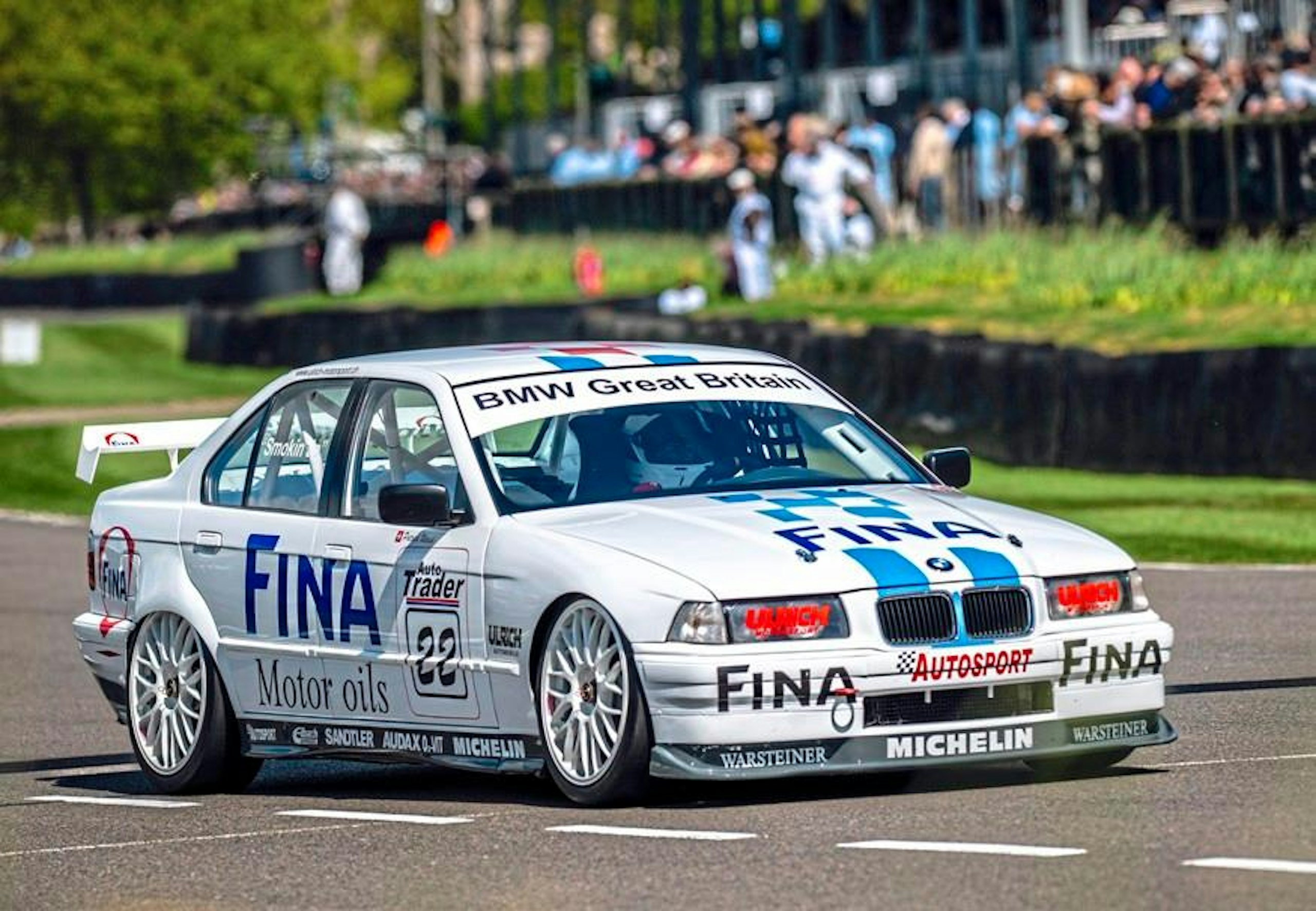
Winkelhock BMW survived infamous Macau crash
‘It’s the first time this car has been to the UK since it was raced by Joachim Winkelhock in the 1996 BTCC,’ said owner Peter Ulrich of his white BMW 320i Super Tourer.
Winkelhock, 1993 BTCC Champion, was another to find himself struggling against the four-wheel drive Audis, although he did manage wins in the car at Brands Hatch, Thruxton, Oulton Park and Snetterton, finishing fifth overall in the 1996 Championship.
‘After the BTCC season ended, it went to Macau for the Guia Race, where Winkelhock crashed it into Biela’s Audi on the second lap!’ Winkelhock qualified on pole, but the incident forced the BMW into retirement. Frustratingly for Winkelhock, Biela’s A4 remained relatively undamaged and went on to finish second behind Winkelhock’s teammate Steve Soper.
‘Around 1997-98, it was stripped down and sent to BMW Team Isert as a rolling chassis, before being bought by Gianluca de Lorenzi, who then raced it in the 2001 European Touring Car Championship.’
De Lorenzi managed 14 Amateur-class podium finishes en route to second in class, including works-team-beating overall third-places at Magny-Cours and Jarama. A series of Eastern European drivers raced it in local championships from 2002-06, before Ulrich bought it and restored it to its 1996 specification.
Tecno TF/66
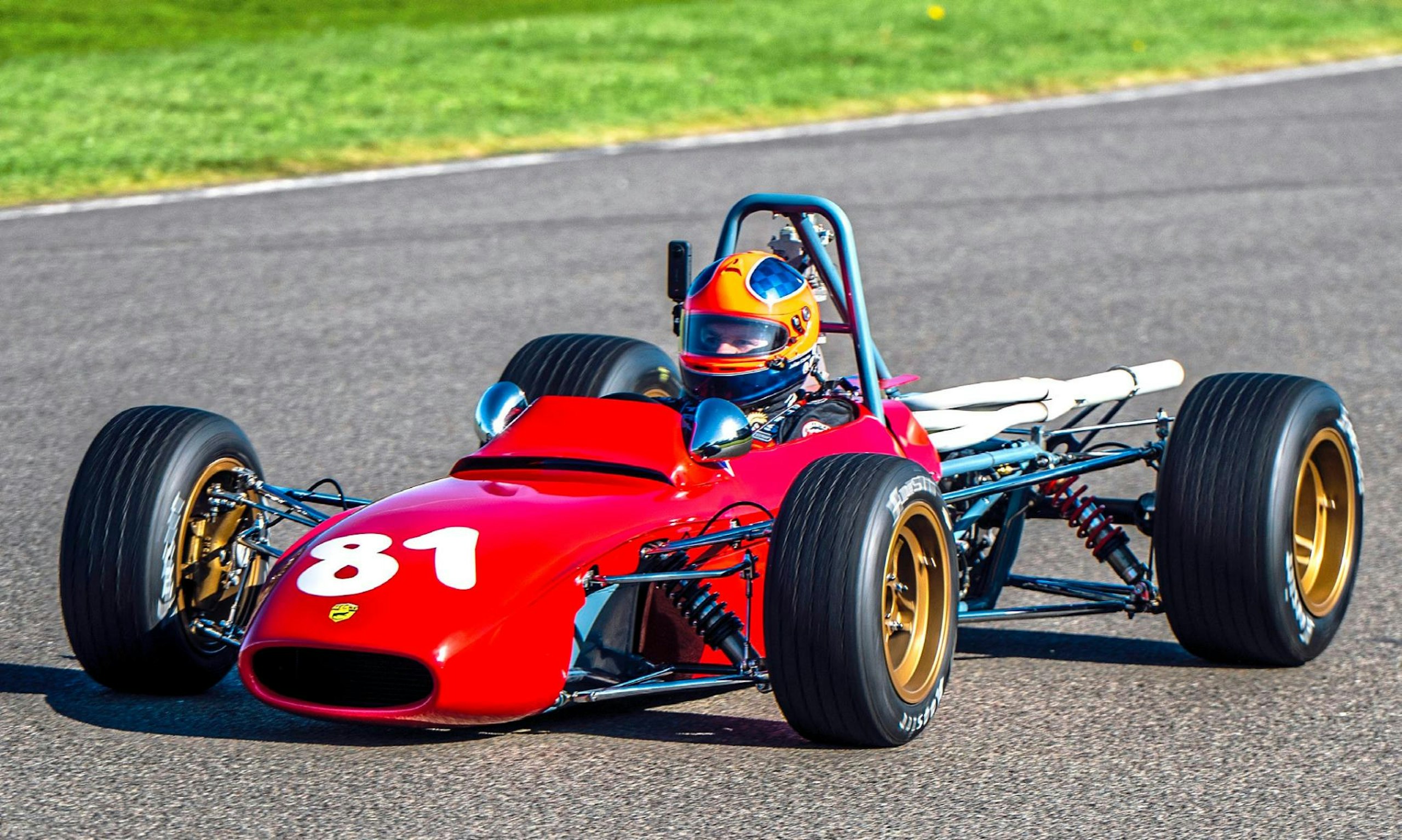
Brambilla wanted to restore his old Tecno
Newly restored by Jim Stokes, this Formula Three car was racing for the first time since 1975, in the Derek Bell Trophy for one-litre F3 cars, also known as the ‘screamer era’ for their hard-worked engines’ high-revving noise.
‘It was Tino Brambilla’s car, chassis T00224,’ said F3 expert Duncan Rabagliatti. ‘Brambilla drove it in the 1967 Italian F3 Championship, finishing seventh in the Campagnano di Roma, and first at Vallelunga before moving on to race for Birelcar for 1968.
‘He sold it to Giuseppe Bianchi, who contested Italian F3 in it from 1968 to 1970, with a best finish of fifth at Monza in 1969. It then went to Luigi Fontana from 1971, who fitted an updraught engine in an attempt to remain competitive into the Seventies, but the attempt didn’t work. In the end, he sold it back to Brambilla, who always intended to restore it back to how it was when he first raced it, but never got around to it.’ Brambilla died in 2020, having kept the car in storage for 45 years.
Brabham BT28-33
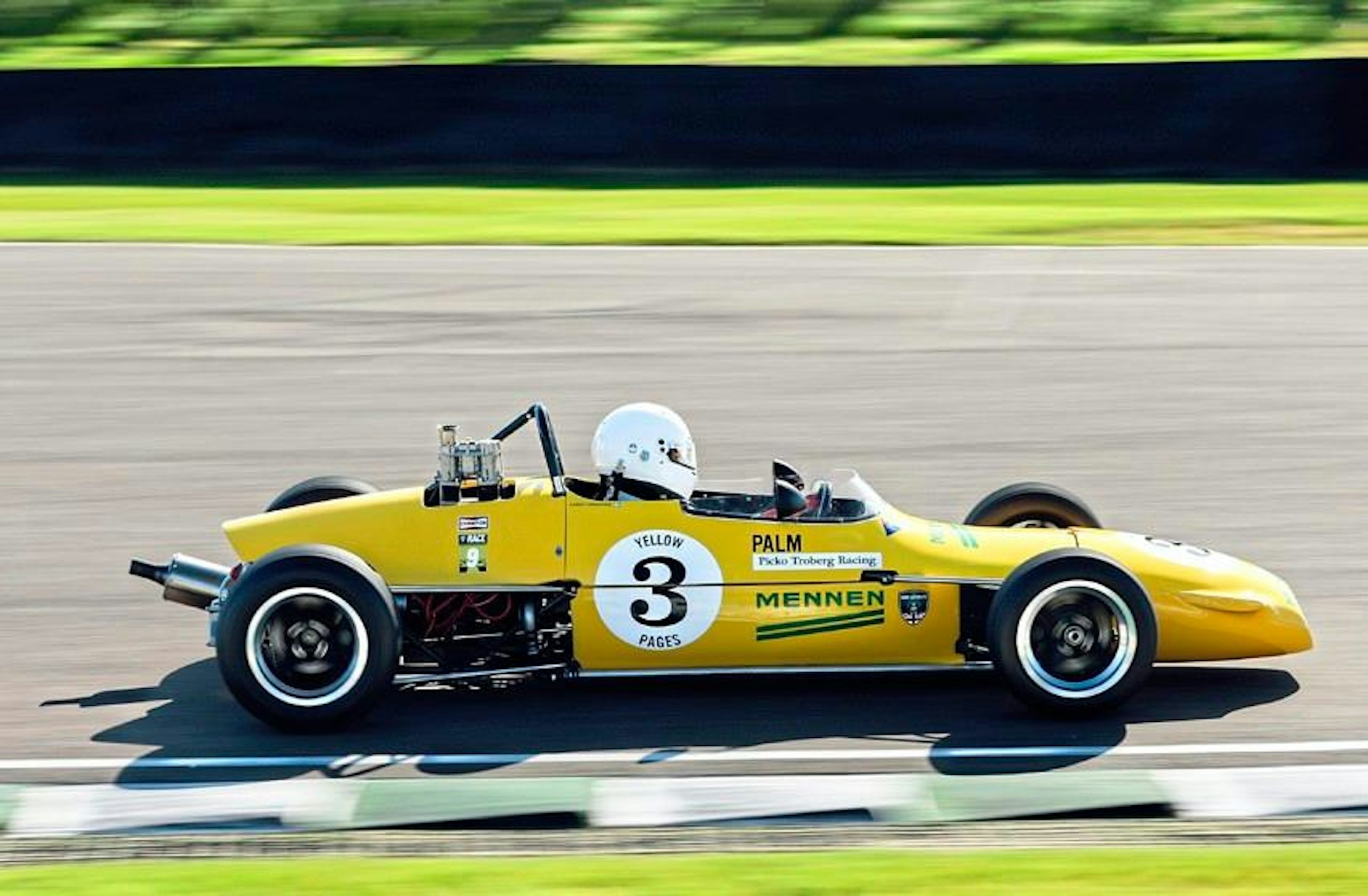
Brabham once secured Nations Cup for Sweden
This championship-winning F3 car was racing in the UK again for the first time since 1970. Bought new by Picko Troberg Racing as part of a twocar team in 1970, it was driven by Torsten Palm – younger brother of championshipwinning co-driver Gunnar – in that year’s Swedish F3 Championship, as well as selected European Championship races. In its sole British appearance – the Nations Cup at Thruxton – Palm finished third, helping to secure the Cup for Sweden along with Gustaf Dieden and Ulf Svensson. Although the overall winner of the race was Gerry Birrell, the Swedish drivers’ points haul was highest, securing the Cup.
Palm went on to set the lap record at Karlskoga during a 1973 F2 race, and ultimately reached Formula One with Hesketh, with a best finish of tenth at Anderstorp in 1975.
The car was restored to its Nations Cup-winning appearance in 2022, complete with Mennen/Yellow Pages livery, and was reunited with Palm himself at Karlskoga.
Renault 19 16v
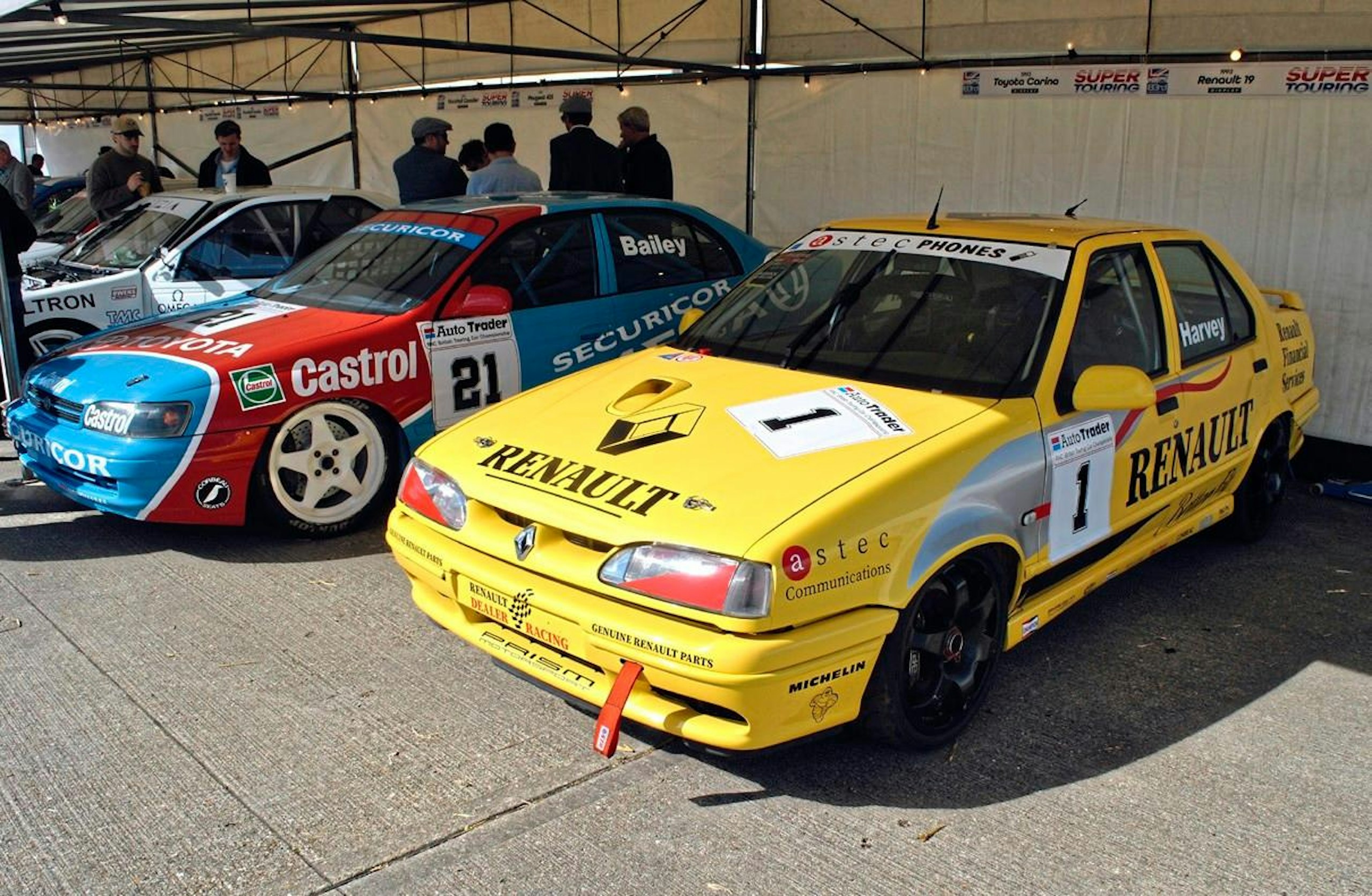
Harvey’s 19 won alongside Senna
This unlikely BTCC hero made a low-key Goodwood debut as part of a static display in the Super Touring paddock area.
The second of four Renault 19 16v Super Tourers built in 1993, it marked a shaky start for Renault in the BTCC. When Tim Harvey went to test a prototype in France, he discovered that the Jean Ragnotti-engineered saloon was essentially a rally machine lightly reworked for circuit racing – complete with handbrake. As a consequence, the resulting 1993 BTCC cars ended up being completely rebuilt by GB Motorsport for Renault Dealer Racing.
Harvey later branded the 19 ‘the worst car I ever drove’, although it delivered one of his most memorable race wins.
In torrential rain at Donington Park, Harvey and his teammate, Alain Menu from Switzerland, eased past BMW pole-sitter Steve Soper to take a one-two finish in front of a huge crowd – the race supported the infamous 1993 European Grand Prix, the only time the Formula One World Championship came to Donington, and which saw Ayrton Senna overtake four drivers on the opening lap in heavy rain.
Sadly, these heroic antics weren’t to be repeated. Harvey managed a third place at the end of the season, once again during a round at Donington, which followed a series of disappointing retirements.
The car was subsequently used as a parts donor for independent driver Nigel Alban in 1994. Restorer MCT Engineering – which made many of its parts when it was new – discovered the car at a Renault specialist in Nottingham in 2015, and after a long search for parts, restoration was finally completed in 2022.
Subscribe to Classic Cars today. Choose a Print+ Subscription and you'll get FREE UK delivery, instant digital access and so much more!