[ Lister Le Mans ]
If you like brawny Jaguars, they don’t come much more exciting than the Lister Le Mans. So, just what does seven litres and 500bhp do to an XJ-S?
Words NIGEL BOOTHMAN Photography IAN SKELTON
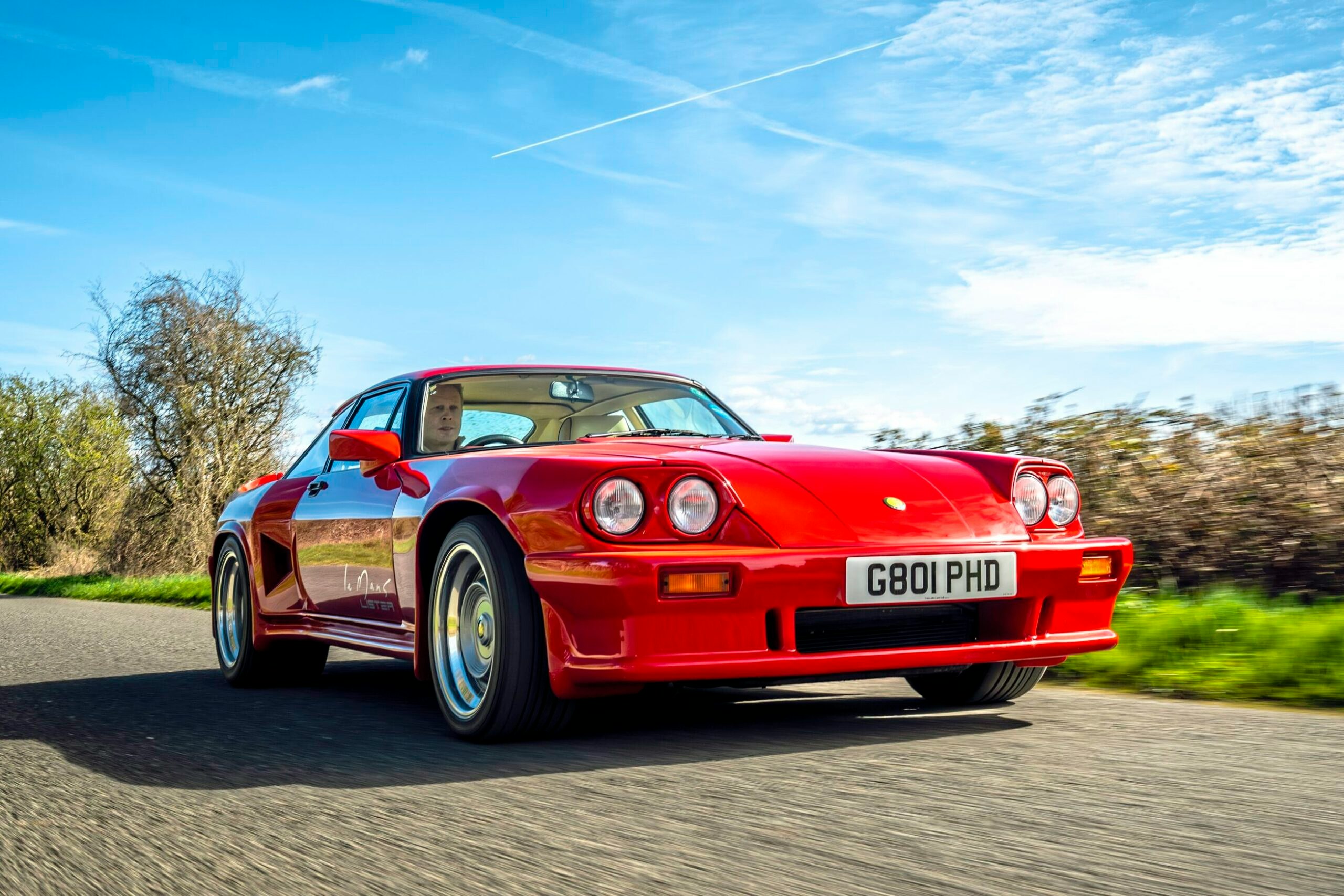
With the Lister out of the garage and standing in the sunshine, we all stand back and stare. Ian, our photographer, considers it with a snapper’s eye, while dealer Charlie Metcalfe and I ponder it as petrolheads. We soon come to a shared view, though, which Charlie expresses first. ‘It’s quite a thing.’
That verdict isn’t as unhelpful as it might seem. It incorporates a few other thoughts, like, ‘it has presence’, ‘it’s miles from a standard XJS,’ and ‘I bet it goes like stink,’ but perhaps edges more towards respect than adoration. Is the Lister too aggressive to be beautiful? That’s something we’ll have time to consider when we get back. But first, we must find out what this highly developed, artisanal British supercar can do on the road.
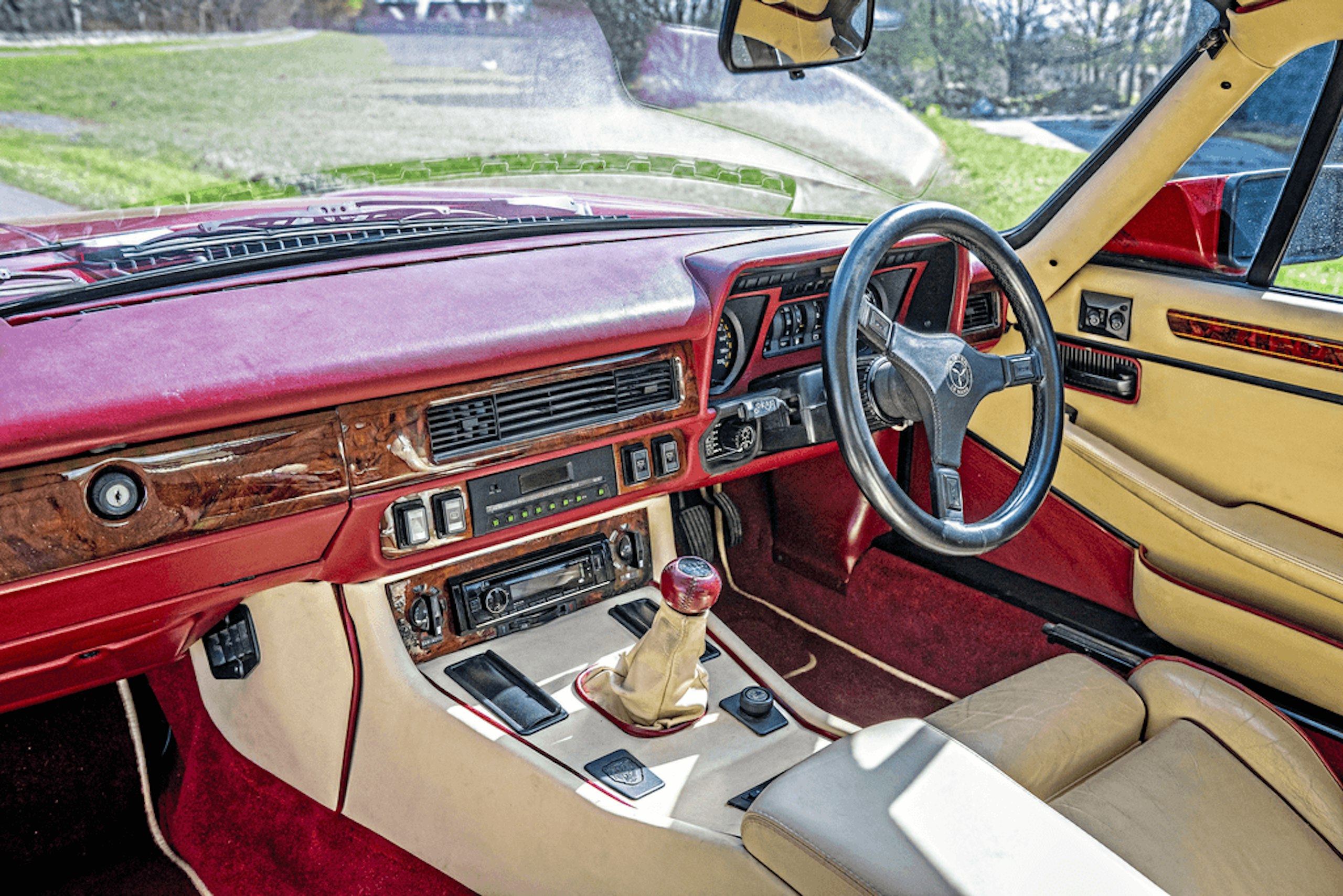
Black, hex-headed screws through A-pillar trim is an odd slip-up in a cabin so beautifully trimmed
Here are standard XJ-S door handles in satin black, with sill panels coloured the same way, then a three-tone interior with extra leather on dash and door cards to reflect the luxury side of the Lister touch. The seats are, we think, the same Recaros as those used in the Aston-Martin V8 Vantage X-pack. They look great, but the squab is rather flat and firm, and taller drivers need to recline. The cabin itself has that faint scent of warm hide and unburned petrol, which together form the aftershave of hairy-chested British muscle.
There’s a Nineties tribute act next: you must perform a two-handed trick to turn the key halfway, blip the immobiliser button and then turn further to start, but after that, all your attention is taken by the boom and rumble from up front. Jaguar’s V12 was never less than smooth, even when enlarged by nearly 1.7-litres and tuned, but this one has a slightly sulky lope to the idle. That hint of drama combines with the firm suspension to resemble a racing car tiptoeing out of the paddock and onto the track.
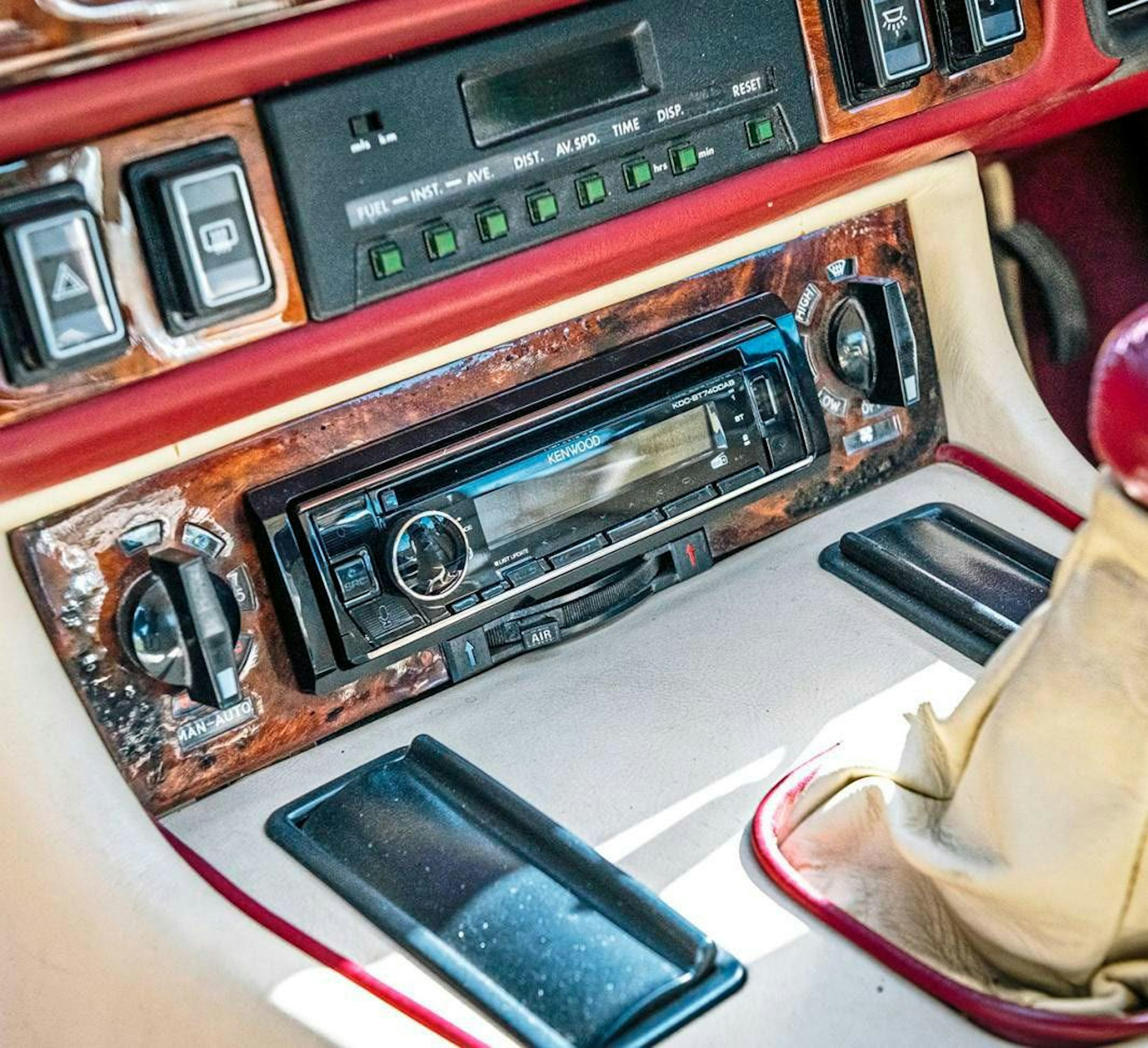
Later stereo only deviation from standard
Our track for today is a nice network of Cotswold A- and B-roads, so we can’t let the red mist descend. Or not entirely. It is – I swear – impossible to resist burying your right foot in the Lister when the engine is up to temperature and there’s half a mile of straight, empty road in front of you. There’s ample torque everywhere and seamless power, so the car never comes violently ‘on cam’, as that racy idle might have suggested. It just pulls and pulls. There’s a complex, multi-toned song from the engine that combines mechanical thrash with exhaust and even intake roar, and it all comes together into a wonderful racetrack howl above 4000rpm. If adrenaline erodes good sense, you grab another gear, and another. Legal limits are too soon exceeded, so it’s better to find a slower, twistier section and squirt all 1.8 tons from one corner to the next.
‘There’s ample torque everywhere and seamless power from the engine, along with a multi-toned song’
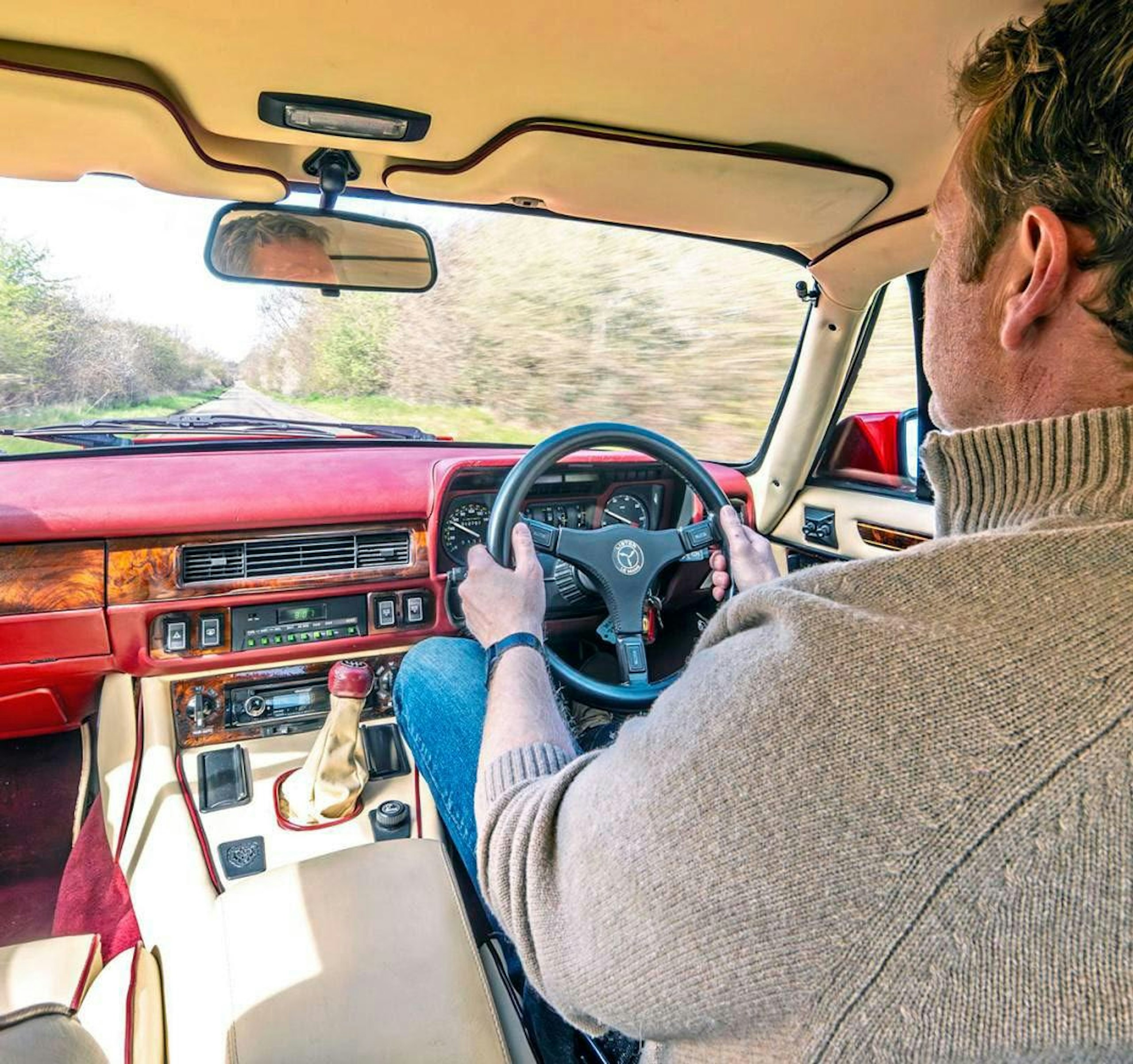
Well-judged steering weight leaves you free to think about everything else
What happens in the bends is more remarkable still. Twitch the small Lister-badged wheel, and the front end almost darts in, apexing early until you re-adjust your brain from its normal XJ-S setting. There’s no body roll either, and if there are limits to the adhesion of these huge Pirelli P-Zeros 250/40/17 front, 335/35/17 rear – they’re so far away on dry Tarmac as to be irrelevant. The sheer size of the front contact patches makes the car follow the bumps and ridges in the road, and ride comfort is compromised on these rough British surfaces, with a fidgety feel that describes very firm springing, damping and bushing. But the payoffs I’m experiencing are startling. It doesn’t steer like an XJ-S, or go like one, or stop like one. The brakes are tremendous, with the rear discs mounted outboard, as Jaguar itself would adopt from 1993.
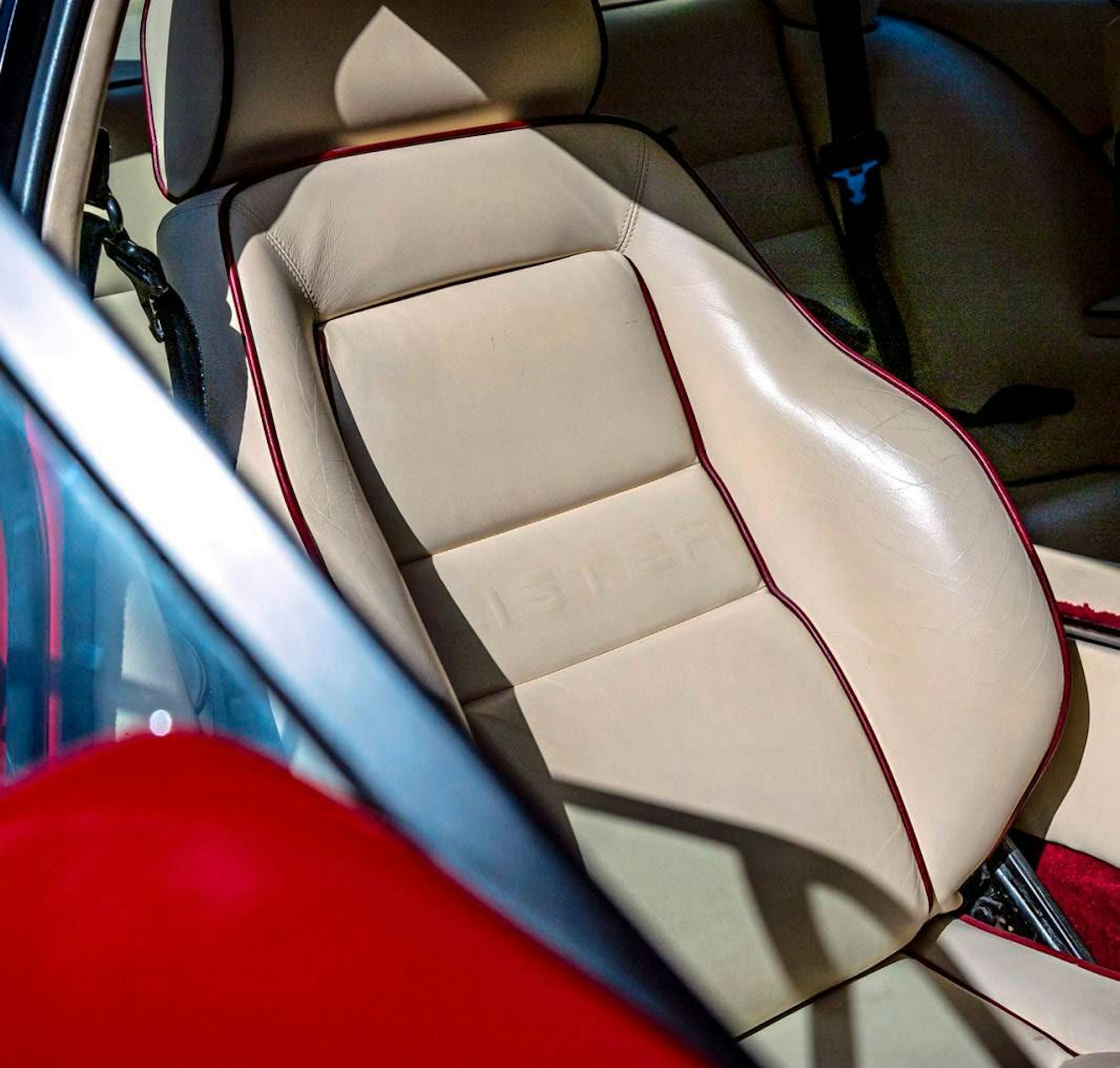
Figure-hugging leather seats look the part
Yet there is the ghost of an old car in this late-Eighties super-weapon. Partly it’s the ergonomics of a cabin whose size and shape reach back to the first half of the Seventies, so when you thank another driver with a cheery wave, your fingers thump into the windscreen. The pedals are rather cramped by modern standards and not set up to heel and toe, which is a pity with all that whirling engine and a somewhat slow-shifting manual gearbox – I’d like to try the six-speed BMW ’box Lister used for the final examples, in place of this five-speed Getrag.
It’s not a relaxed car, despite the high gearing, because of the stiff ride and the levels of engine and road noise, but I eventually twig that I’m basing everything on what a normal XJ-S feels like. And that comparison won’t work. Jaguar’s E-type replacement was never a sports car, or even close, and the remedial work needed to make it handle and perform like one was immense. So, what we’ve ended up with is not an XJ-S with a body kit and a massive engine, but a hand-built supercar with Jaguar underpinnings as a starting point. Which in turn reminds me of the old joke about asking directions in Ireland, ‘Well sir, if I were you, I wouldn’t start from here.’ So just how did Lister end up getting here by using the XJ-S as a starting point?
‘There is the ghost of an old car in this late-Eighties super-weapon’
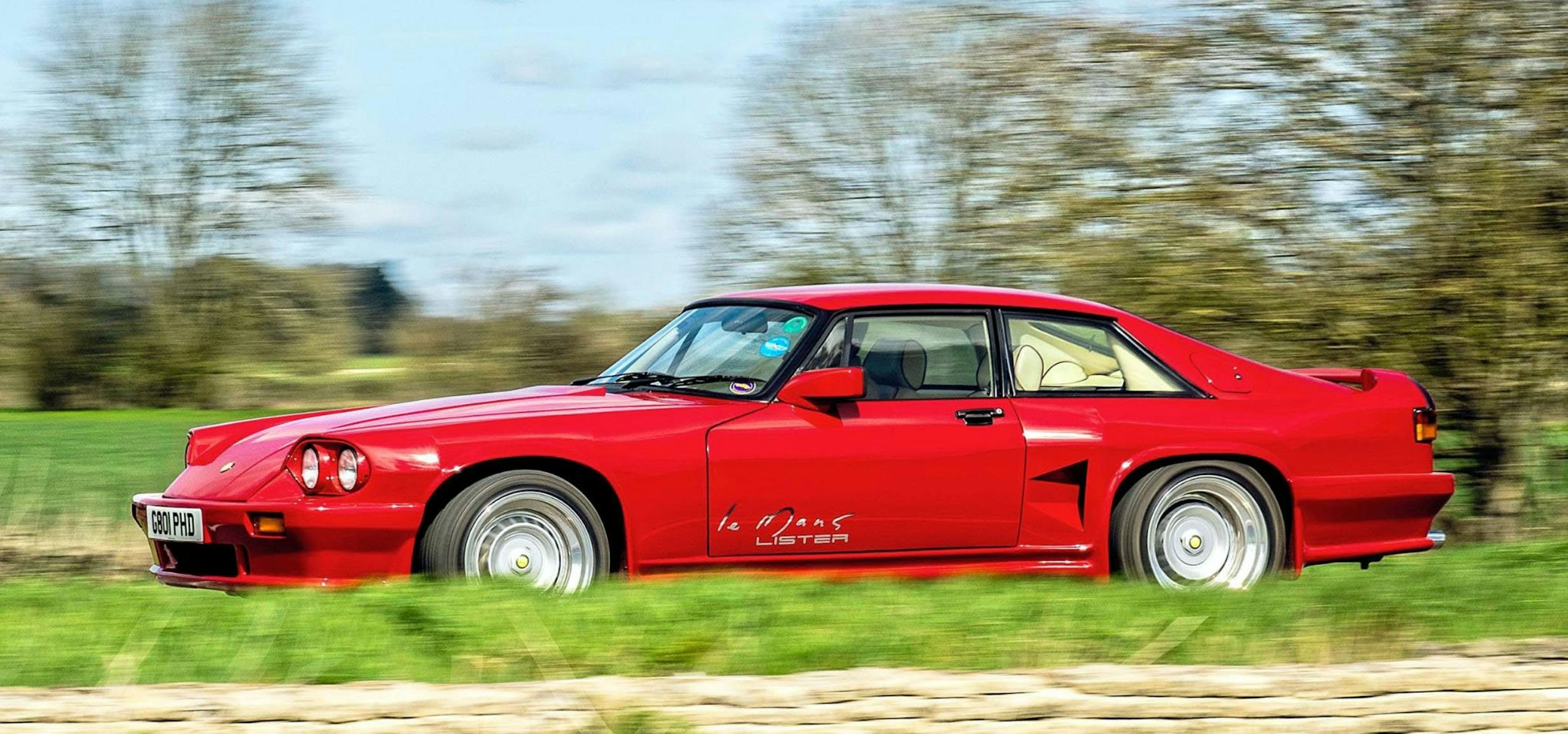
Lister pulls off the trick of being a quiet GT, but only on the smoothest roads
We are lucky to have an ideal source for an answer. This car has been owned for the past few years by Peter Litchfield, who was involved with the company that became the reincarnated Lister from the very beginning, as he explains.
‘I got to know Warren Pearce from WP Automotive, and his son Laurence, around 1982 or 1983,’ says Peter. ‘They rebuilt a Jaguar I owned at the time and made it quicker, and I soon got involved in an eight-hour race at Donington with them. I got them to build me a proper racing XJ-S, which was very quick, and the idea of developing roadgoing cars grew. I bought 30 percent of the business and WPA did a deal with Brian Lister to use the name, so from 1986, Lister was making cars again.’
Over the next few years, WPA/Lister would offer various levels of upgrade not only to the XJ-S, but XJ saloons as well. At the top of the range was the Le Mans, a very heavily modified XJ-Sbodyshell with hardly an original panel left on it. The changes were neither purely for show nor just aerodynamic, but involved a revised fastback window line in place of the buttresses to create more headroom above the rear seats. Which is indeed present, but a four-seat limousine this is not. The rear glass, says Peter, is an MGB tailgate screen turned upside-down.
‘What Lister did to the engines is the most exciting aspect of the transformation’
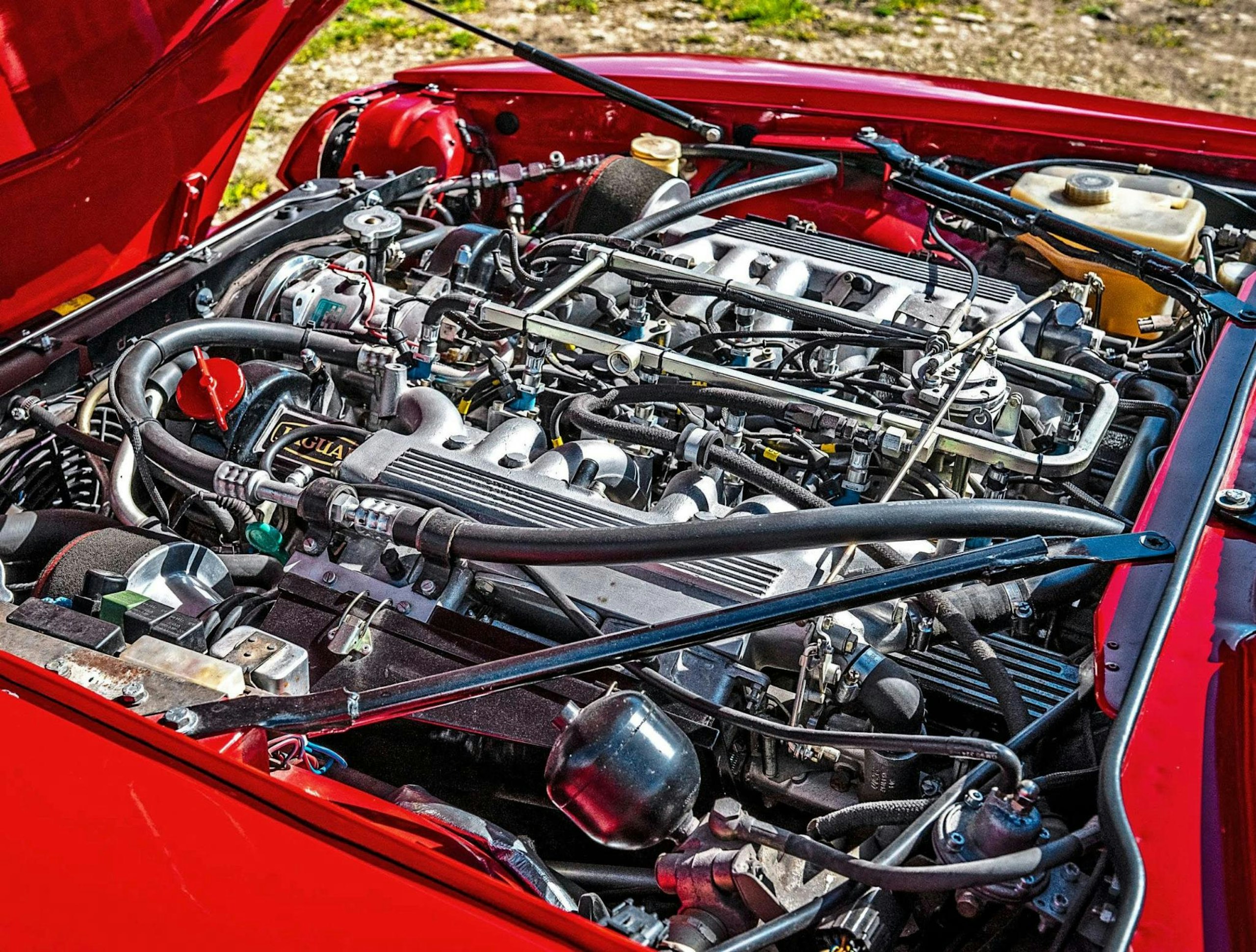
New engine management system pushes output of V12 to around 500bhp
The Le Mans boxed-out arches look seven or eight inches wider than standard and that bonnet, sloping down over where the grille once was, seems sure to restrict airflow. That it did, apparently, but this car has recently had much attention from Jaguar guru Tom Lenthall, who has increased cooling efficiency so much that we barely see 80°C all day.
What Lister did to the engines is the most exciting aspect of the transformation. Starting with a standard V12 cylinder block, it re-sleeved for larger bores, added a steel billet crankshaft, Cosworth pistons, its own cylinder heads with large, polished ports, its own camshafts and Marelli digital fuel injection. The result was 496bhp at 6200rpm and around 500lb ft of torque all through the rev range. Not enough? You could eventually order twin superchargers to add another 100bhp. If geared at the usual 33mph per 1000rpm in top gear, the naturally-aspirated Le Mans would be travelling at more than 200mph at peak power.
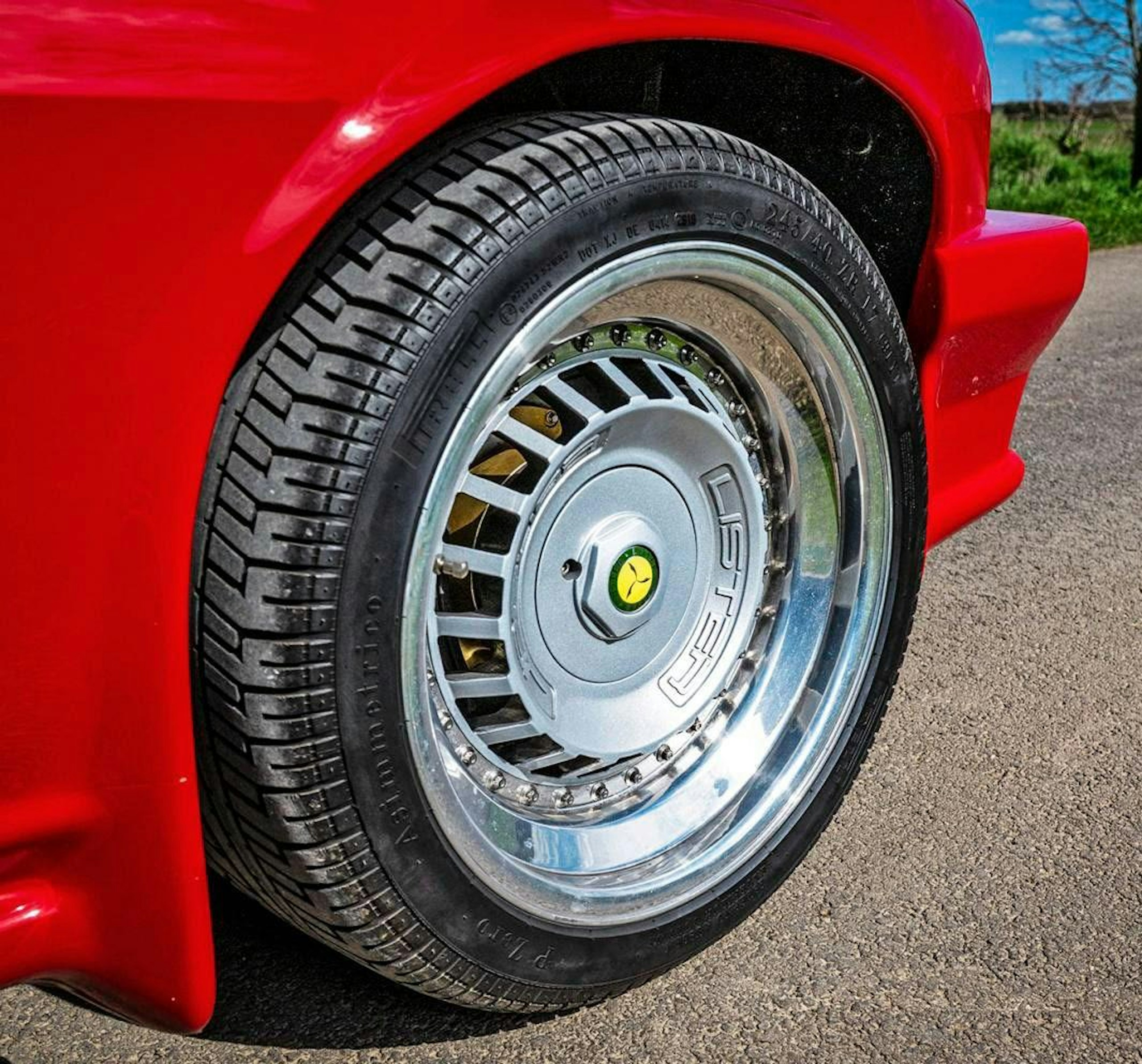
Much road noise from huge tyres and stiff suspension
‘I did 180mph in one of these once, with no fuss,’ says Peter, and we won’t tell you where he managed that. ‘Of course, I had one of my own when they were new, but around 1990 my circumstances changed and I sold my share back to Laurence, and we stayed on good terms. Then, 30-odd years later I was sitting in Florida browsing the internet and I saw this one for sale in Luxembourg.’
Peter bought the car unseen and took delivery of it in the UK, little realising he was at the beginning of a significant project. ‘The paint wasn’t looking its best, so I sent it to Karl Gosney at Premier Paintwork & Restoration in Thatcham. Because these cars were built in steel, they would rot if water got into the foam beneath the body kit, so Karl ended up having to completely rebuild the ’shell.’
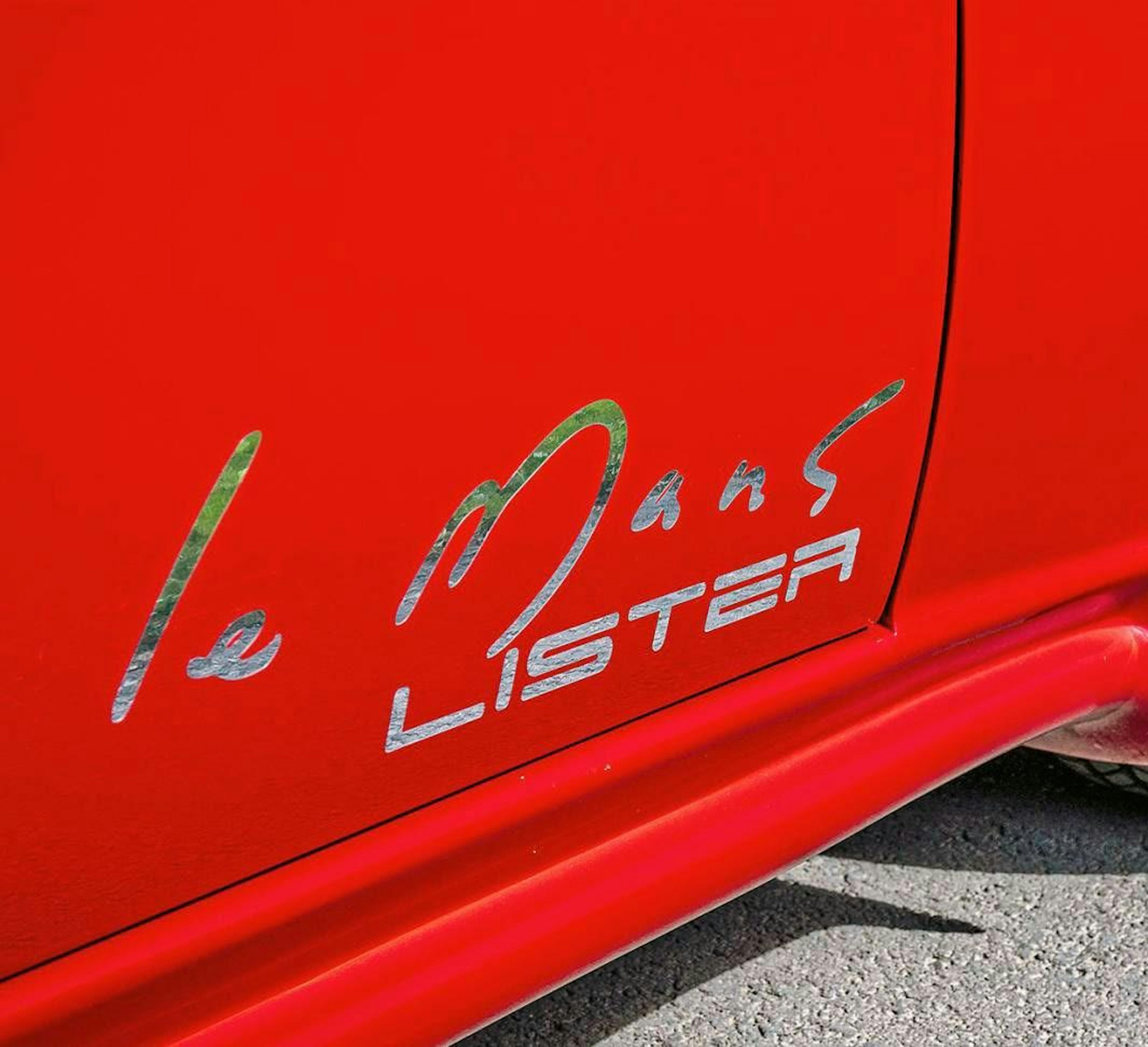
Lister overhaul makes XJ-Sa proper sporting drive with enough raw edge
This included an interesting but costly detour in which Peter had a set of scissor doors fitted, but which never quite rose and stayed up as intended. ‘My son said, “the bloody car’s ostentatious enough as it is!” so I got Karl to re-fit the standard doors,’ says Peter, ruefully. The car then went to Tom Lenthall for a full mechanical restoration, including a rebuild of the engine, gearbox and suspension, plus a swap from the original Marelli sparks to a modern ECU with coil packs and no distributor.
The end result is virtually a new car, and Peter knows little of its early history, beyond a sheaf of more recent bills in the folder. He thinks there were perhaps 25 Le Mans built from a total of around 90 Lister XJ-Ss and a few more saloons created before the entirely new Lister Storm was launched in 1993. Tilts at Le Mans and Daytona followed as Lister morphed into a motorsport team, eventually changing ownership in 2012.
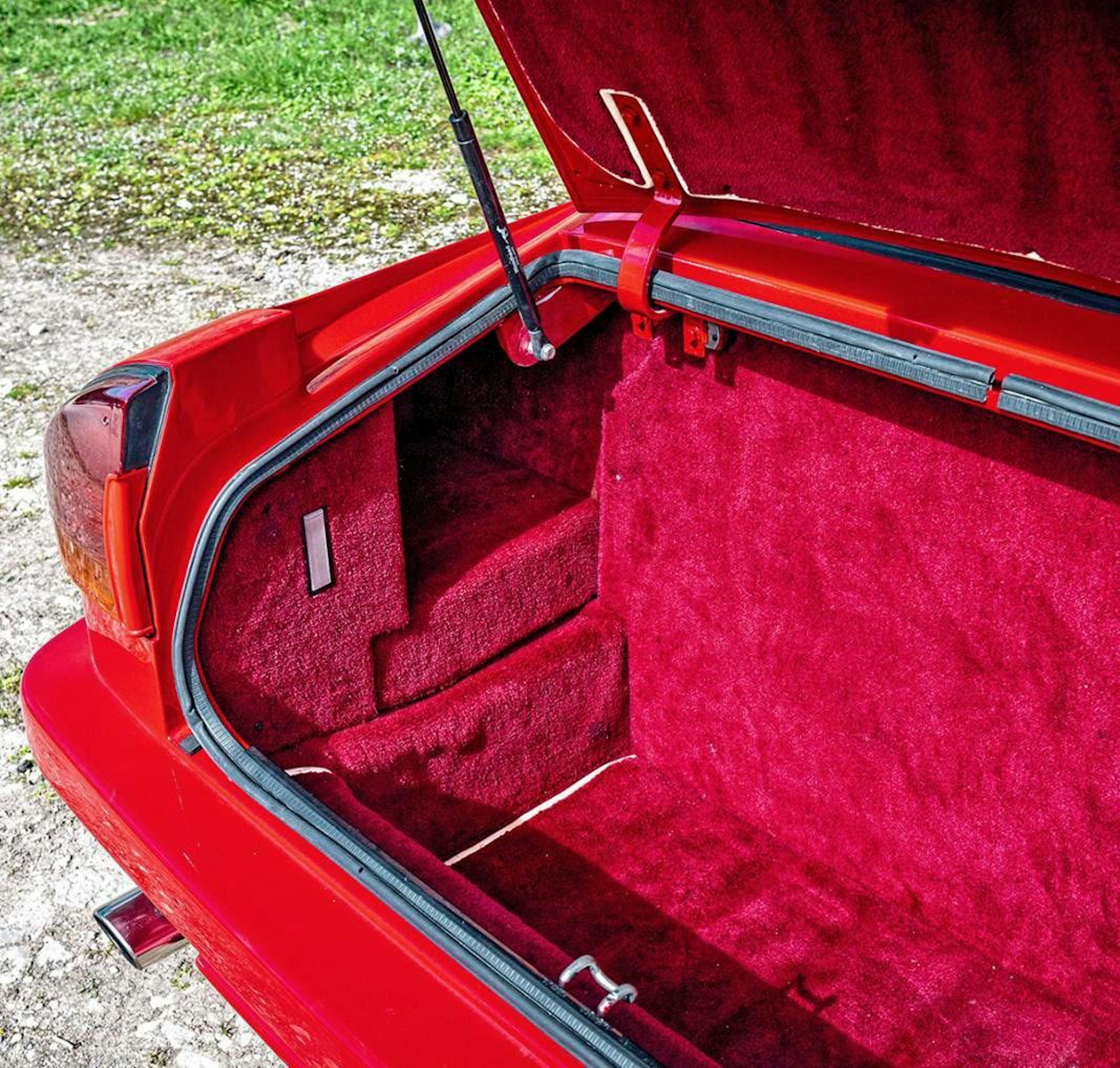
Extravagant trimming extends to the deep but short boot
By then, the idea of re-engineering and re-styling XJ-Ss to compete in the Ferrari and Lamborghini market seemed utterly laughable. Was Lister ever offering a genuine alternative to the Italian exotics? In my door mirrors, there’s nothing much but the car’s huge, red hips – rather like driving a Testarossa. Here, the body kit is needed to cover those immense wheels, because Lister couldn’t start with a clean sheet of paper. So, it’s done what it was already good at, and turned a road car into a racing car, or at least employed those tactics. Hence, it’s been stiffened and given huge power with vast tyres placed as far apart as was possible. Ride quality – probably softer before the recent upgrades Peter procured from Tom Lenthall – was partly sacrificed while steering feel, weight and geometry have all been optimised.
The more you compare, the closer it seems to a front-engined Testarossa – a fully tricked-out Le Mans cost a whopping £121,000 back in 1989 when a Testarossa was around £6000 less, and the Lister has more room inside and a better boot. The Lister is both quicker and faster, if a little noisier and less compliant. Is it, as Fast Lane magazine once claimed, the XJ-Sthat Jaguar should have made? Well, selling 90 of these vastly expensive aftermarket specials should be seen as a very strong performance, when every one of those customers could have ordered a Porsche 911 Turbo or a Testarossa instead. But as factory Jaguars, they would not have made financial sense to develop and sell in small numbers, and the lack of the Lister identity might have reduced sales still further.
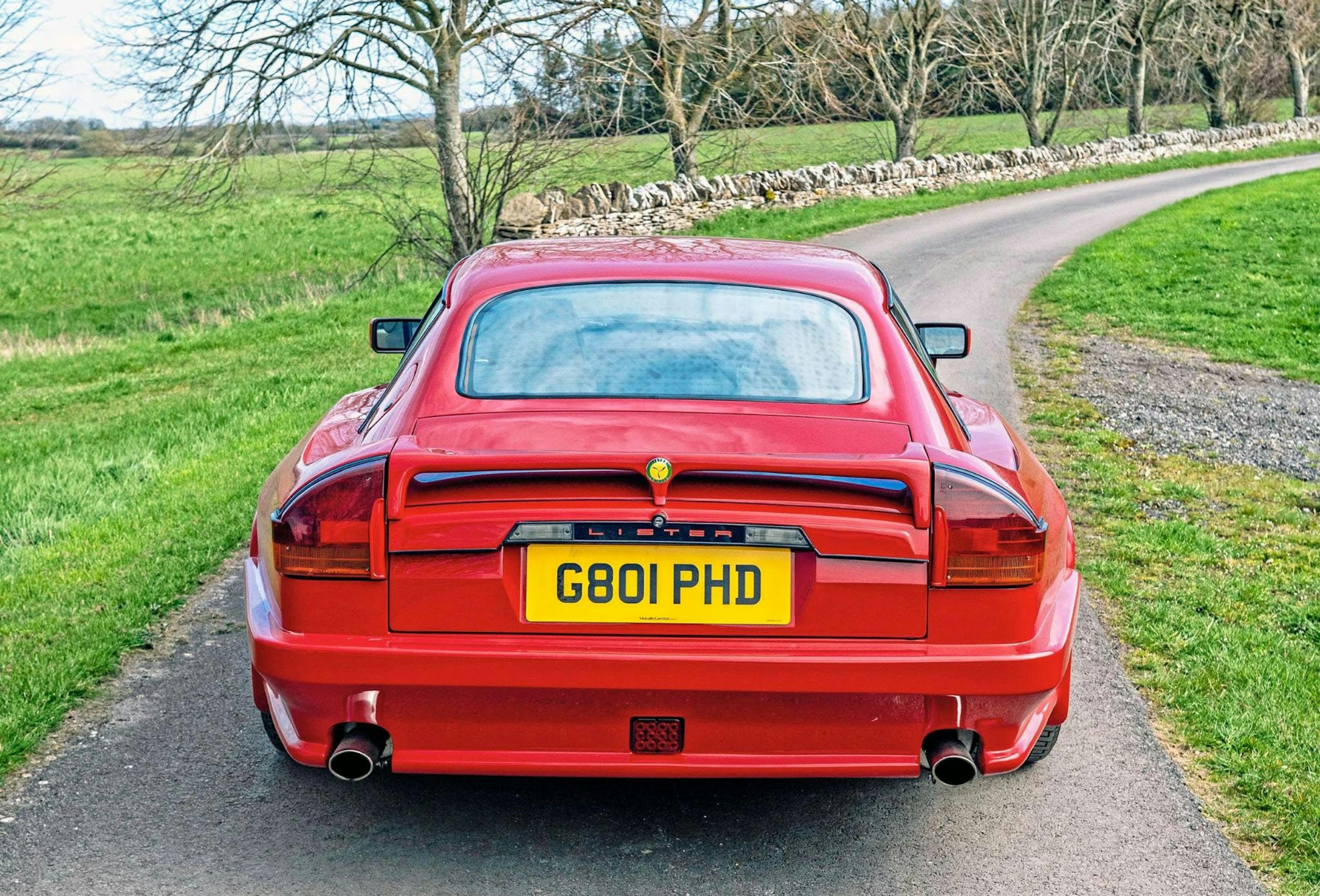
Aerodynamics – was any of it truly effective, or largely for show?
‘The Lister is both quicker and faster than a Testarossa, if a little noisier and less compliant’
The Lister does have features that Jaguar certainly should have built into the XJ-S, not least the turn-in and body control. Not long ago, I tried a standard Seventies XJ-S on these very same roads, and since driving the Lister I’ve concluded it seems disgraceful that Jaguar allowed the original to be such a pudding.
But it’s horses – or rather cats – for courses. It’s been an education to see what a few talented engineers could make of the XJ-S, but it was always too extreme – and far too expensive – for the mass-market buyer. In the end, how much you like what Lister achieved will be dictated by your tolerance of both late-Eighties bodykits and race car experiences on the road. That leather-lined cabin aside, it’s entirely separate from the standard Jaguar because instead of being insulated from the mechanical experience, you’re fully immersed in it. Which for anyone lucky enough to drive one of these cars, soon becomes the main reason to love it. Whatever your view, you must admit… it’s quite a thing.
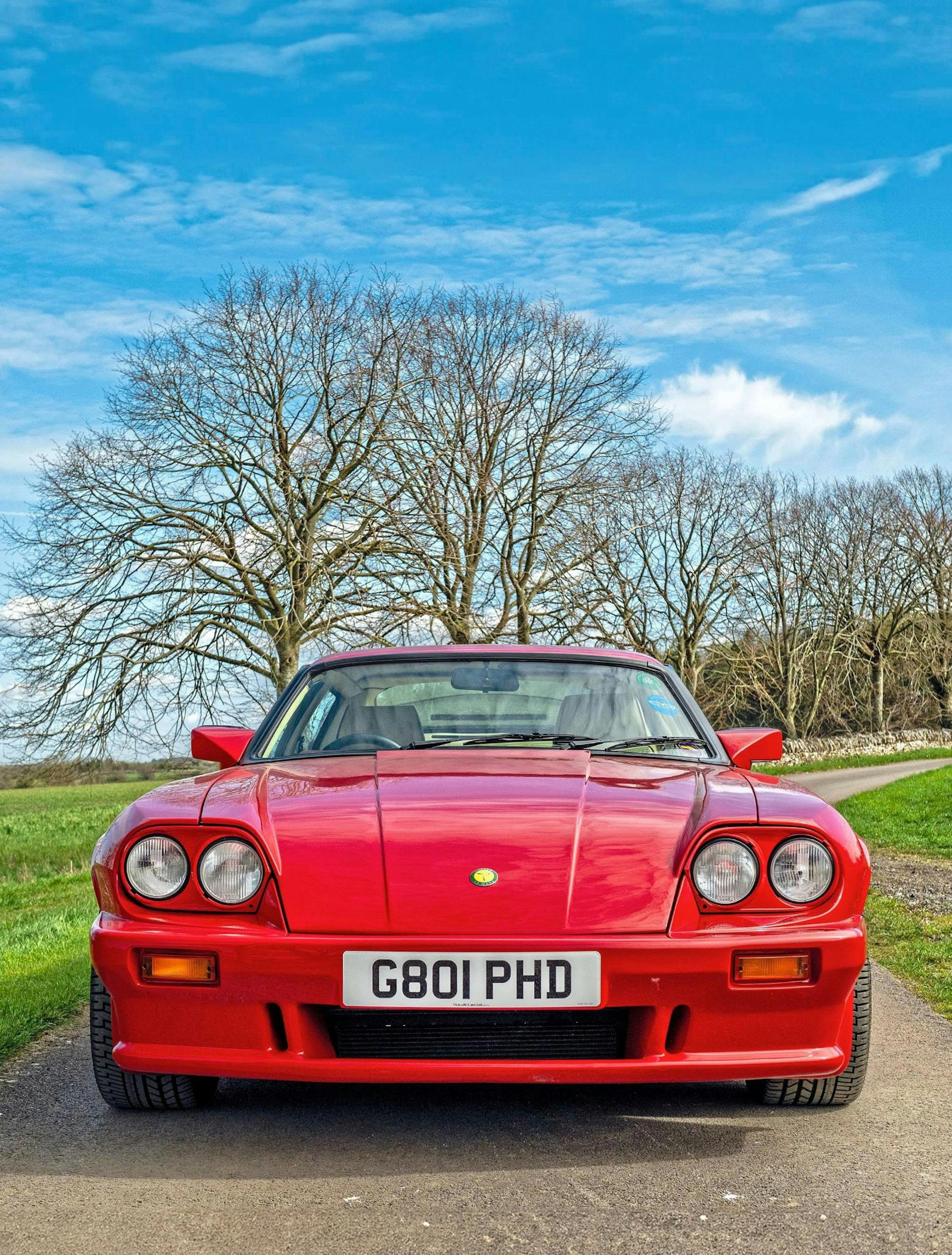
Thanks to: Peter Litchfield and to Metcalfe Cars (metcalfecars.com), where this Lister was for sale.
1990 Lister Le Mans
Engine 6995cc V12, ohc per bank, Marelli electronic fuel injection (standard model)
Power and torque 496bhp @ 6200rpm, 500lb ft @ 3250rpm (standard model)
Steering Rack-and-pinion, power-assisted
Suspension Front: independent, double wishbones, coil springs, telescopic dampers. Rear: independent, upper and lower transverse links, trailing arms, torque reaction bar, coil springs, telescopic dampers, anti-roll bar
Brakes Front and rear: vented, cross-drilled discs, four-pot alloy calipers, servo-assisted, ABS
Performance Top speed (claimed): 200mph; 0-60mph (claimed): 4.4sec
Weight 1800kg (3969lb)
Fuel consumption 12mpg (estimated)
Cost new £121,000 (1989)
Value now £110,000-£130,000
LIVING WITH A LISTER LE MANS

‘It might look like a handful but it’s easy to drive, and in the time I’ve had it, it’s given no trouble and taken everything in its stride,’ says the owner of this car, Peter Litchfield.
‘Mind you, I know the car inside out and backwards after the restoration and my history with the company, but if you can get them mechanically fit, they’re not difficult to look after. They are a bit tricky to see out of, and in the days when I had my first one, I remember catching the front of it on the odd high kerb.
‘But they make wonderful long-journey cars and, unlike the original XJ-S, they’re even more fun on a twisty road. Just don’t expect much more than low teens when it comes to miles per gallon!’
Subscribe to Classic Cars today. Choose a Print+ Subscription and you'll get FREE UK delivery, instant digital access and so much more!