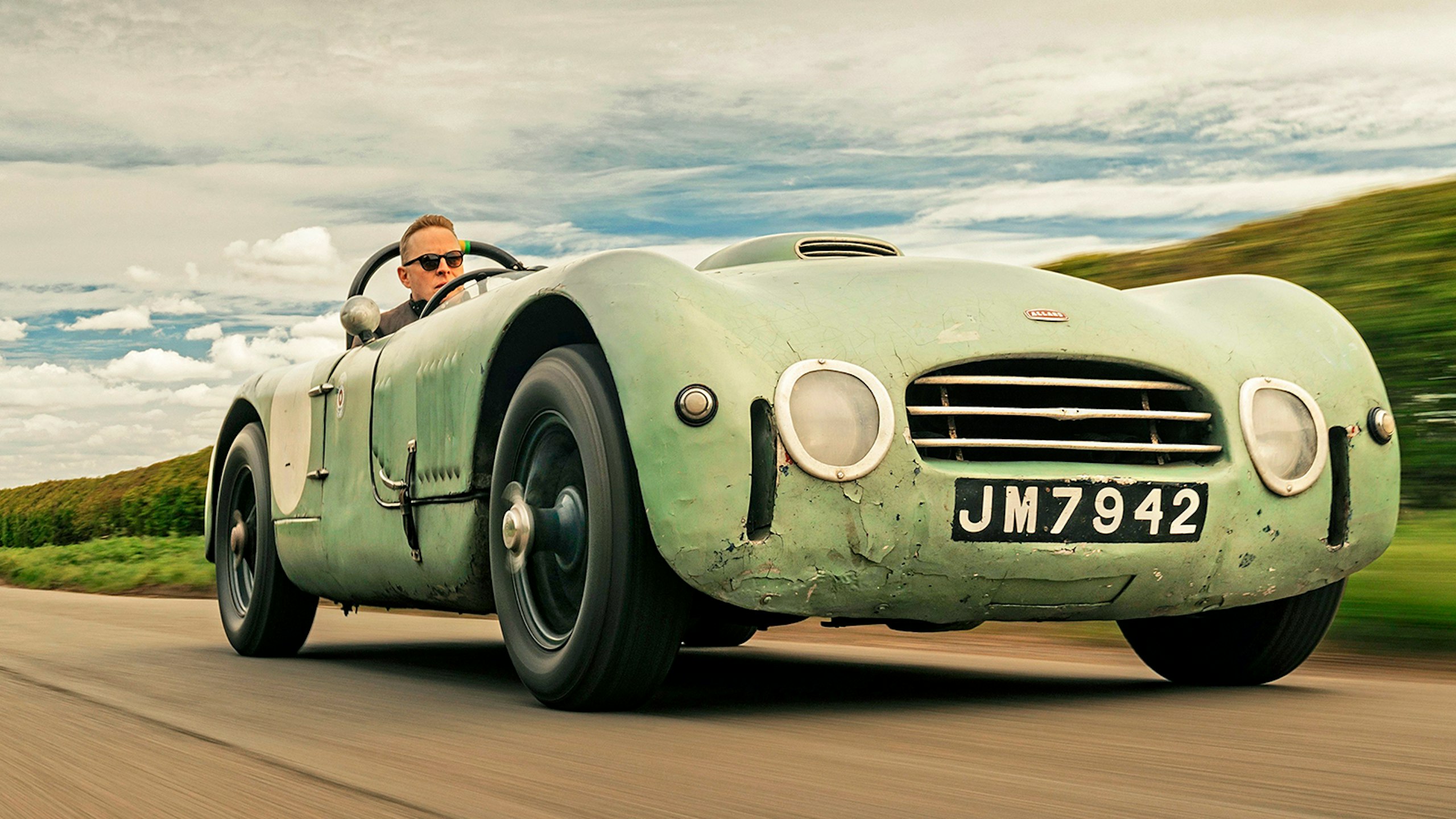
[ Allard J2X Le Mans ]
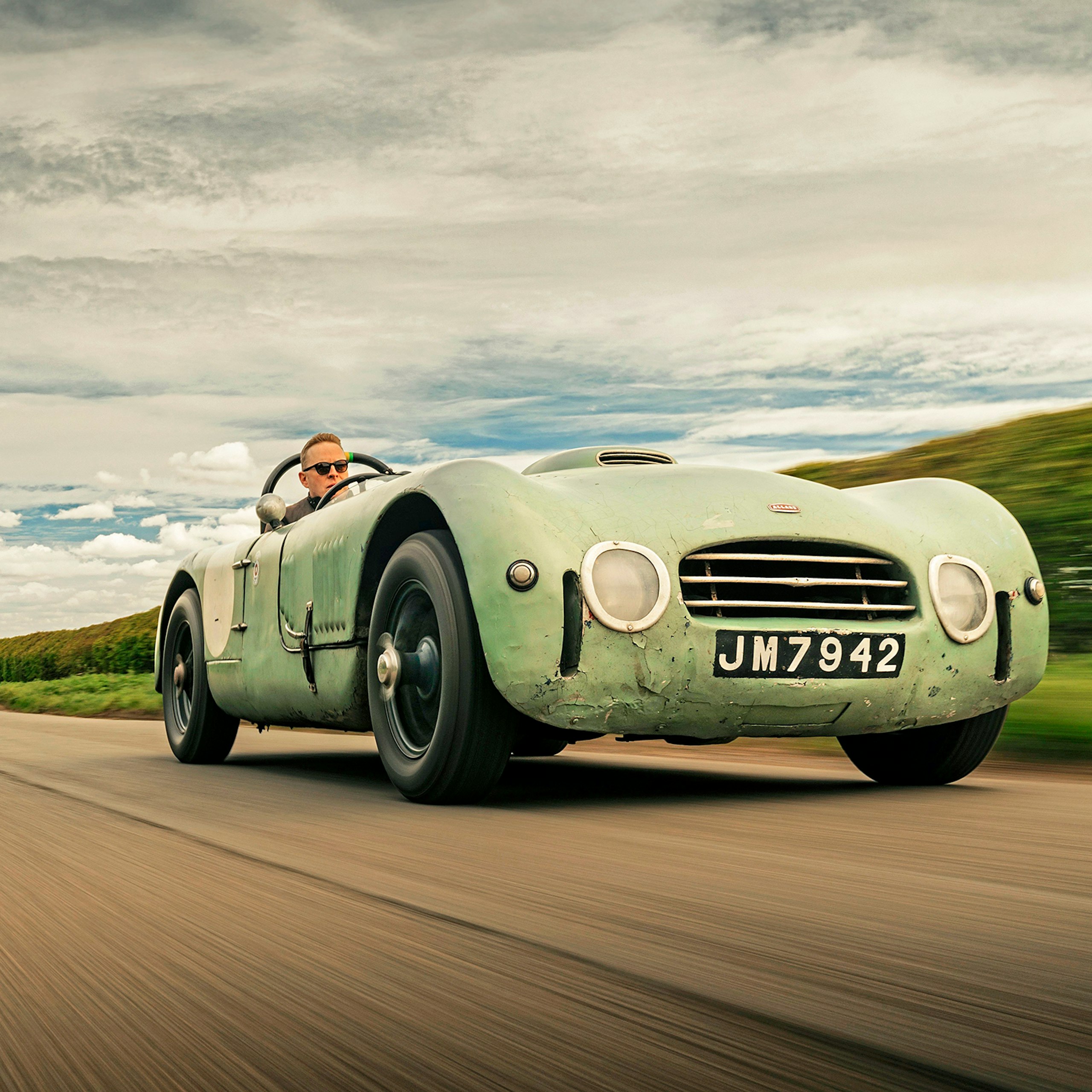
After almost 75 years of adventure and misadventure, this Allard J2X Le Mans is still competing – and it bears the scars proudly
Words NIGEL BOOTHMAN Photography ALEX TAPLEY
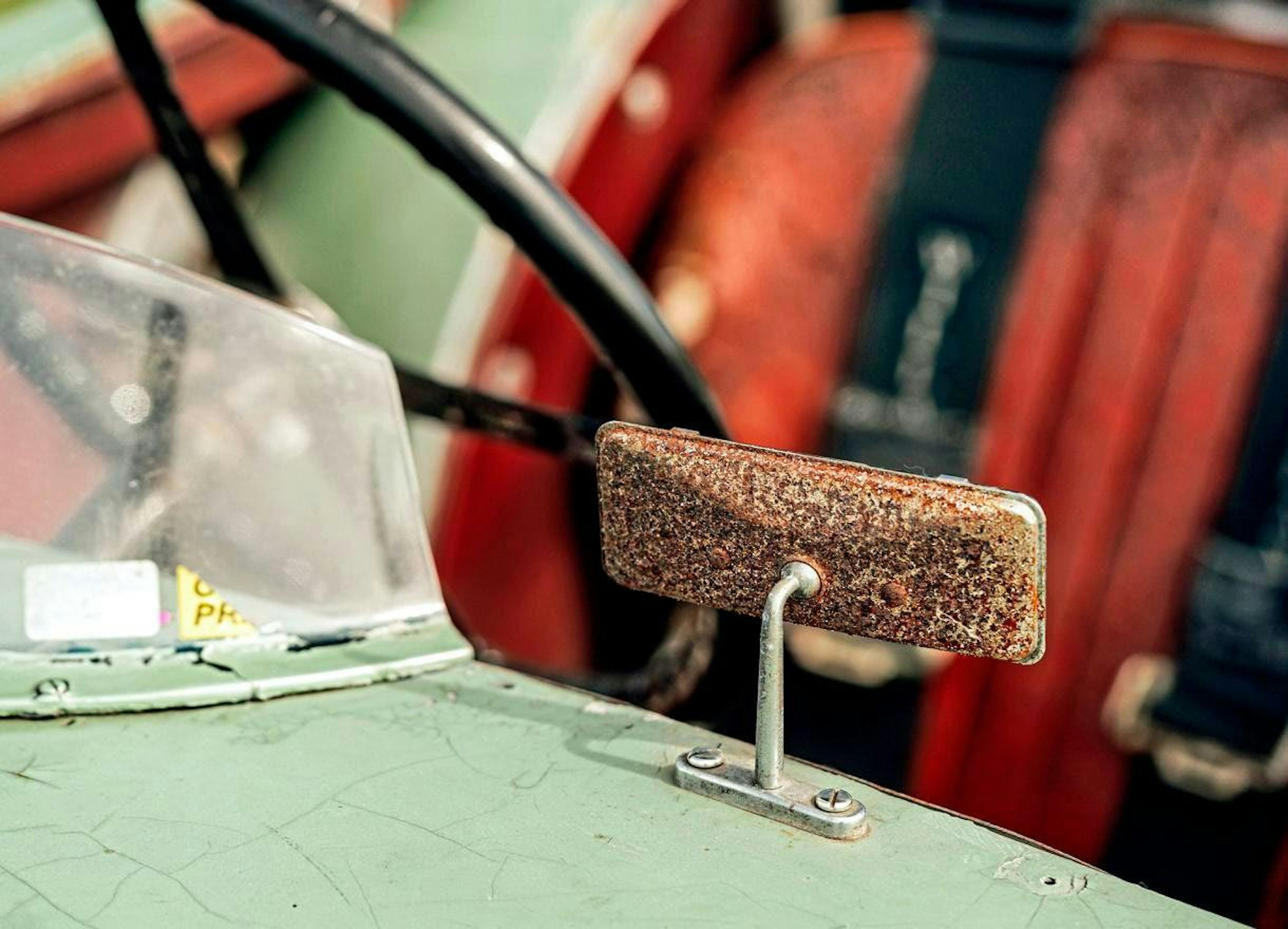
The first thing to master isn’t either the clutch control or the heavy steering, it’s the sensory overload. Everything is sending messages, from my hip bones – jammed between transmission tunnel and offside chassis member – to my hands, holding this huge quivering wheel as the engine rumbles like an earth mover. Then there’s the smell of unburned fuel, racing oil and hot Dunlops. But the eyes are transmitting most of the data. There are lots of exposed screwheads, edges of painted aluminium, gauges of many origins and vintages, switches that might belong in a car or in a Lancaster’s cockpit. Yes, that’s the general vibe – the war surplus green and the beaten-up leather seats add to the aero-engine clatter, suggesting we’re queuing for take-off.
The distractions don’t really diminish when I slot the four-speed Borg-Warner T10 into first and move off. I catch sight of the propshaft whirling round, clearly visible through the gap between the end of the transmission tunnel and the next bit of bent tin, over the tail of the gearbox. I hope that UJ doesn’t let go. As I release the clutch, the revs actually drop below idle thanks to the car’s tall overall gearing, and if we catch a bit of gravel in the middle of a junction, the rear wheels spit and spin.
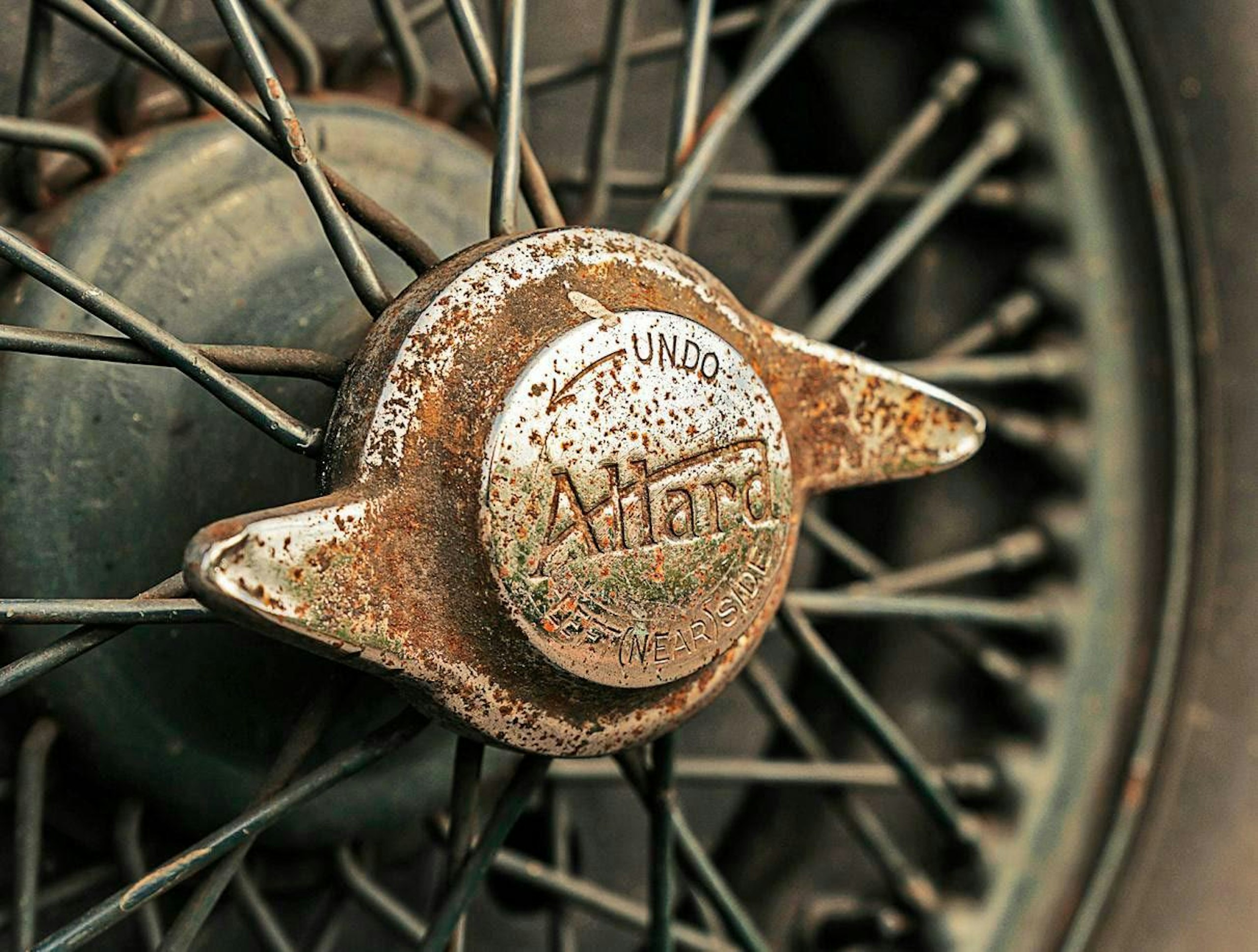
1952 Le Mans rule changes required fully enclosed wheels; new body created
Apply pressure on the accelerator and the Cadillac V8 passes through two or three character changes as the revs rise – from a lazy glug-glug-glug around 1000rpm, like an overloaded Chevy Suburban, to a muscle car’s energetic throb as we get to 2000 and 2500, before a barnstorming race-car bellow develops at 3000 and carries on to the redline at 4500rpm… or so I believe. Even getting close to that mark on the modern rev counter – which reads, irrelevantly, to 8000rpm – means my eyeballs are vibrating and someone is using a steam hammer right by my ear, and I want to reach for that long, soft brake pedal. The Cadillac 331 is one of the first-generation American pushrod V8s, and its power band has more in common with a Ford ‘Flathead’ than a high-winding Chevy small block from a few years later. Again and again, I think I’m driving it quite hard and then I look down to find I’ve changed up at 3000rpm. Low-down power and torque are, shall we say, abundant.
History in this car’s rear view; more to come
Luckily the pedals are where you’d want them to be – not offset, not awkward, though I can’t see my feet and with the brakes biting where they currently are, I can’t heel-and-toe. Which is where I finally begin to understand that this car would ask a different technique on track from younger, more pin-sharp competition cars. One where you mustn’t overheat your drum brakes and where grabbing a lower gear isn’t always the fastest way through a corner.
Here are cross-ply tyres with small contact patches, so the steering wheel has a new role. It doesn’t just turn you towards a corner, it helps you set the car up for a drift that scrubs off a bit of speed and lets you carry more momentum through an apex than you would by trying to drive it like a modern sports car. And why change down, if you can rely on the carthorse heave from the V8 when it’s halfway up its rev range? If all this sounds like the approach you’d use for a pre-war car, you’re right.
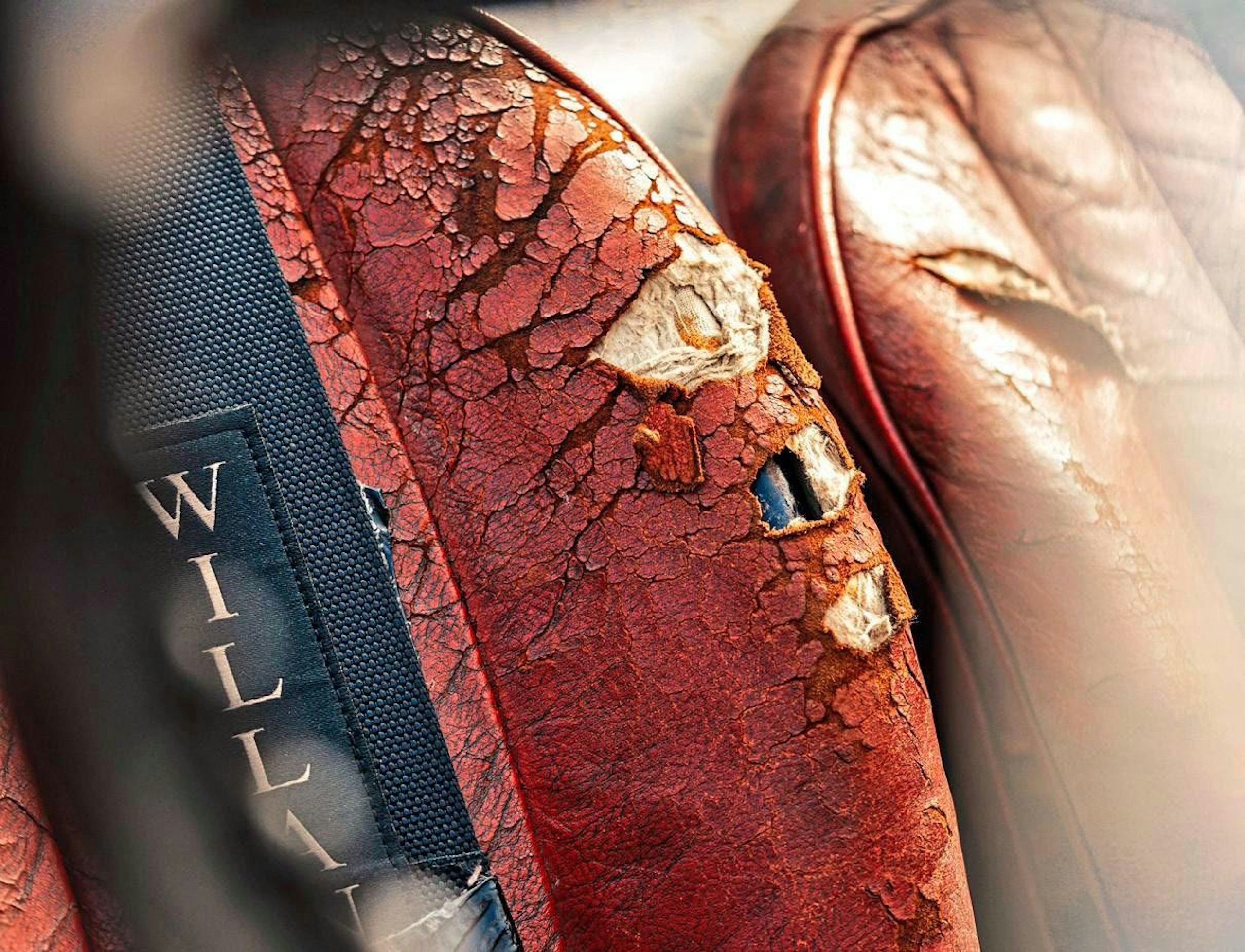
Worn leather seats help evoke aeronautical feel
Ah, but that steering. Around these Leicestershire lanes it’s following every bump and tramline, wrenching the wheel left and right. The car’s owner, Tom Walker, reckons it’s a combination of play in the steering box and the Dunlop Racing tyres. He says it’s transformed for road use by a set of radials, but the Allard is mainly used for racing, so that’s how we find it. Sure enough, the steering does improve with speed and especially on good road surfaces. You’re still casting the car at a gap rather than aiming it with fingertip precision, but it would be a different story on a sweeping circuit like Goodwood. ‘It loves Goodwood,’ says Tom. ‘On a flat track like that, with the speed you can carry, it handles beautifully and every corner is epic.’
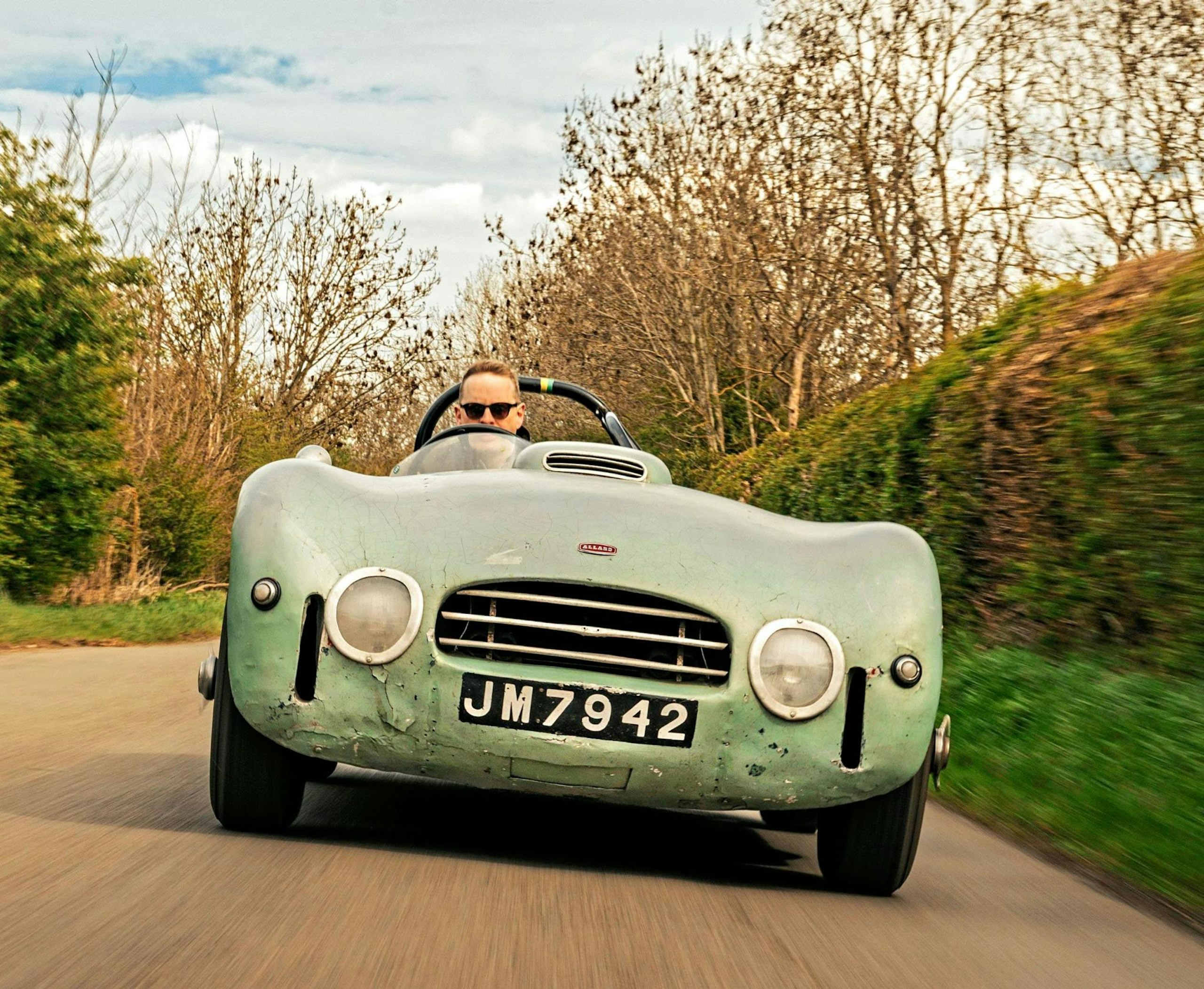
Ex-de Larringa car wears wider J2X Le Mans bodywork
Tom found the car at an auction in 2000, when it came to market after almost 15 years in storage. It had already lived a long and exciting life on track by then, with an origin story that’s both a tad mysterious and typical of the casual way low-volume car makers operated in the Fifties.
One of Sidney Allard’s customers was the Olympic skier and Army officer Colonel Rupert de Larrinaga. Both Tom Walker and previous owners of this Allard exchanged letters with de Larrinaga, which remain in the car’s history folder, and explain what happened. De Larrinaga owned an Allard J2 registered OVT 983, bought secondhand, and he found it something of a handful. Even Sydney Allard thought the J2’s oversteer was excessive and successfully reduced it by moving the engine forward in the chassis, rearranging the front radius arms at the same time and creating the J2X. De Larrinaga heard of this and in 1952 decided to have his car re-chassis’d in J2X form.
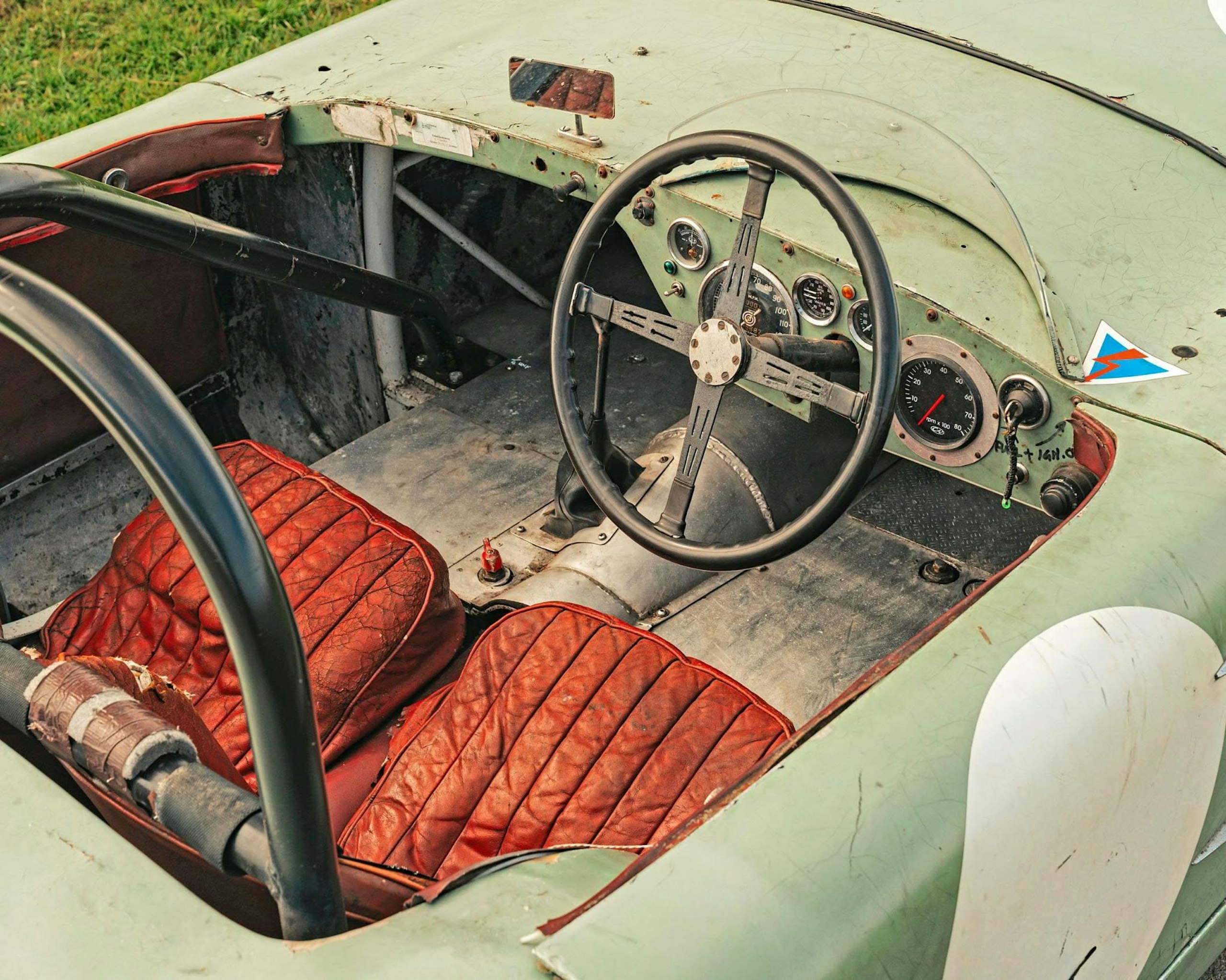
Chocks away! J2X cockpit is visceral and race focussed
What resulted was almost a new car – a J2X chassis, yes, but with a new full-width body of the Le Mans type that Sydney Allard would take to La Sarthe that year. This was something of a surprise to de Larrinaga, who nonetheless paid up with good grace. Tom believes that four were built initially, of which perhaps three went to Le Mans that year – two started the race – and this was the fourth. However, while the Le Mans entries were entirely new cars and used Chrysler engines, it seems de Larrinaga’s car was built using the Cadillac engine and perhaps the rest of the driveline and running gear from his J2. However it was done, the car retained the OVT 983 registration and de Larrinaga enjoyed two seasons of sprints and hillclimbs.
‘The V8 changes from a lazy glug-glug-glug to an energetic throb’
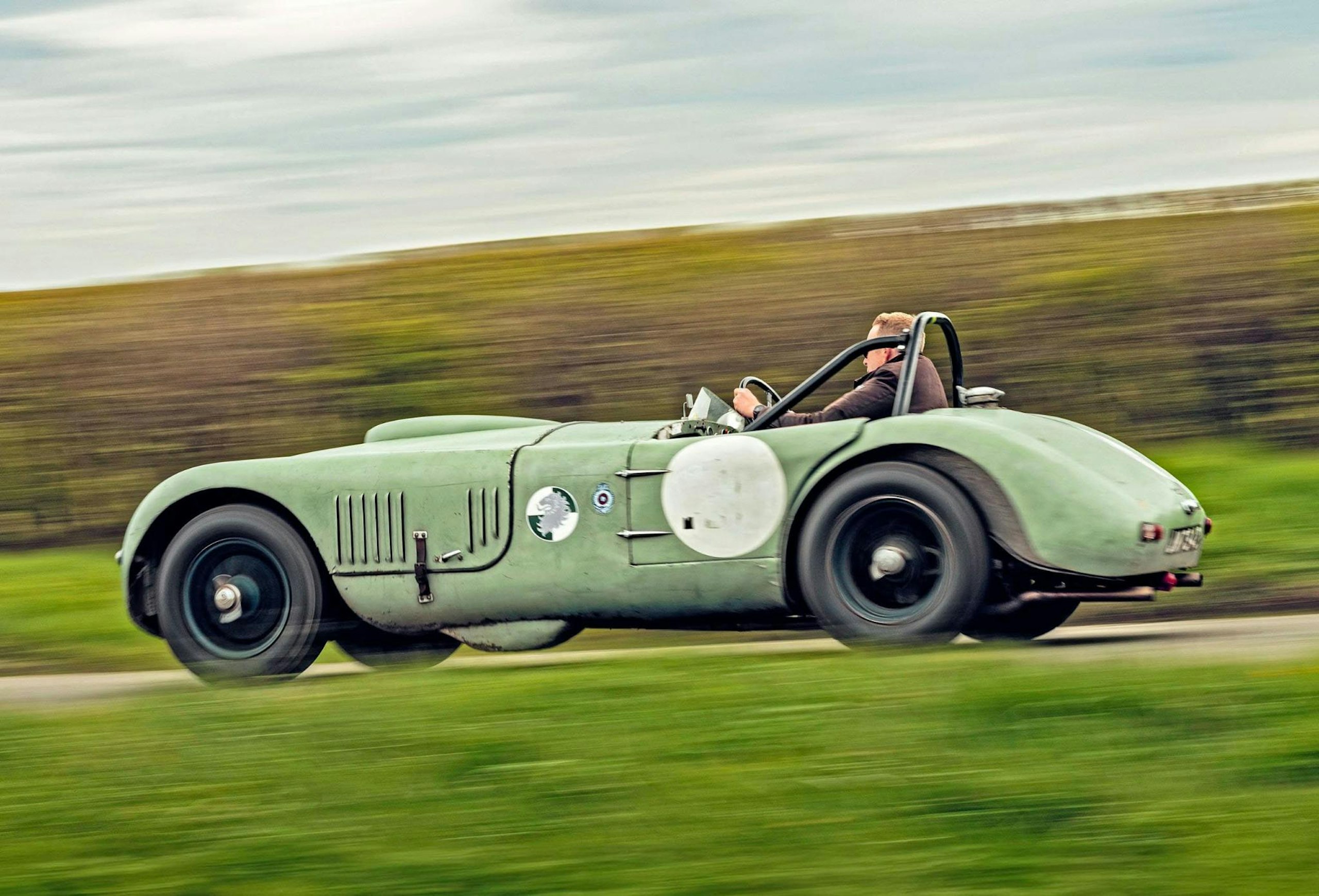
Abundant torque, rear-wheel drive, dual race and road car persona
Towards the end of 1954, de Larrinaga took the next step and bought a new Allard J2R, the last and fiercest of the bloodline. He sold the J2X Le Mans to a hotelier from Worthing, Eric Alexander, who was also a keen competitor. Quite how the documents were handled for this transaction remains a mystery, but de Larrinaga wanted to hang onto the OVT 983 number.
Presumably because of this, Alexander re-registered the J2X Le Mans as JM 7942, which was originally attached to an Allard M-type, and that’s how it’s remained ever since.
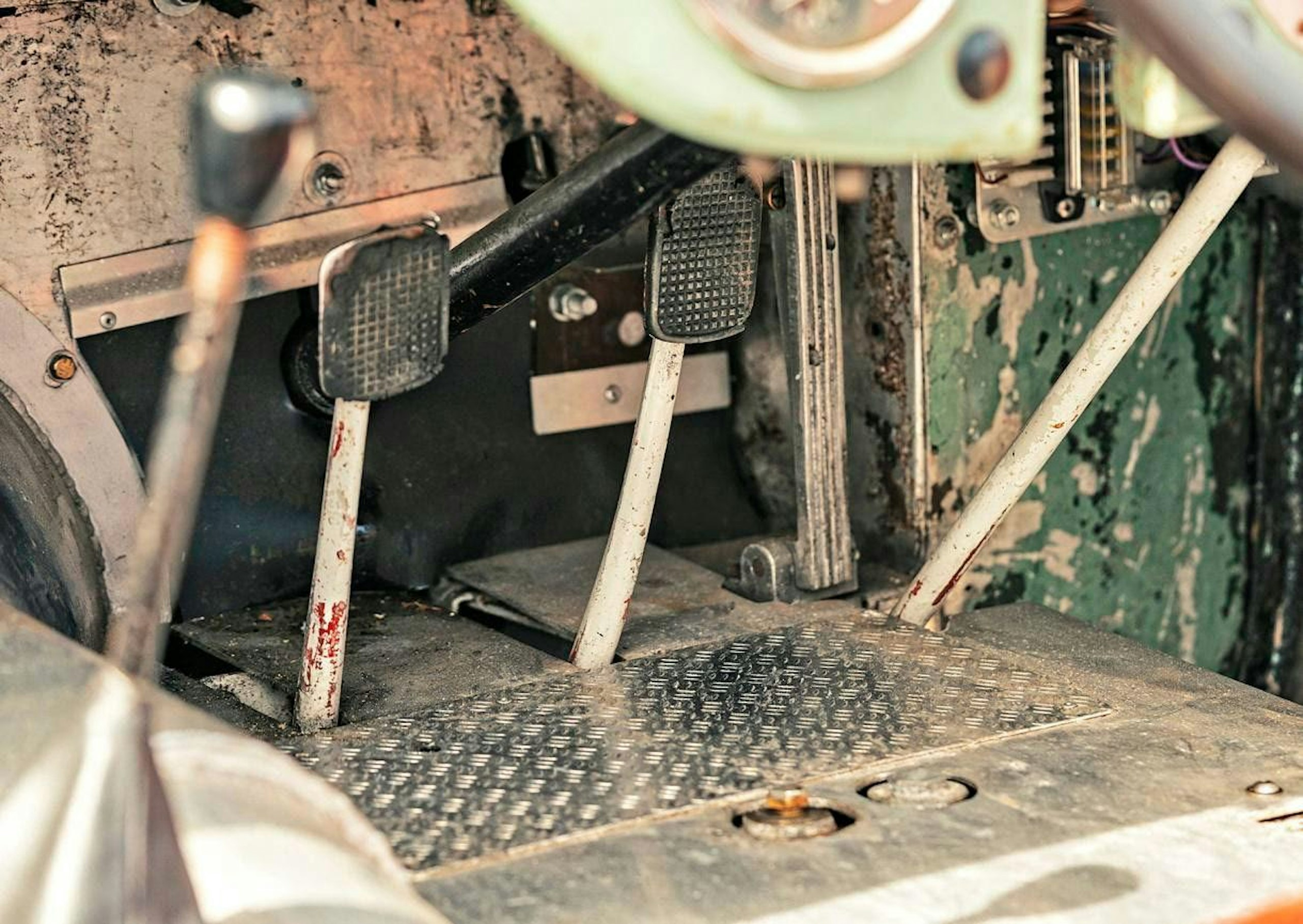
No heel-and-toe from unsighted pedal positions
Eric Alexander was featured in Motor Sport not long after, showing the three Allards he then owned, and revealing details of JM 7942’s state of tune – it ran what was effectively a sprint engine, with twin four-barrel Rochester carburettors, very high compression for the time of 10:1 and extra-strength valve springs. Alexander and his partner Margaret Hockenhull campaigned the car with great success at the Brighton Speed Trials and elsewhere through to 1960, including three entries at Goodwood, where it was driven by a Mr Cuff-Millar. Hereafter, it seems to have had a relatively quiet time for eight years with a Dr John Pattinson until being sold to Robin Sadler in 1968. On his first outing at Silverstone, Sadler aquaplaned off at 90mph between Maggots and Becketts and the car was severely thumped. Sadler happily escaped with only bruises and sold the battered car to Roger Reese.
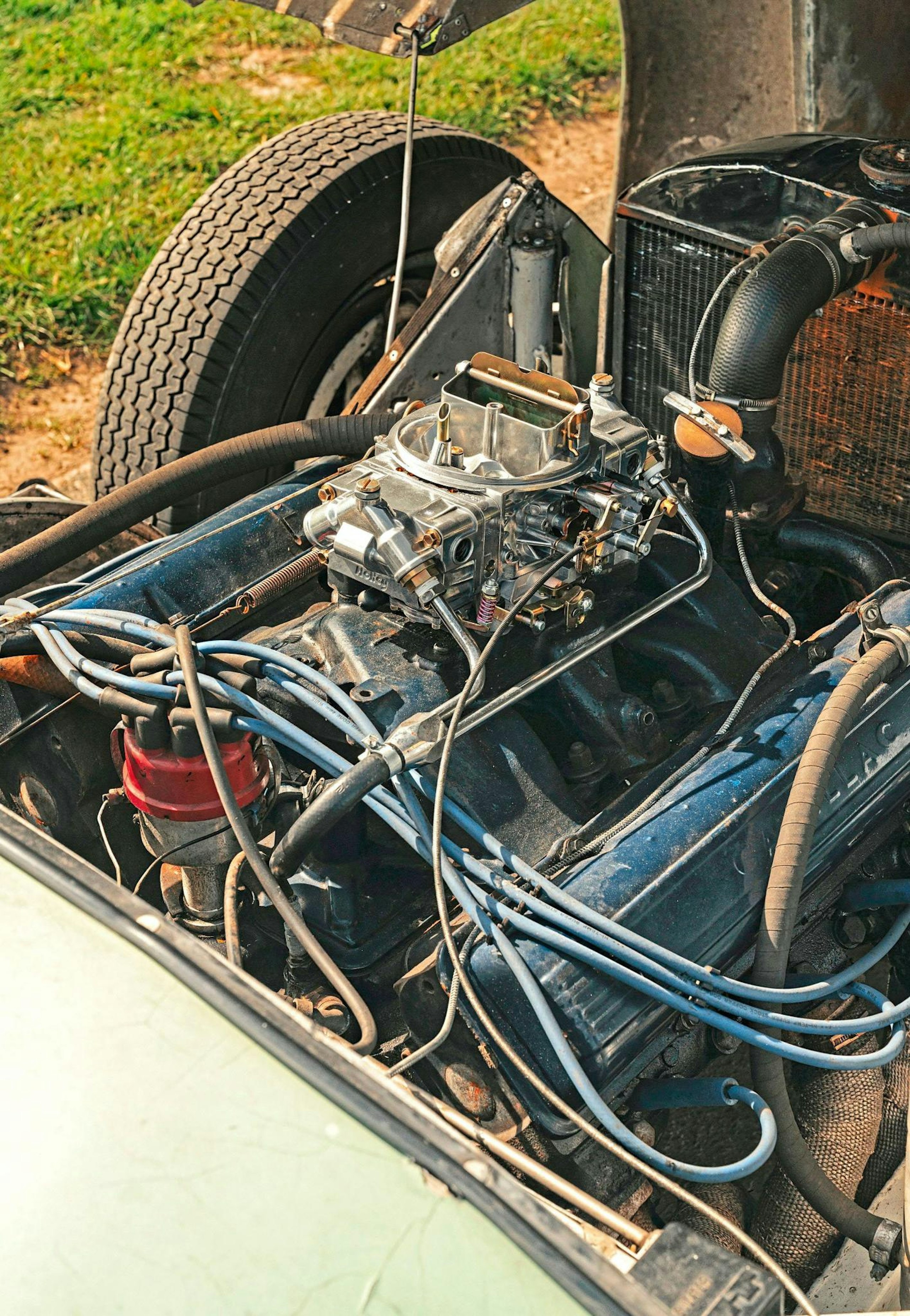
‘The engine dominates everything… from 3000 to 4500rpm it’s a full-on racing car’
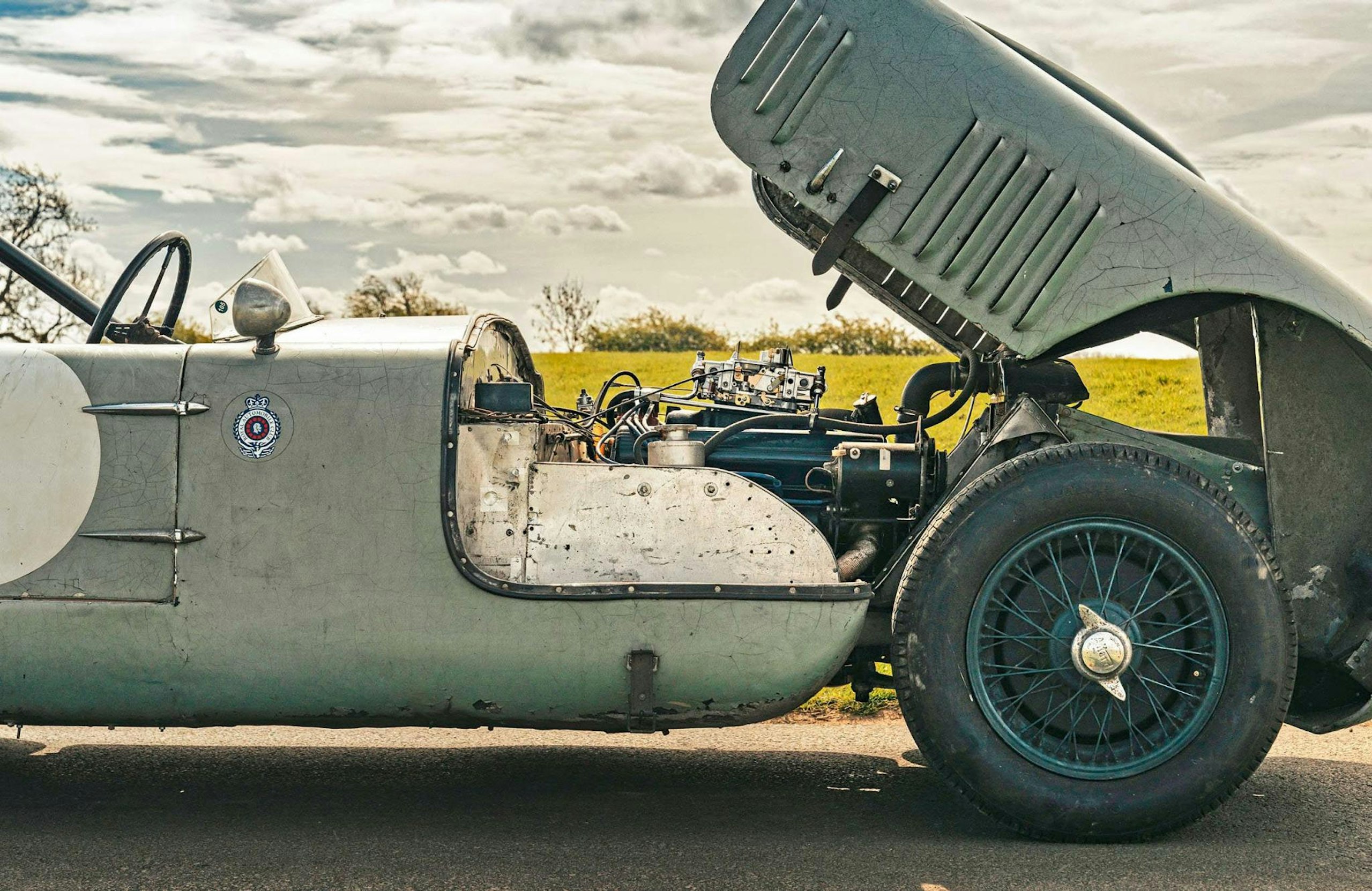
No Chrysler V8 for this Le Mans; J2 uses Cadillac power
Reese embarked on a somewhat shoestring rebuild that seems to have rescued and repaired most of the major components, and he brought the car out once again in 1975, wearing little wheelarch lips to help cover some wider tyres. Reese enjoyed the car in a few club sprints and used it on the road, too, which might be why there’s a photo of it wearing yet another registration number – Reese was a multiple Allard owner and may well have swapped plates from one car to another, depending on which was taxed…
Resse died in 1987 and the car was eventually consigned to an H&H sale by his widow in 2000, when Tom Walker saw it on the cover of the catalogue. ‘I really wanted a C-type Jaguar, but I couldn’t afford one of those, and this was estimated at £18,000,’ Tom says. ‘It was pretty rough – it was painted in blue Dulux house paint and the gearbox arrangement was a lash-up that involved an American three-speed gearbox casing with a shaft passing through it to a four-speed ’box from an Alvis Speed 25, all mounted on bits of welded-up tube. I got rid of that.’
‘On road, you cast the car at a gap rather than aim it with precision’
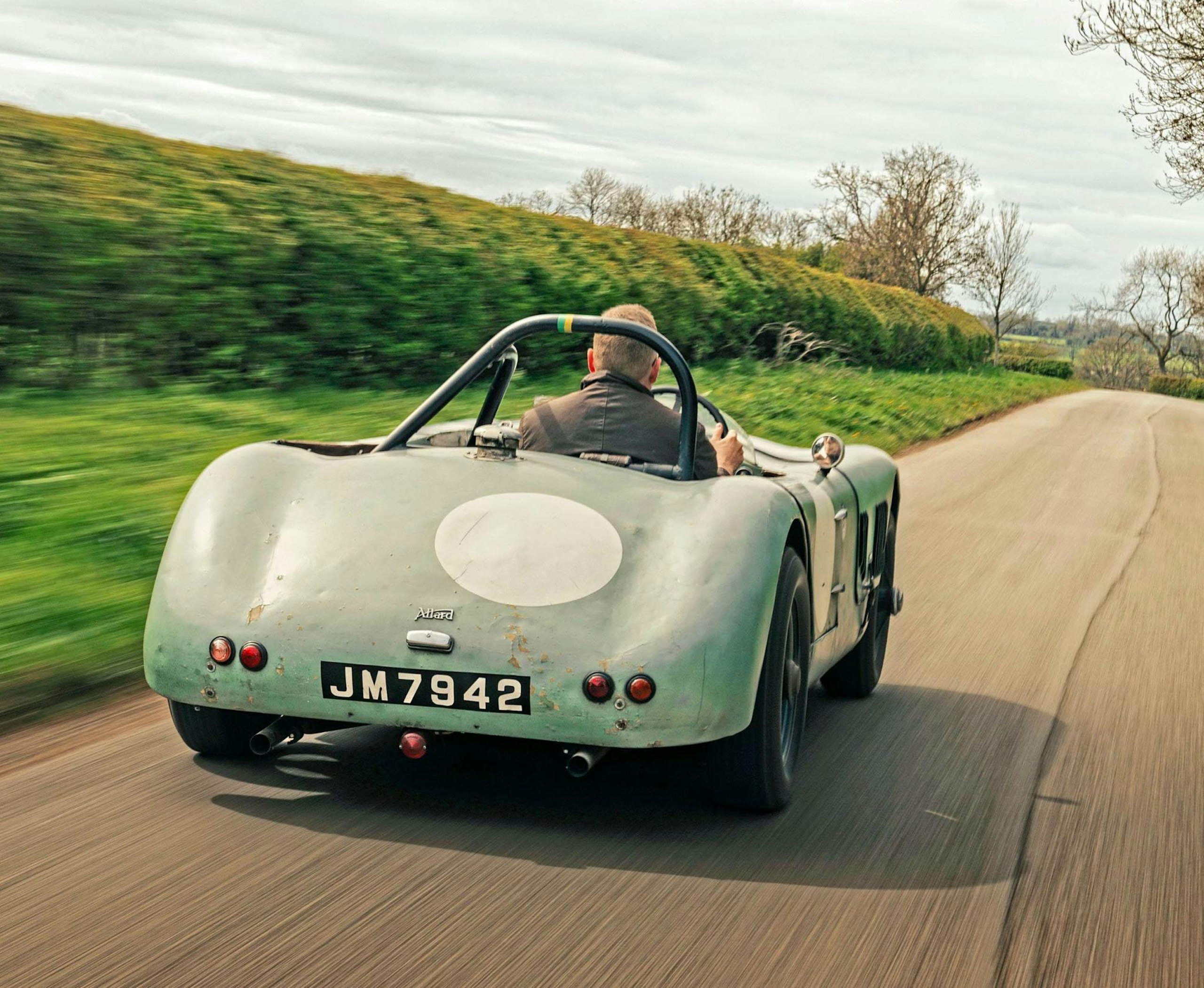
Dunlop crossplies dictate careful but involving drive
Tom rebuilt the car as close to de Larrinaga’s specification as he could. He stripped it and had a banana-like bend in the chassis straightened, before shot-blasting the frame and coating it in Massey-Ferguson tractor paint – Tom is a farmer, after all.
‘Geoff Scott-Comber, a tractor mechanic, rebuilt the Cadillac engine back to standard for me,’ says Tom. ‘That was our “V1” engine. Then I tried a bigger 390ci Cadillac, but I blew that up by over-advancing the ignition. Eventually the best combination was the Cadillac 331 engine with 390 cylinder heads on it for better compression and bigger valves and ports.’
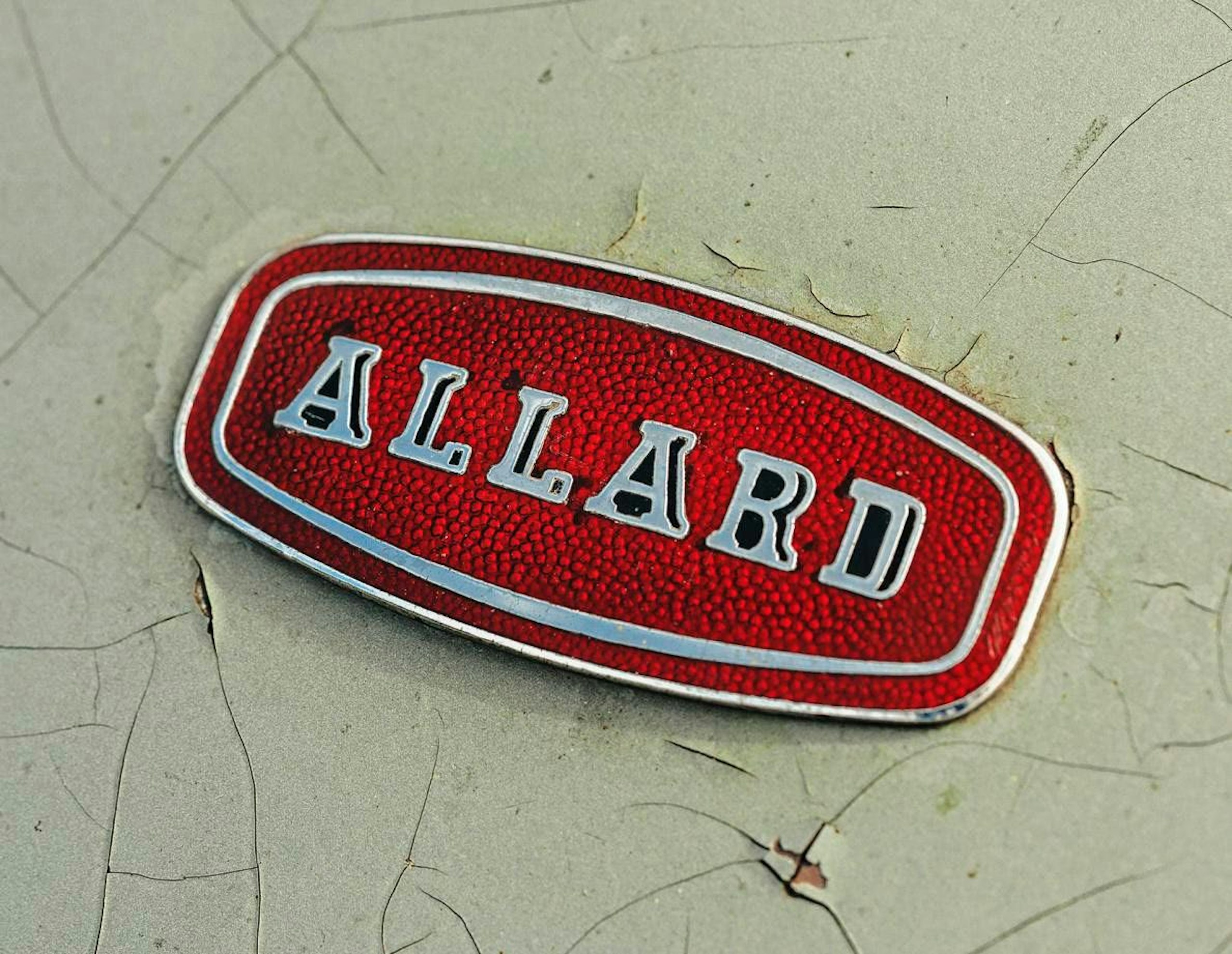
No Le Mans success for namesake J2X…
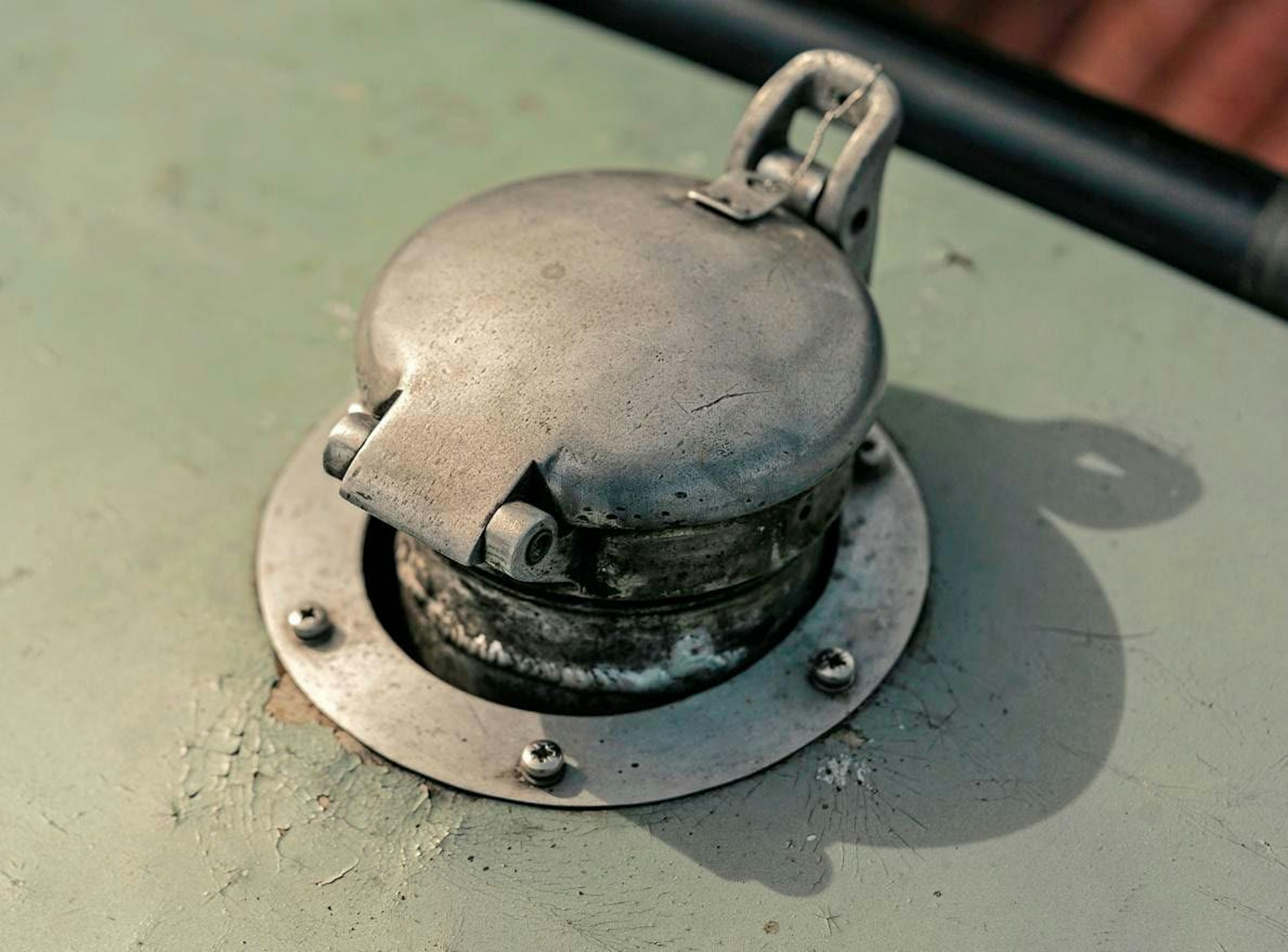
…pair of cars retired during fifteenth hour
That paint is not war-surplus green at all. Tom sanded the body down through five or six layers to find this light green at the bottom, and also in places inside the car.
‘I spoke to de Larrinaga, who said he’d invented that colour and called it Alpine Mist Green – and that Aston Martin had stolen the idea and used it on its DB3S!’
Tom got a good colour match and refinished the car to complete the 1952 look. Since then, he’s enjoyed many seasons of competition, including FISCAR and Duncan Wiltshire’s Legends series, the Fifties sports car races with the VSCC and several appearances in the Woodcote Trophy at the Goodwood Revival. ‘I’ve done the Spa Historic, too,’ says Tom. ‘Drive there, race, drive it back. It’s never on a trailer.’
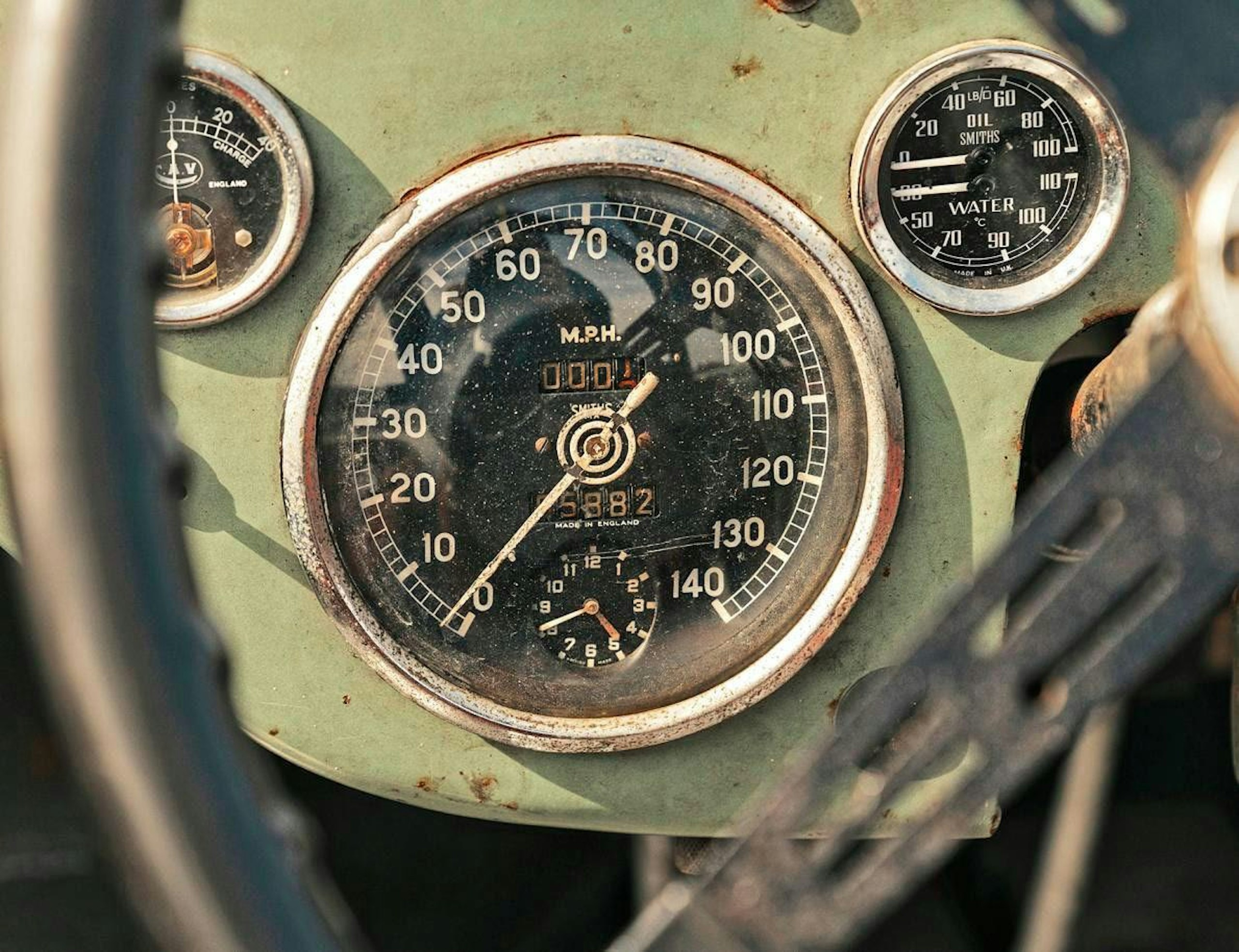
Once caught at Goodwood doing 148mph!
At first glance you’d think this car had been preserved in its juices since the late Fifties, bearing the scars of ancient battles. But cars that get raced acquire new scars all the time, as well as new parts – hence that shiny but effective carburettor and the modern rev counter. Tom is now thinking about a bit of panel work and some fresh paint, and before you frown at the loss of patina, remember it was smart only 20 years ago when the last restoration was completed. There are two ways you can treat an old warhorse like this – lock it away and preserve the aura, or just use it. And if you do use it, you inevitably need to refresh it now and then. What you see here is not the car’s ‘forever’ condition – we’re just catching it at one specific point in a long and continuing competition history.
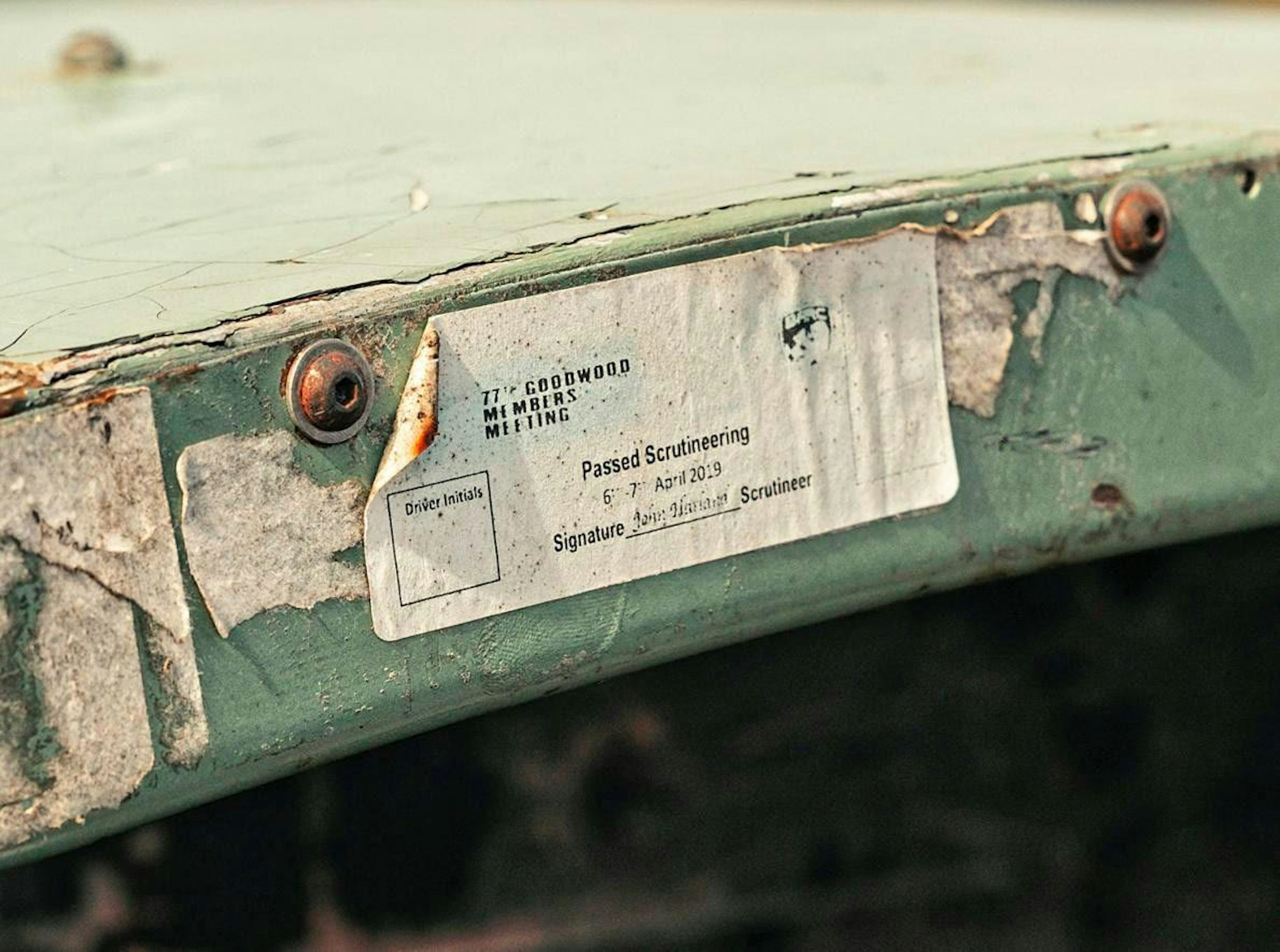
Car still active in historic race series
For now, though, it does mean we can storm off through the puddles and not get precious about a bit of grime. Whatever the other distractions are in the cockpit, the engine still dominates everything. It seems to be in the ideal state of tune for a roadgoing racer, because it idles well and isn’t fussy, and up to 3000rpm it’s a very fast road car. From 3000 to 4500rpm its character changes and it’s a full-on racing car.
Numbers? It feels like 0-60mph would disappear in around five or six seconds and Tom says that it’s been through the speed traps at the end of the Lavant Straight at Goodwood at 148mph. It is _ver_y loud and very exposed, but if you’re up for the sheer thrill there’s not much to touch it.
Next outing? Well, Tom will be racing it again soon, but on the evening of our shoot, he’s arranged a trip to the pub. I very much suspect he will be first to the bar.
‘It is very loud and very exposed, but if you’re up for the thrill there’s not much to touch it’
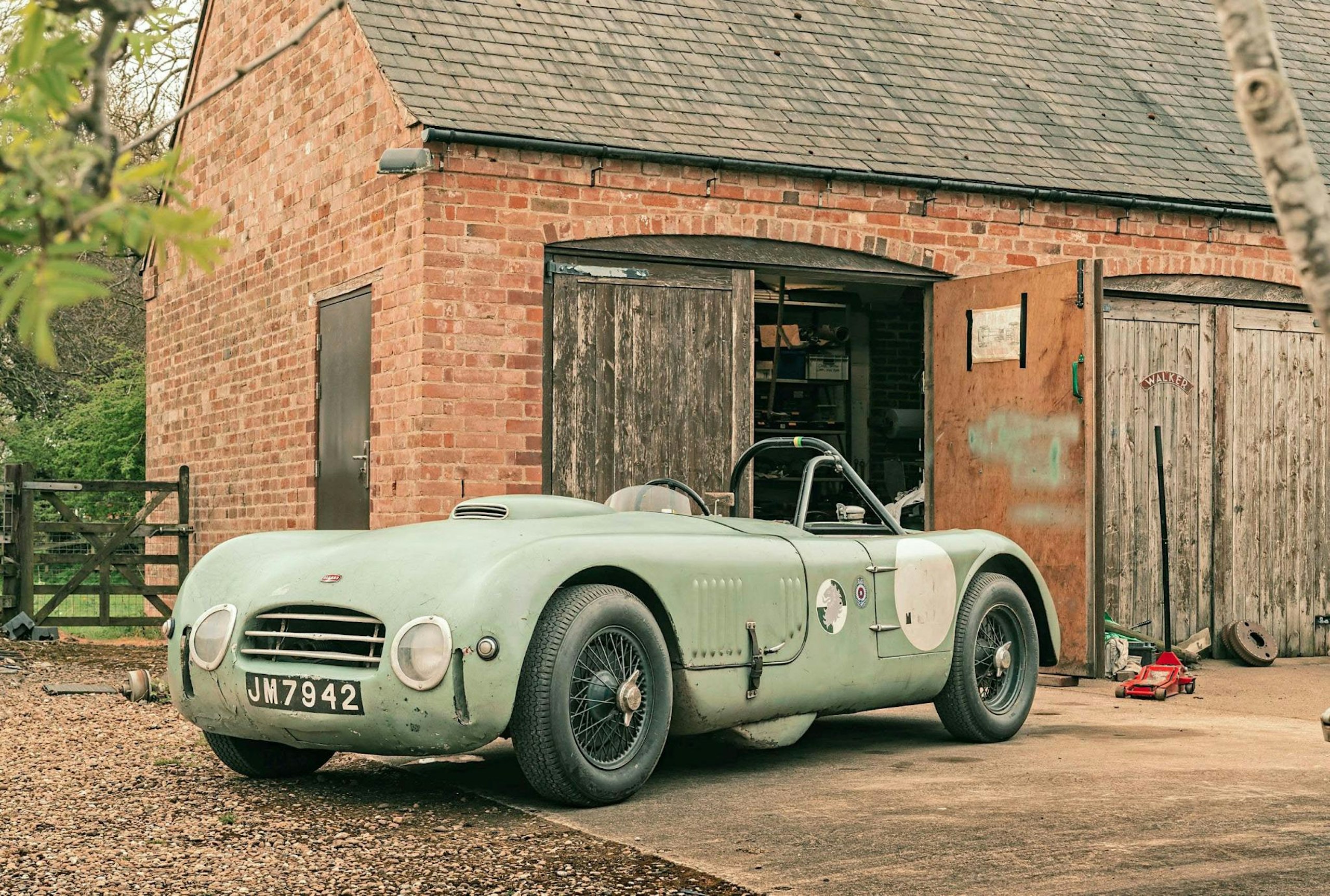
New racing scars are acquired constantly, adding to patina
1952 Allard J2X Le Mans
Engine 5424cc V8, ohv, Holley 750 cfm four-barrel carburettor
Power and torque 280bhp @ 4000rpm (est); 350lb ft @ 2500rpm (est)
Steering Marles worm and roller, non-assisted
Suspension Front: independent; transverse lower links, trailing radius rods, coil springs, telescopic dampers. Rear: de Dion axle, fixed semi-trailing arms, coil springs, telescopic dampers
Brakes 12in drums, unassisted, inboard at rear
Performance Top speed: 148mph; 0-60mph: 5.5sec (est)
Weight 1219kg (2688lb) (J2X)
Fuel consumption 14mpg (est)
Cost new £1713 (J2X)
Classic Cars Price Guide £135,000-£290,000
LIVING WITH AN ALLARD J2X LE MANS

‘The engine has been bulletproof since it was built 20 years ago – and I once did a lap of Goodwood with no water in it!’ says owner Tom Walker. ‘I tried a Cadillac three-speed gearbox but it was a horrible thing. The Borg-Warner T10 is still made, now by Rochester, and they’re only £1500 so I made my own bellhousing to fit it to the Cadillac engine. The clutch is a bog-standard diaphragm Chevrolet thing.
‘The de Dion rear end gives you a rock-steady feel on track, especially now I’ve lowered and stiffened the springing, and fitted good dampers. The brakes would go after two laps, and I’d get slower and slower. So, I drilled holes in the backplates and then ducted air through pipes from the box round the radiator, which has transformed it.’
Subscribe to Classic Cars today. Choose a Print+ Subscription and you'll get FREE UK delivery, instant digital access and so much more!